Wildlife & landscape pests · Western North Carolina field companion
European hornet — probable
Vespa cf. crabro
Carpenter BeeHolly
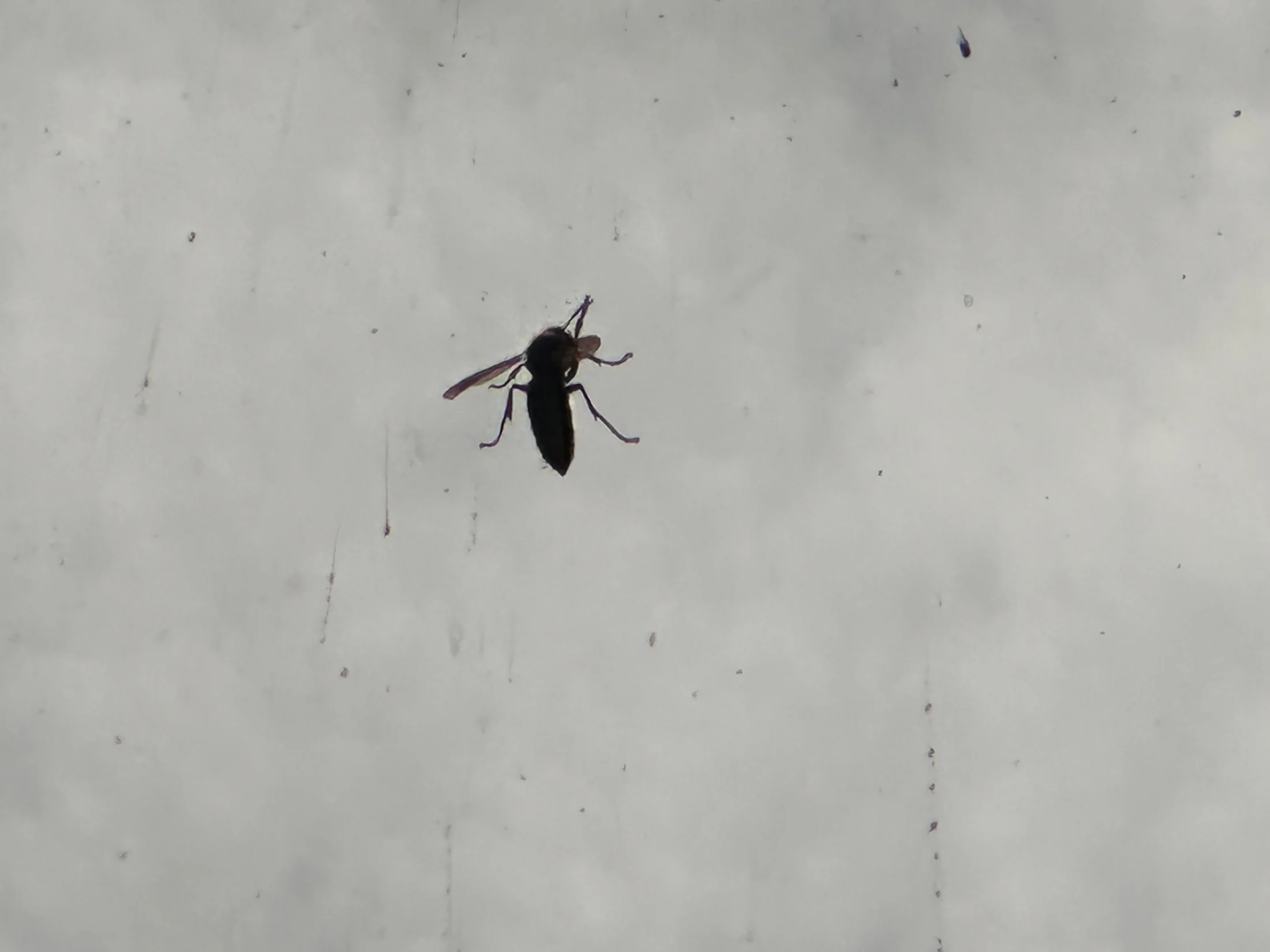
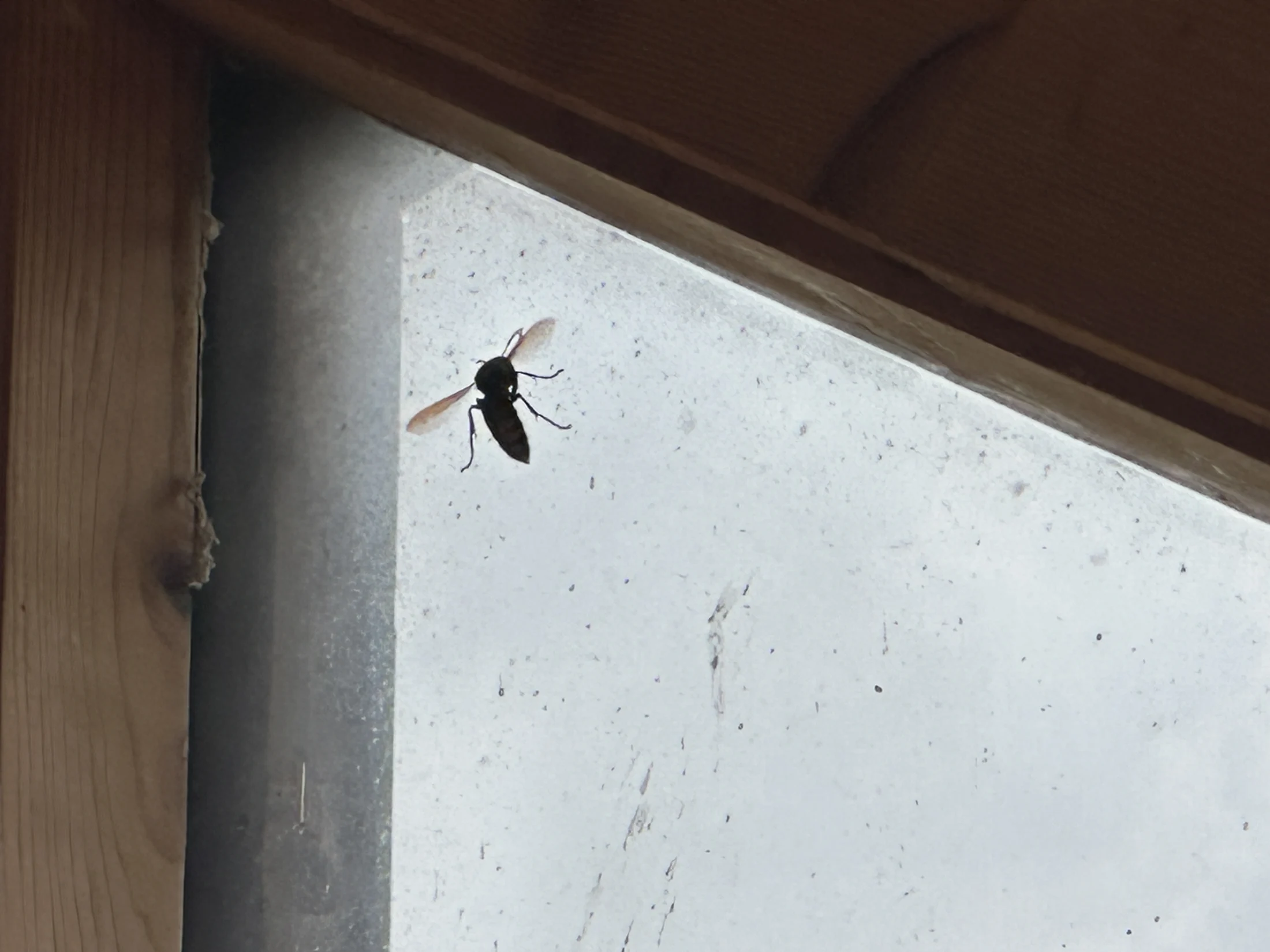
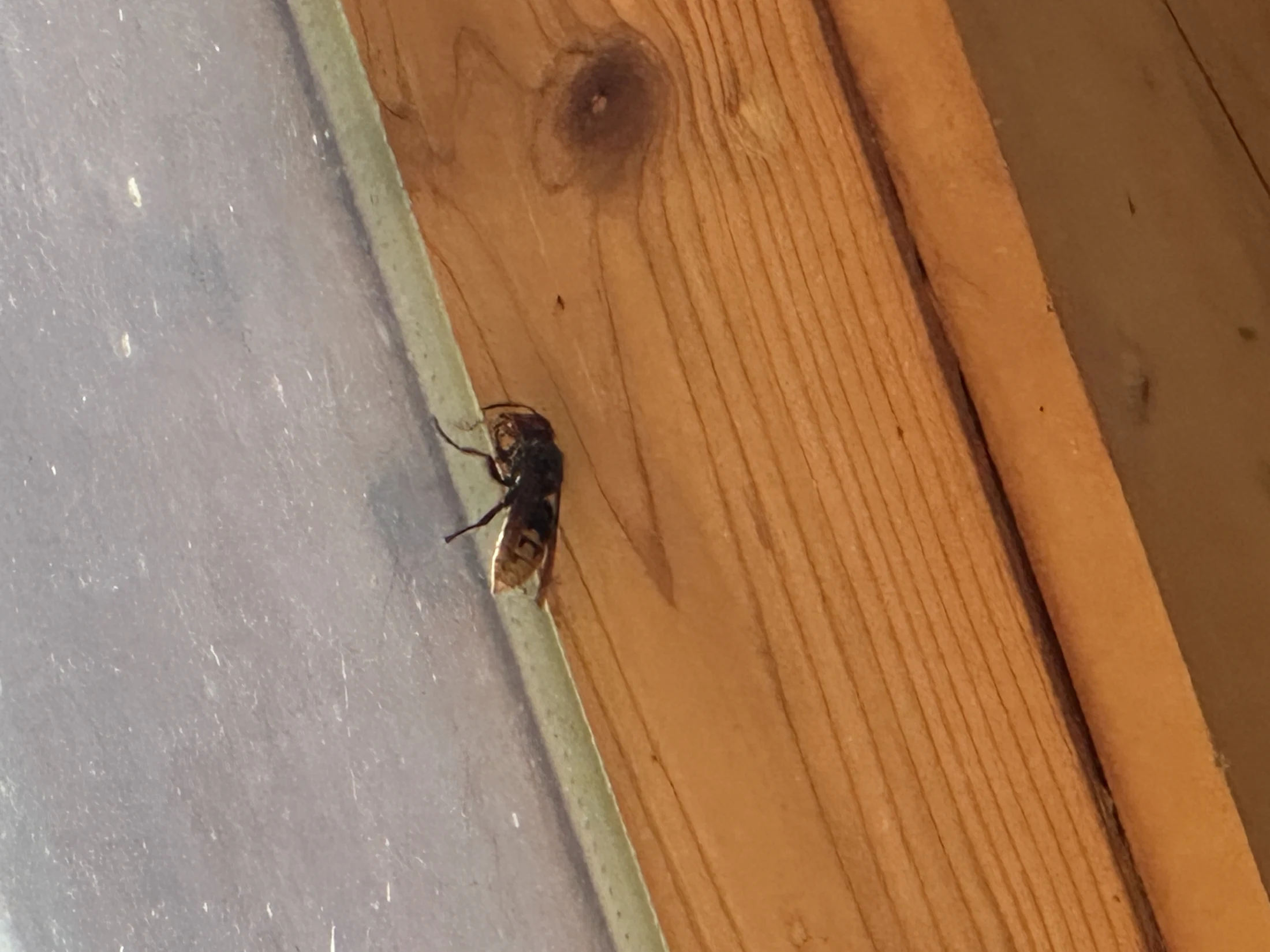
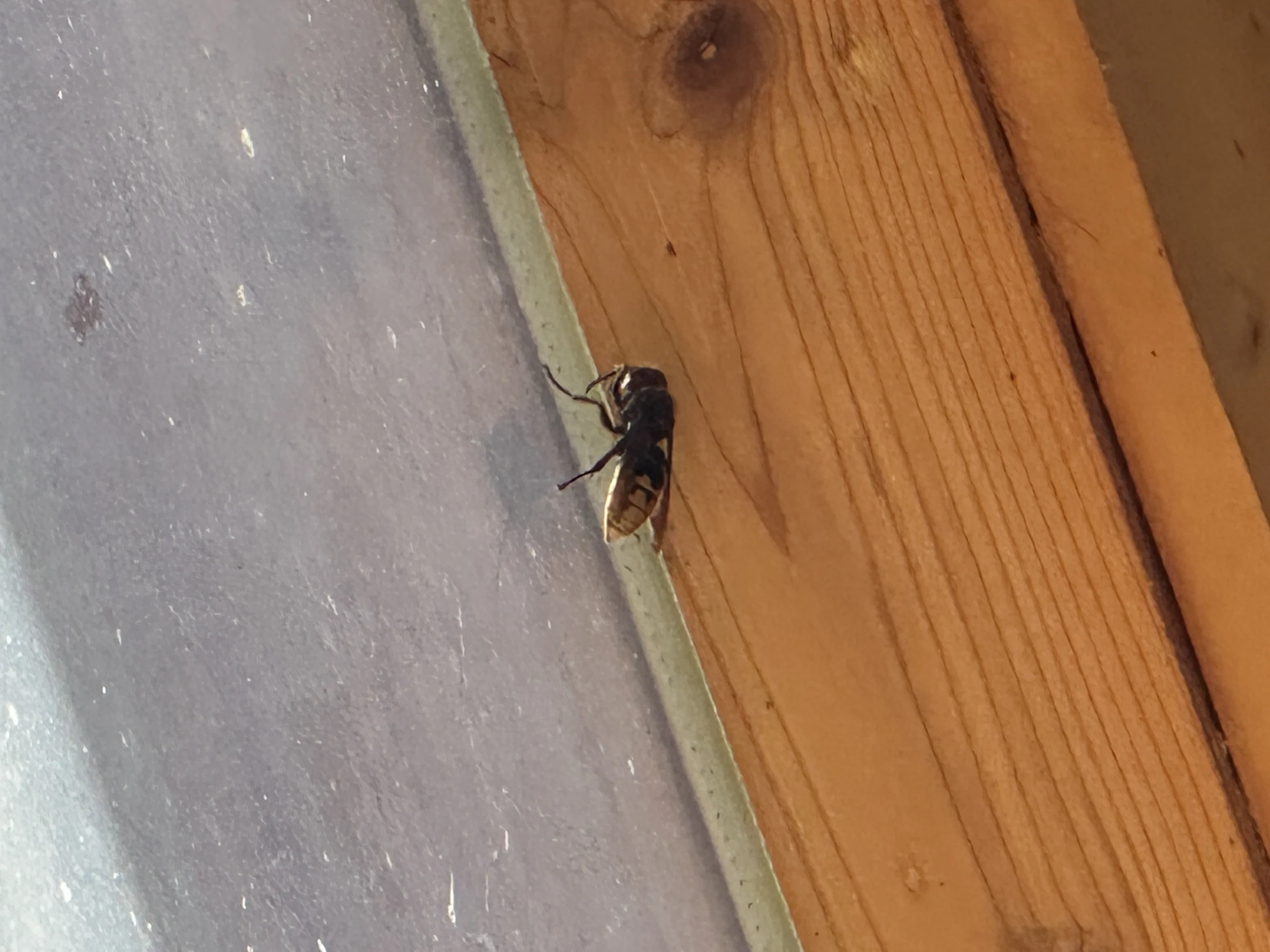
The insect photographed at the window is a wasp, with the closer views favoring European hornet. The carpenter-bee filename does not fit its body and markings.
Wooded neighborhoods and structures with cavities; the filename gives Henderson County.
A sensible first response
Observe without handling or blocking a flight route. A nest near a frequently used doorway should be assessed in place by a qualified local professional.
When to look
Filename record: May 28. European hornet queens become active in spring and colonies develop through summer if this identification is confirmed.
Identification
IMG_9053 and IMG_9054 show a dark, elongated wasp silhouette. IMG_9055 and IMG_9056 reveal amber wings, reddish-brown head tones and a yellow abdomen interrupted by dark markings. There is no carpenter bee’s broad, rounded, shiny black abdomen.
Lookalikes & limits
European hornet is the leading candidate, but size is unmeasured and the dorsal abdominal pattern is only partly visible. Other social wasps must be excluded. The photographs do not demonstrate a nest.
In the garden
A predatory wasp that can capture other insects. It is not a carpenter bee and should not be credited with wood-excavating bee behavior.
LOOK CLOSELY
Two views, a closer look.
Place two photographs beside one another. Compare the overall plant with leaves, flowers, or bark when those views are available. Captions identify what each photograph actually shows. Images are not at the same scale; species references may show different cultivars.