
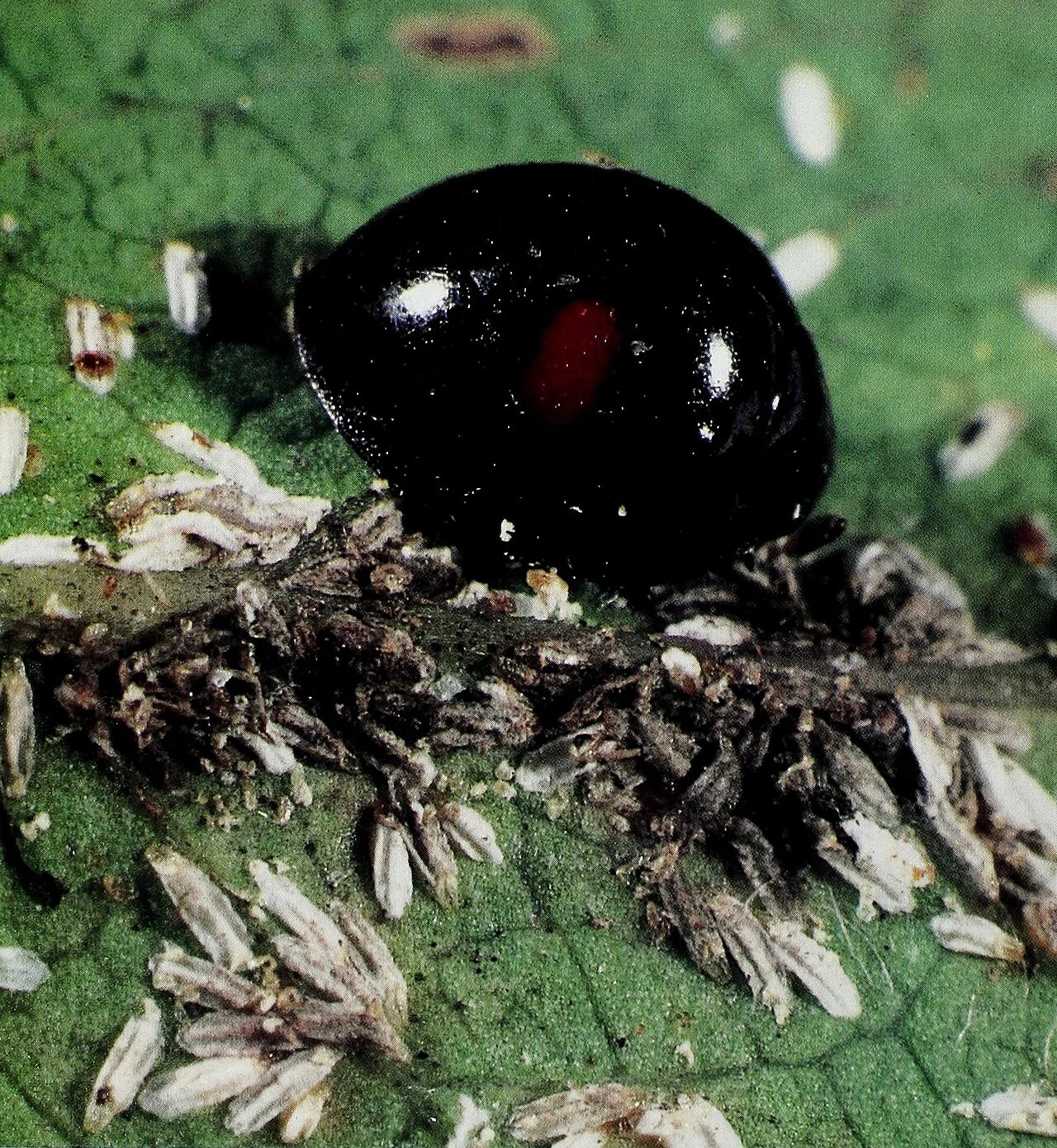


In the landscape.
Plants & places
Euonymus, including Japanese euonymus and wintercreeper.
Recognize the damage
Yellow leaf spotting, thinning foliage, twig dieback, and decline under heavy infestations.
Before you act
Inspect undersides and stems with a hand lens; check beneath covers and watch for tiny mobile crawlers.
A sensible first response
Remove badly infested portions where practical and reduce plant stress. Confirm crawler activity to time any treatment; consider replacing repeatedly failing plants with suitable alternatives.
When to look
Covers persist year-round; crawler emergence recurs during the growing season.
In Western North Carolina
Relevant in WNC ornamental beds; old empty covers can remain after the insects have died.
Identification, lookalikes & further notes
Identification
Male covers are narrow and white; female armor is darker and oyster-shaped on stems and leaves.
Lookalikes & limits
Other scales and fungal spots occur on euonymus. Armored scale itself does not produce honeydew.
In the garden
Yellow leaf spotting, thinning foliage, twig dieback, and decline under heavy infestations.
What would help next
Record the host plant, date, fresh damage, and a clear photograph of the animal or insect. A damage match narrows the search; it does not establish an identification.