Wildlife & landscape pests · Western North Carolina field companion
Eastern cottontail
Sylvilagus floridanus
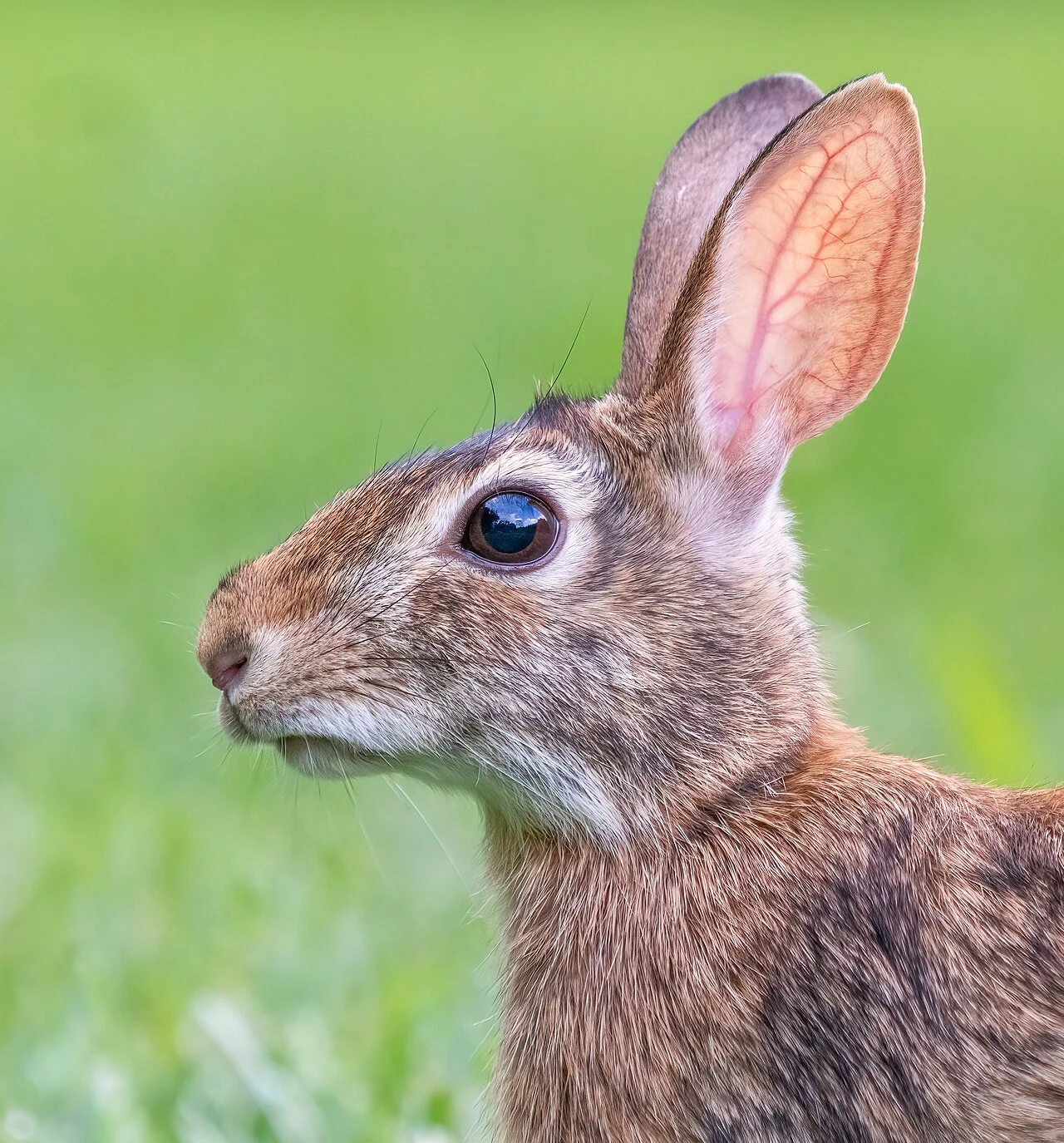
Eastern cottontail · head and earsRhododendrites ↗ · CC BY-SA 4.0Photo contextA reference portrait, not evidence of which animal damaged a particular planting.
A low, neatly clipped stem may be the calling card of a rabbit.
Tender herbaceous growth, young shoots, and bark during lean periods.
Recognize the damage
Clean low cuts and nibbling; young woody stems may lose bark near the ground.
Before you act
Inspect fresh cuts and nearby cover, then compare with pellets or direct observations before assigning the damage.
A sensible first response
Protect seedlings and young stems with suitable mesh exclusion. Check fence gaps and guards regularly, allowing space for growth.
When to look
Year-round; bark feeding is particularly relevant when other food is limited.
In Western North Carolina
Native wildlife that often uses brushy edges near gardens; protect vulnerable plants rather than assuming every rabbit needs removal.
Identification, lookalikes & further notes
Identification
Long ears, a short cotton-white tail, and round pellets help distinguish rabbits from small rodents.
Lookalikes & limits
Deer tend to tear shoots. Voles leave small tooth marks and runways; snow can raise a rabbit's feeding height.
In the garden
Clean low cuts and nibbling; young woody stems may lose bark near the ground.
What would help next
Record the host plant, date, fresh damage, and a clear photograph of the animal or insect. A damage match narrows the search; it does not establish an identification.
LOOK CLOSELY
Two views, a closer look.
Place two photographs beside one another. Compare the overall plant with leaves, flowers, or bark when those views are available. Captions identify what each photograph actually shows. Images are not at the same scale; species references may show different cultivars.
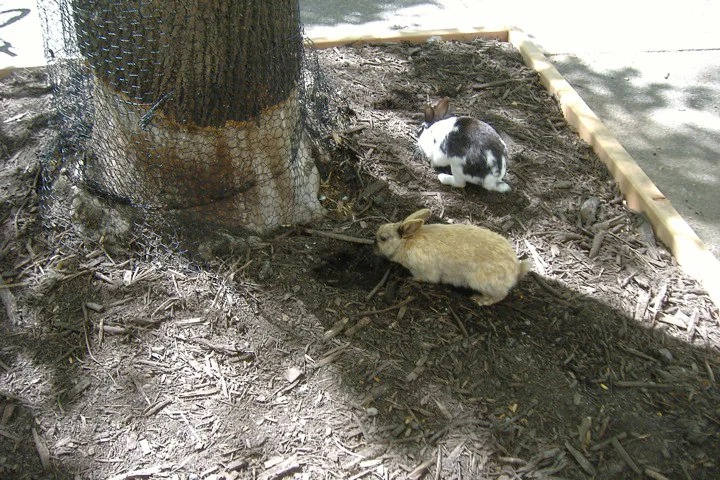
Eastern cottontail · head and earsRhododendrites ↗ · CC BY-SA 4.0Photo contextA reference portrait, not evidence of which animal damaged a particular planting.Rabbits with bark damage at the base of a treeAngilbas ↗ · CC BY-SA 4.0Photo contextThe source depicts domestic rabbits, not an eastern cottontail. Compare low bark gnawing with fresh local signs before identifying the cause. Resized and converted to WebP; full composition retained.
Your margin of the garden.
Saved only in this browser on this device. Export your notes from My garden in the library.

.jpg)
