
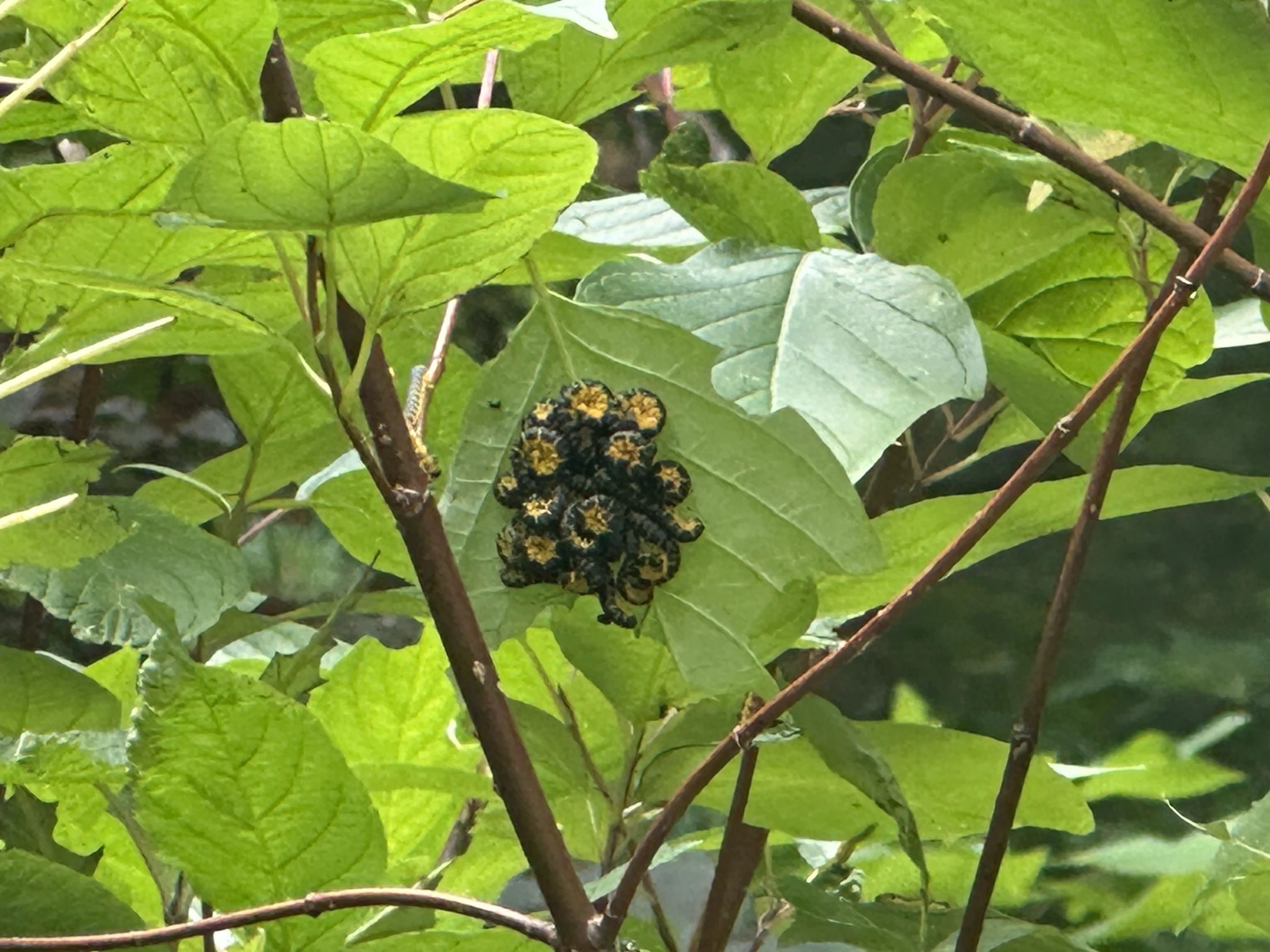
In the landscape.
Plants & places
Likely feeding on or resting beneath a broadleaf shrub/tree leaf; Flat Rock is the filename locality.
A sensible first response
Monitor the plant’s condition. Confirm the host and insect before any treatment; products for moth caterpillars are not automatically effective on sawflies.
When to look
Filename record: June 26. NC Extension records dogwood sawfly adults from May into July; larval timing varies.
Identification
IMG_9511 shows numerous coiled, segmented larvae with yellow undersides, dark backs and dark heads. A stretched larva at the left helps reveal the body form. The leaf has dogwood-like arcuate veins, but the host itself is not verified.
Lookalikes & limits
Dogwood sawfly is probable at genus/group level. The photograph does not resolve a full proleg count or the features separating Macremphytus species. A confirmed host plant and a sharp side view would strengthen the determination.
In the garden
If confirmed, a native dogwood-feeding sawfly group. Colonies can strip individual leaves or branches while also providing prey.