
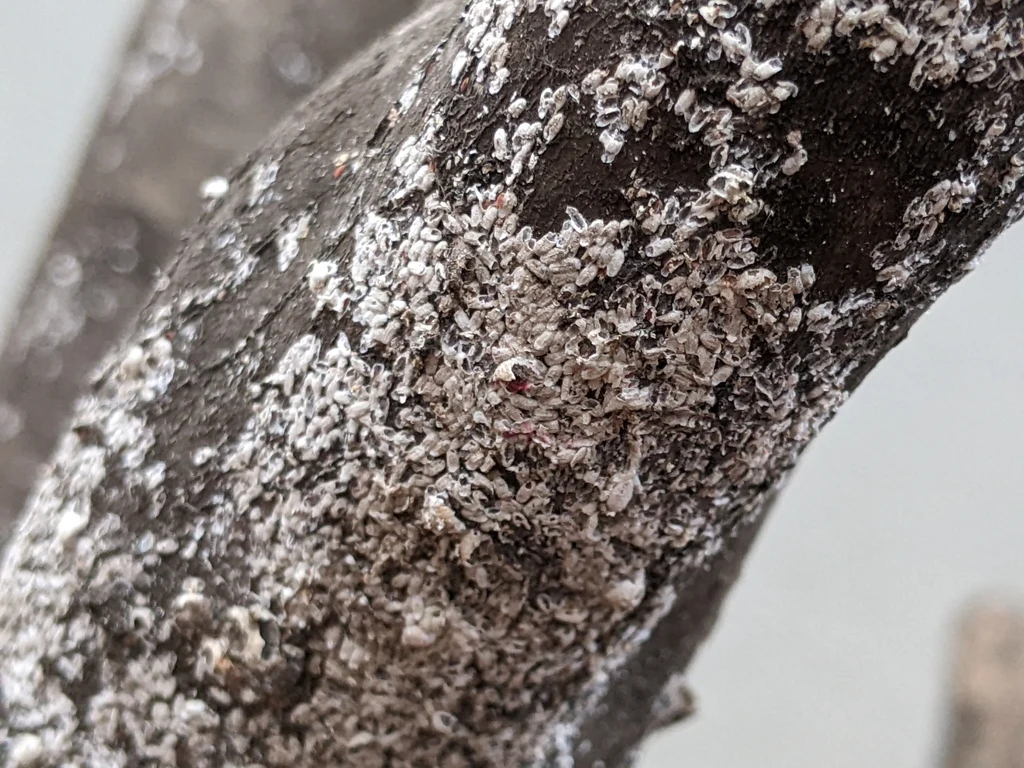
In the landscape.
Plants & places
Primarily crape myrtle in residential landscapes.
Recognize the damage
Honeydew coats bark and nearby surfaces; heavy infestations reduce growth and flowering.
Before you act
Inspect branch junctions and trunks, checking living insects and whether new sooty deposits continue.
A sensible first response
Confirm identity with Extension. Prune limited heavily infested portions when appropriate and preserve predators; specialist guidance can help select a pollinator-aware treatment if needed.
When to look
Several overlapping stages can occur through the growing season.
In Western North Carolina
An expanding regional pest to watch for in WNC plantings; the guide does not imply infestation at every location.
Identification, lookalikes & further notes
Identification
Small white-gray felt scales and fluffy egg sacs occur on trunks and branches.
Lookalikes & limits
Aphids feed on foliage and also cause honeydew. Beneficial lady-beetle larvae may be white and waxy but move actively.
In the garden
Honeydew coats bark and nearby surfaces; heavy infestations reduce growth and flowering.
What would help next
Record the host plant, date, fresh damage, and a clear photograph of the animal or insect. A damage match narrows the search; it does not establish an identification.