
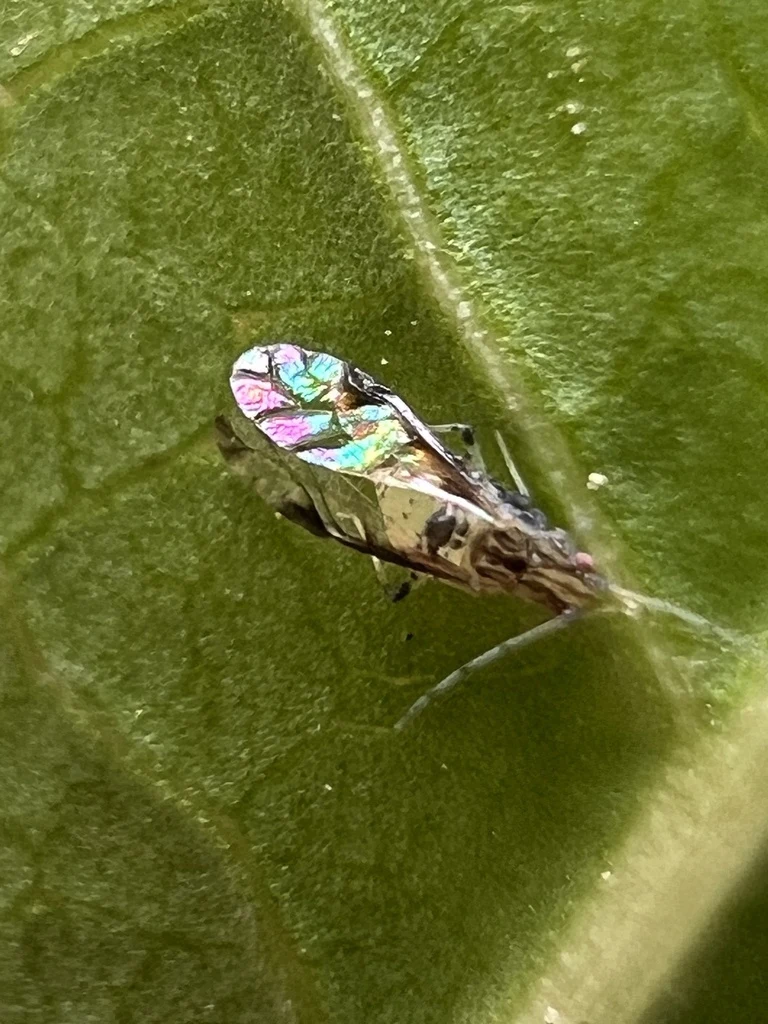
In the landscape.
Plants & places
Crape myrtle.
Recognize the damage
Honeydew and sooty mold accompany yellow spotting or distorted new growth.
Before you act
Look under fresh leaves and then inspect twigs for scale, rather than treating sooty mold as the original cause.
A sensible first response
Encourage lady beetles, lacewings, and other predators. A directed water rinse can reduce small colonies; use plant vigor and continuing injury to judge further action.
When to look
Spring through fall, with rapidly recurring generations.
In Western North Carolina
Relevant where crape myrtles grow well in lower-elevation WNC; older sources may call the aphid Tinocallis kahawaluokalani.
Identification, lookalikes & further notes
Identification
Small pale yellow-green aphids with dark markings feed on leaf undersides; winged forms can occur.
Lookalikes & limits
Crape myrtle bark scale occupies woody surfaces and also produces honeydew; fungal leaf spots are another issue.
In the garden
Honeydew and sooty mold accompany yellow spotting or distorted new growth.
What would help next
Record the host plant, date, fresh damage, and a clear photograph of the animal or insect. A damage match narrows the search; it does not establish an identification.