

In the landscape.
Plants & places
Camellia, yew, Chinese holly, and several other shrubs.
Recognize the damage
Honeydew and sooty mold accompany feeding; heavy populations can reduce plant vigor.
Before you act
Turn leaves over and inspect stems; look for egg sacs, crawlers, and predator activity before taking action.
A sensible first response
Preserve natural enemies and remove small heavily infested portions where practical. Use crawler monitoring and local guidance if populations continue to damage the plant.
When to look
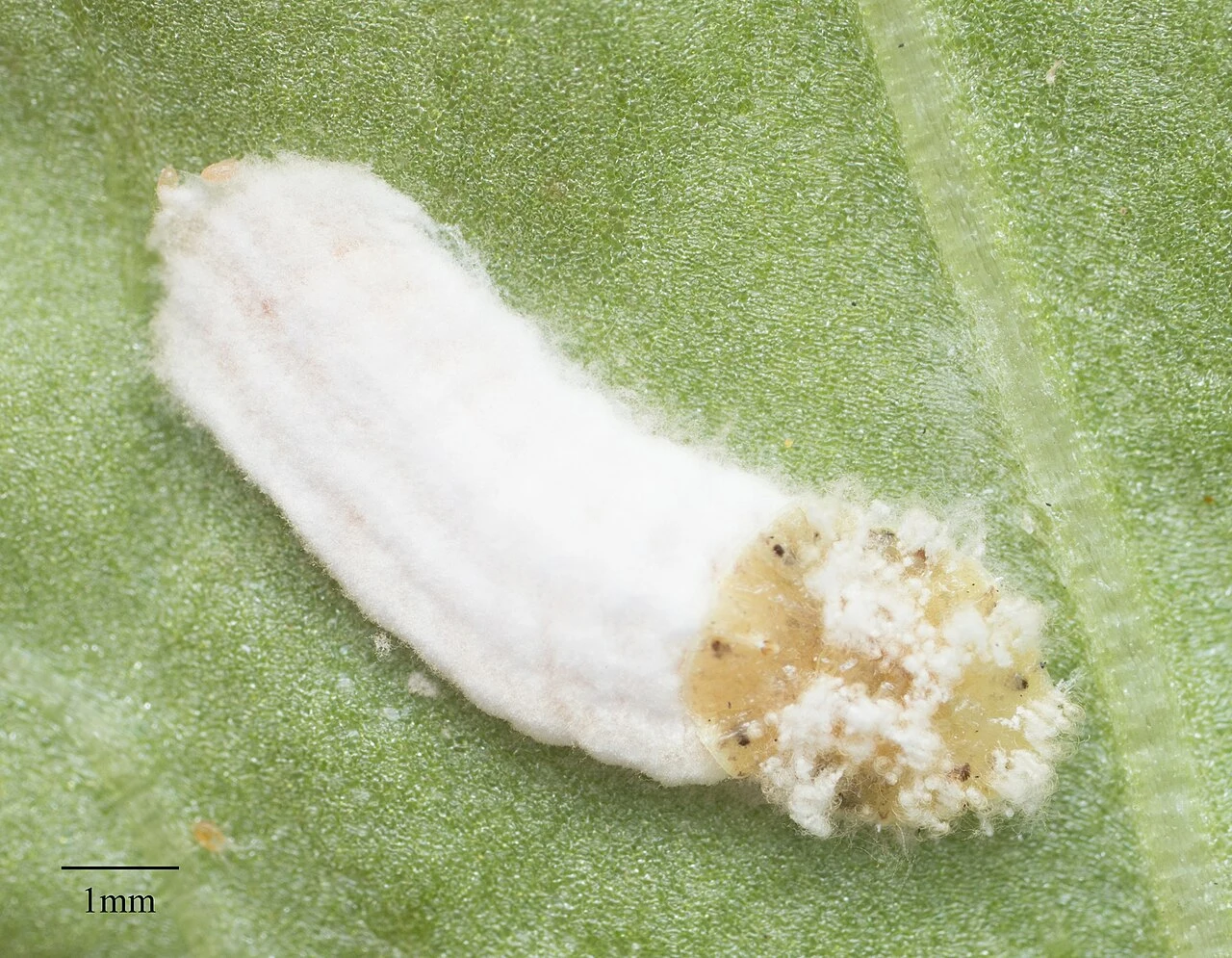
White egg sacs are conspicuous in spring into early summer; timing varies with temperature.
In Western North Carolina
Also called cottony taxus scale; a useful WNC diagnosis on yews as well as camellias.
Identification, lookalikes & further notes
Identification
Tan to brown flattened females produce elongated white cottony egg sacs behind the body.
Lookalikes & limits
Tea scale has small armored covers. Woolly lady-beetle larvae can be beneficial predators among scale colonies.
In the garden
Honeydew and sooty mold accompany feeding; heavy populations can reduce plant vigor.
What would help next
Record the host plant, date, fresh damage, and a clear photograph of the animal or insect. A damage match narrows the search; it does not establish an identification.