Ponds, lakes and slow water across western North Carolina. Overland journeys may connect water bodies or lead to nesting ground.
A sensible first response
Give it room to travel. Keep hands away from its head and never lift a snapping turtle by its tail.
When to look
Photographed in June, when overland movements are unsurprising; the photograph does not establish its sex or purpose.
Identification
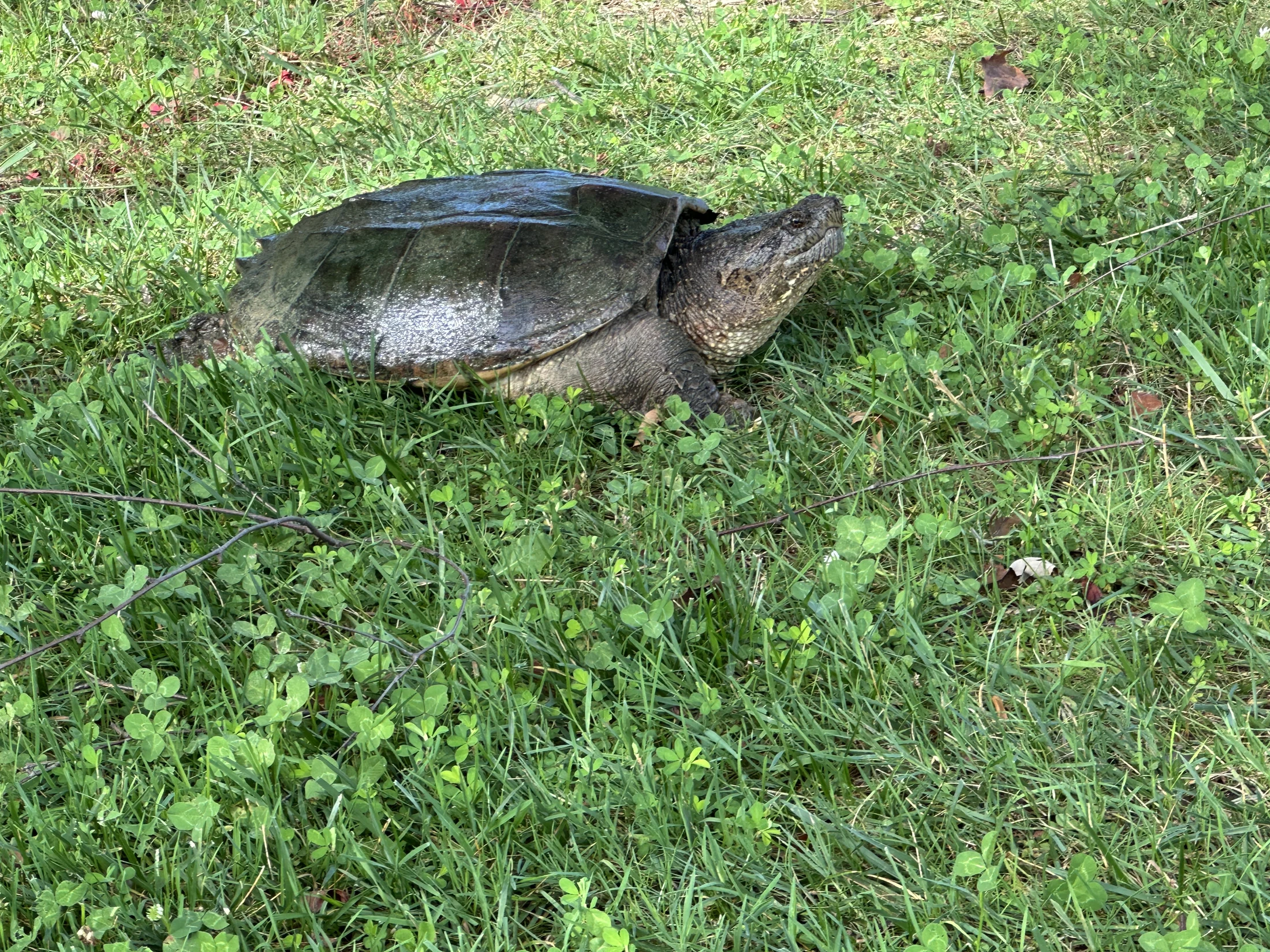
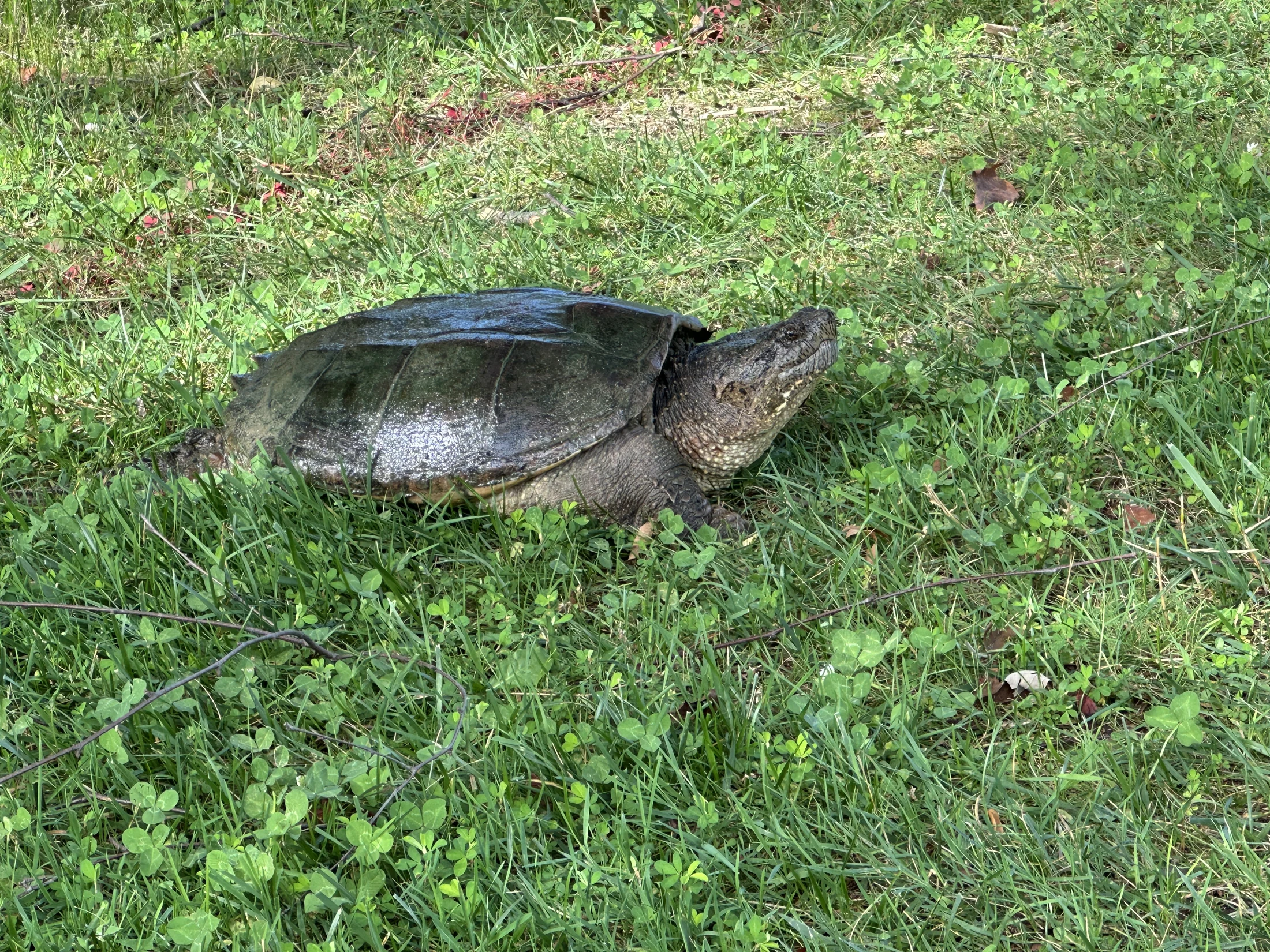
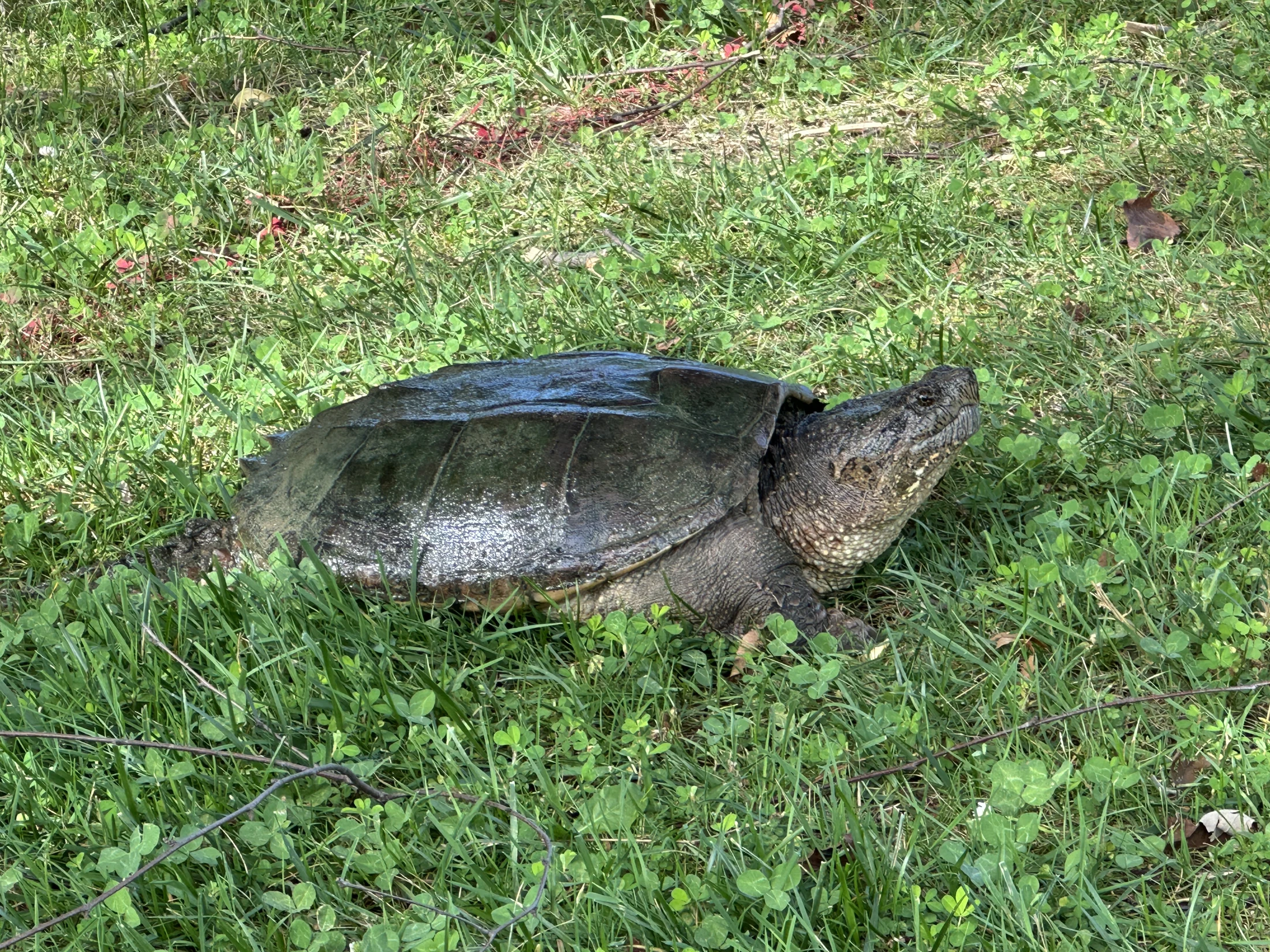
The three views show the same robust turtle with a very large head, heavy rough neck, low dark shell and a long tail extending behind it. That combination is diagnostic of the common snapping turtle in this region.
Lookalikes & limits
Other local pond turtles have a less massive head and much shorter tail. This is not an alligator snapping turtle, a species outside North Carolina's native fauna.
In the garden
An aquatic omnivore and scavenger linked to the garden's wider watershed.
LOOK CLOSELY
Two views, a closer look.
Place two photographs beside one another. Compare the overall plant with leaves, flowers, or bark when those views are available. Captions identify what each photograph actually shows. Images are not at the same scale; species references may show different cultivars.
Common Snapping TurtleHollyCommon Snapping TurtleHollyCommon Snapping TurtleHolly
Your margin of the garden.
Saved only in this browser on this device. Export your notes from My garden in the library.