
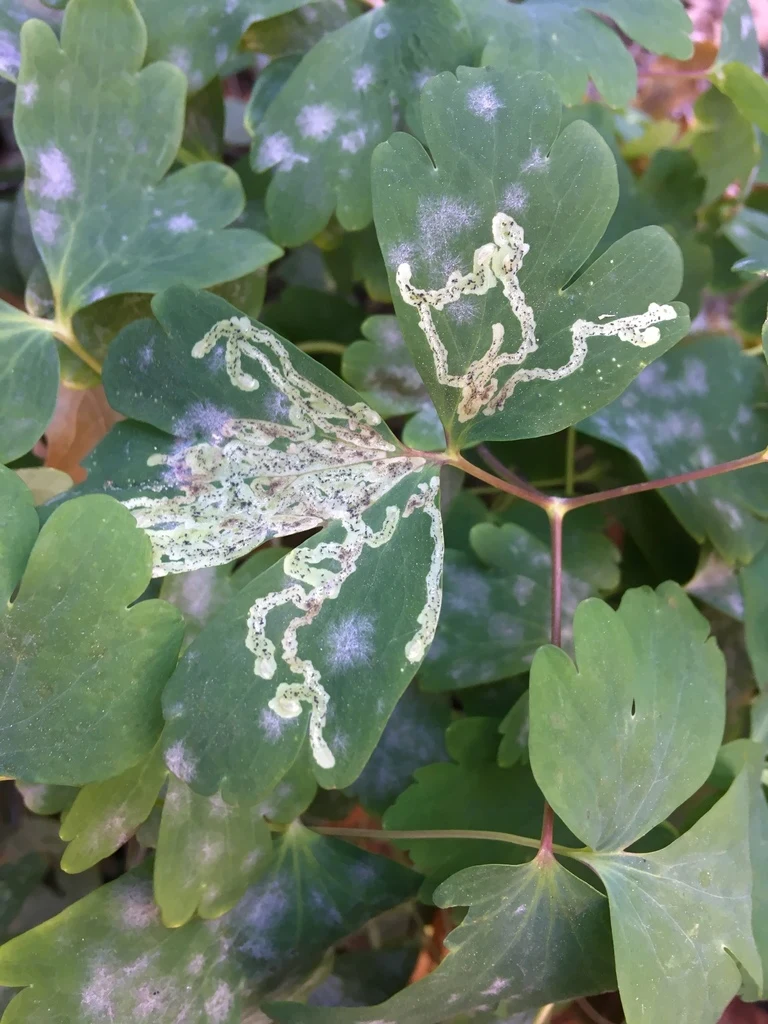
In the landscape.
Plants & places
Columbines; the regional source discusses Phytomyza minuscula.
Recognize the damage
Serpentine mines disfigure foliage while the leaf surface remains largely intact.
Before you act
Hold affected leaves to the light and distinguish fresh occupied trails from dry old mines.
A sensible first response
Pick off a few occupied leaves when practical and tolerate cosmetic injury. Avoid stripping the whole plant merely to remove old empty mines.
When to look
Spring through the growing season, with successive generations possible.
In Western North Carolina
A familiar columbine issue in WNC gardens; host identity and mine structure matter more than fly color.
Identification, lookalikes & further notes
Identification
The larva is a small maggot within a fresh mine; adults are tiny dark flies, seldom noticed.
Lookalikes & limits
Other columbine miners make different mines. A mine photograph supports the damage type more readily than an exact species.
In the garden
Serpentine mines disfigure foliage while the leaf surface remains largely intact.
What would help next
Record the host plant, date, fresh damage, and a clear photograph of the animal or insect. A damage match narrows the search; it does not establish an identification.