
.jpg)
In the landscape.
Plants & places
Southern chinch bugs favor St. Augustinegrass; other Blissus species use other grasses.
Recognize the damage
Yellowing progresses to irregular brown turf, often in hot, sunny sites.
Before you act
Part the canopy at living edges of a patch and look for several life stages; identify both bug and turfgrass.
A sensible first response
Reduce avoidable turf stress and confirm a damaging population before treatment. Preserve predatory bugs; local turf advice is more useful than a generic southern-lawn schedule.
When to look
Warm-weather activity; injury can intensify during hot, dry periods.
In Western North Carolina
Included for lower-elevation warm-season lawns. Southern chinch bug is not the usual explanation for damage in a mountain fescue lawn.
Identification, lookalikes & further notes
Identification
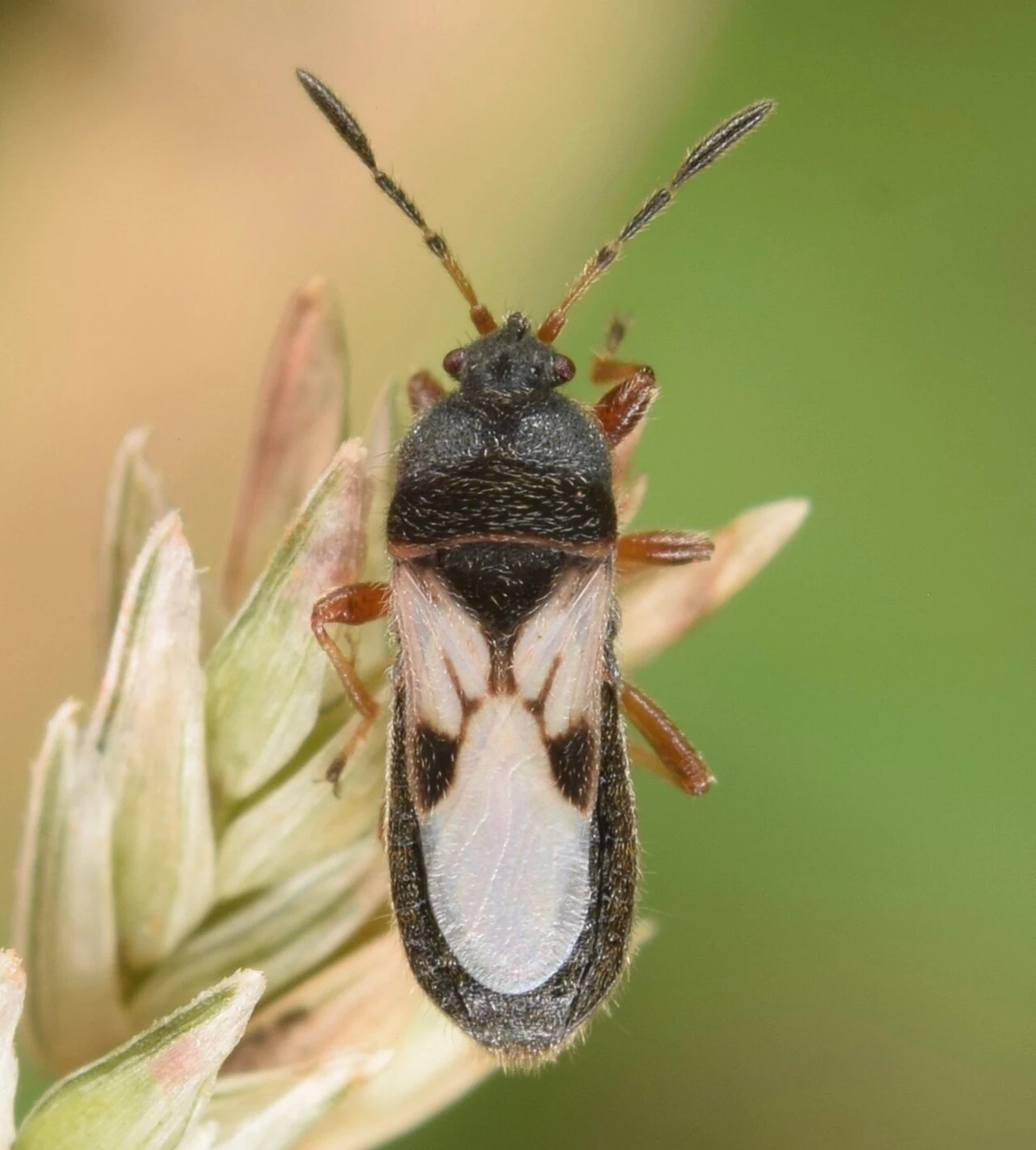
Adults are small dark bugs with pale wing areas; young southern chinch bugs are orange-red with a pale band.
Lookalikes & limits
Beneficial big-eyed bugs have conspicuously broad heads and prominent eyes. Drought and disease need ruling out.
In the garden
Yellowing progresses to irregular brown turf, often in hot, sunny sites.
What would help next
Record the host plant, date, fresh damage, and a clear photograph of the animal or insect. A damage match narrows the search; it does not establish an identification.