Wildlife & landscape pests · Western North Carolina field companion
Boxwood psyllid
Cacopsylla buxi · also Psylla buxi
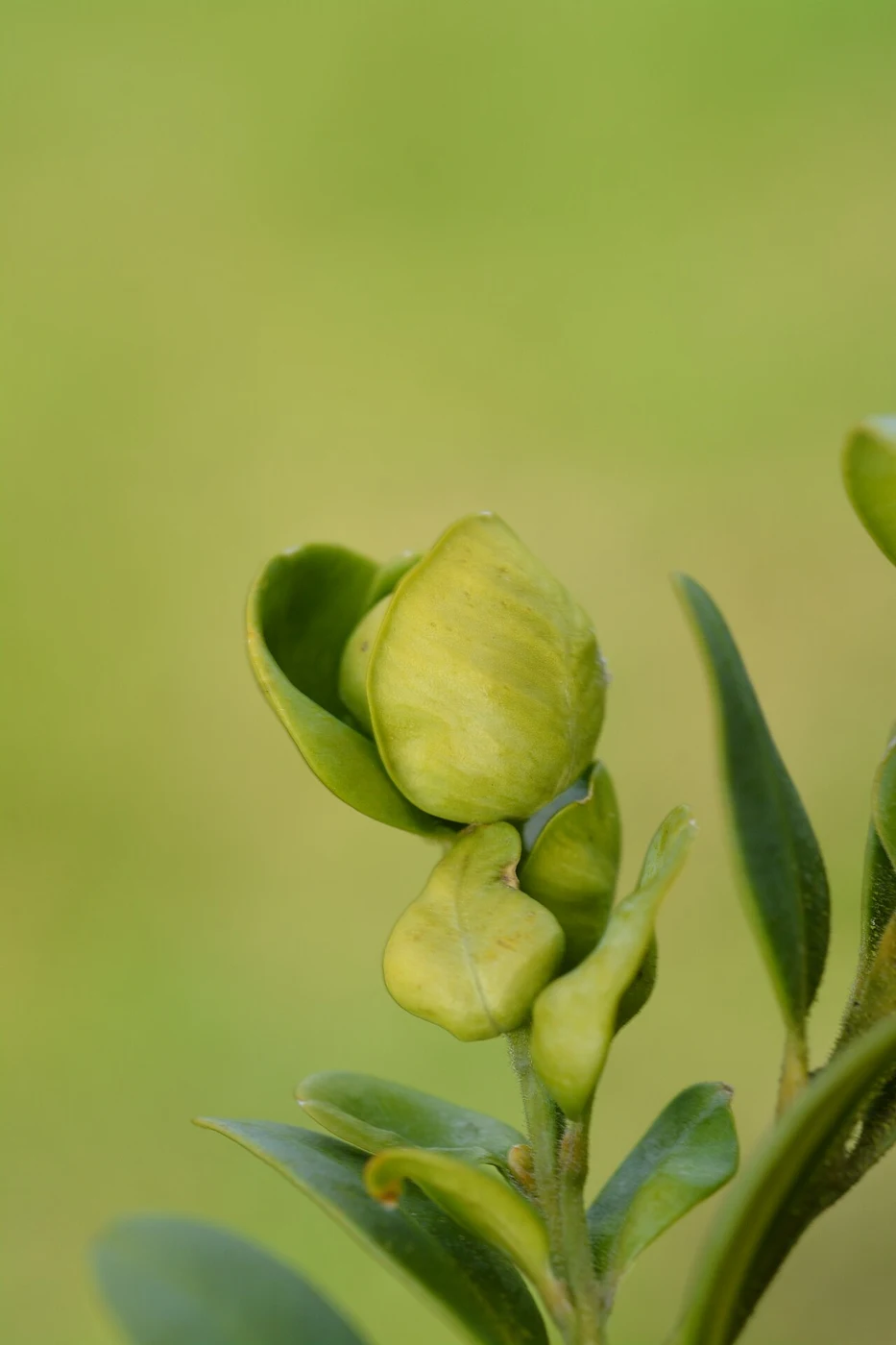
Boxwood psyllid injury · cupped terminal leavesGilles San Martin ↗ · CC BY-SA 4.0Photo contextOld cups can persist after the insects leave. Open fresh tips gently to check for nymphs.
Cupped clusters at a boxwood tip may shelter a small sap feeder.
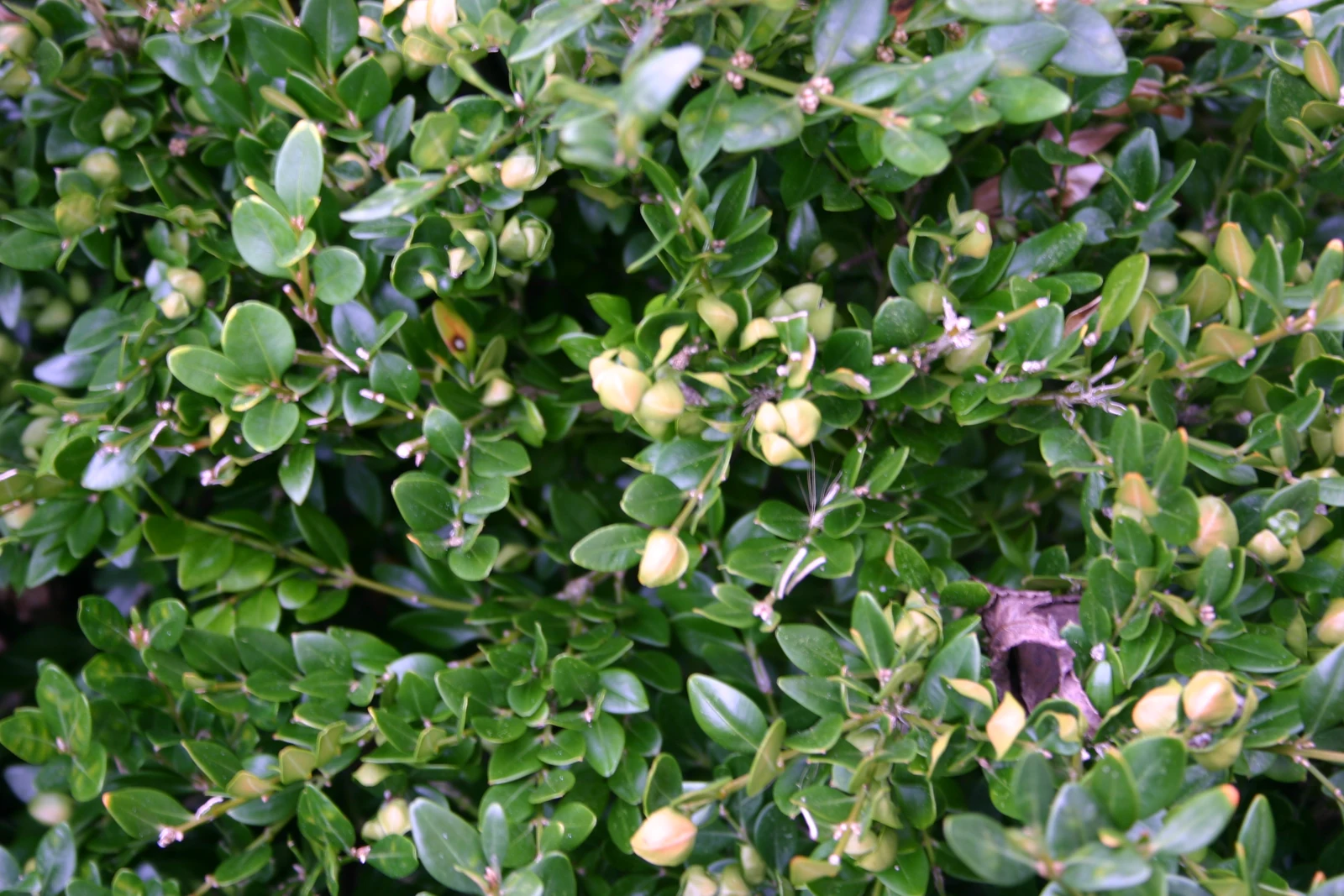
New terminal leaves curl into cups; shoot growth can be slightly stunted.
Before you act
Gently open curled new tips in spring and check for active nymphs and wax.
A sensible first response
Usually tolerate limited injury or prune a few affected tips. Check for live nymphs before treatment; old distorted leaves will not flatten after insects disappear.
When to look
One early-season generation; damage is often outgrown by midsummer.
In Western North Carolina
A useful WNC boxwood lookalike; usually less consequential than persistent leafminer injury or disease.
Identification, lookalikes & further notes
Identification
Pale-green nymphs produce white wax inside curled growth; adults resemble tiny green leafhoppers.
Lookalikes & limits
Leafminer makes blisters within leaves, while mites cause stippling. Old cups can remain after psyllids are gone.
In the garden
New terminal leaves curl into cups; shoot growth can be slightly stunted.
What would help next
Record the host plant, date, fresh damage, and a clear photograph of the animal or insect. A damage match narrows the search; it does not establish an identification.
LOOK CLOSELY
Two views, a closer look.
Place two photographs beside one another. Compare the overall plant with leaves, flowers, or bark when those views are available. Captions identify what each photograph actually shows. Images are not at the same scale; species references may show different cultivars.
Boxwood psyllid injury · cupped terminal leavesGilles San Martin ↗ · CC BY-SA 4.0Photo contextOld cups can persist after the insects leave. Open fresh tips gently to check for nymphs.Cupped terminal boxwood leaves attributed to boxwood psyllidUser:SB_Johnny ↗ · CC BY-SA 3.0Photo contextThe photographer identifies this as psyllid injury to boxwood. Similar leaf distortion can have other causes; look for the insect when checking a local plant. Resized and converted to WebP; full composition retained.
Your margin of the garden.
Saved only in this browser on this device. Export your notes from My garden in the library.