
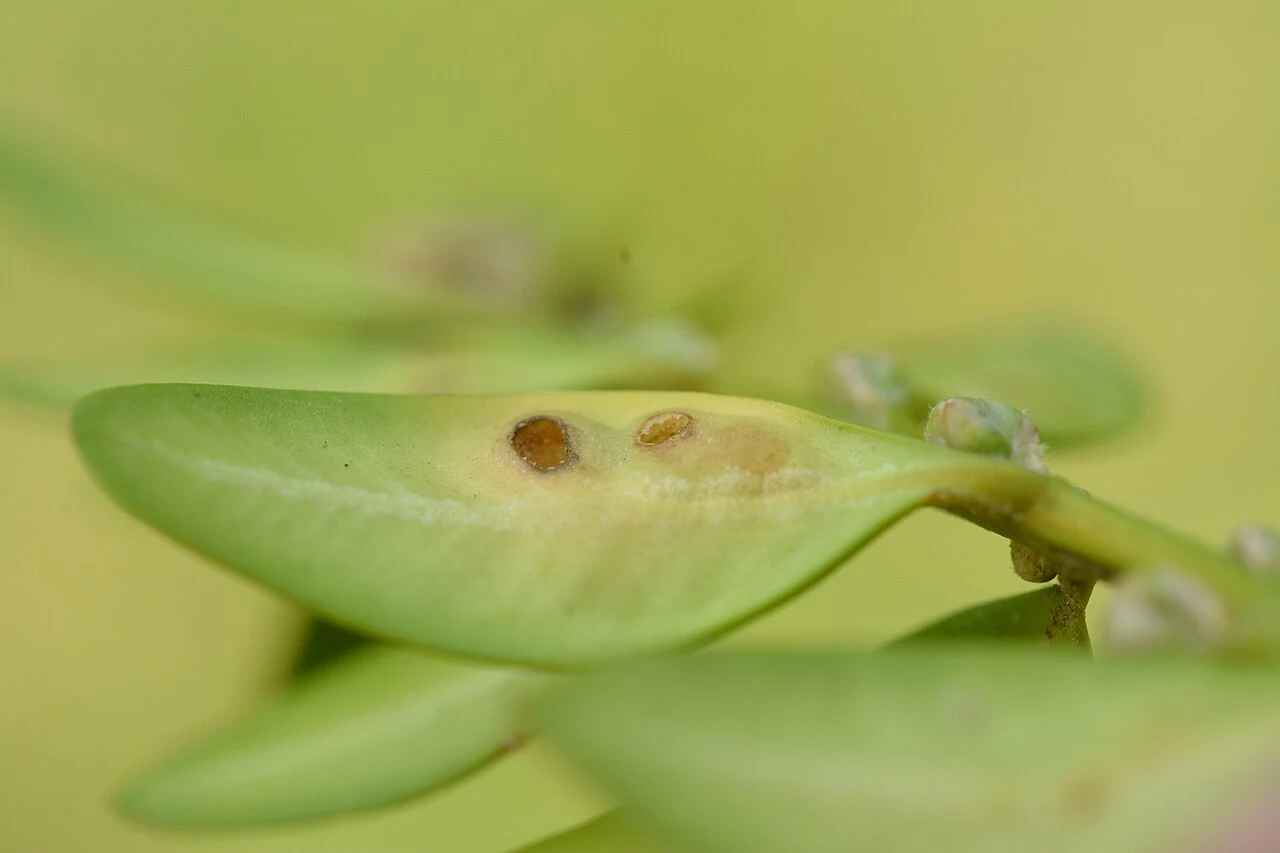

In the landscape.
Plants & places
Boxwoods; susceptibility varies among species and cultivars.
Recognize the damage
Blistered undersides, yellow-orange discoloration, and thinning or premature leaf loss in heavy infestations.
Before you act
Hold a blistered leaf to light or gently open one to look for larvae; examine new growth for small adult flies.
A sensible first response
Remove limited infested foliage before adult emergence where practical. Consider less-susceptible cultivars for replacement and seek diagnosis for repeated severe damage.
When to look
Larvae overwinter in leaves; adults emerge around spring growth.
In Western North Carolina
NC guidance identifies leafminer as especially relevant in the Mountains and Piedmont; older sources use Monarthropalpus buxi.
Identification, lookalikes & further notes
Identification
Small yellowish maggots live inside mined leaves; adults are delicate orange flies.
Lookalikes & limits
Boxwood psyllids cup young tips; mites stipple leaves. Blight and root problems need separate diagnosis.
In the garden
Blistered undersides, yellow-orange discoloration, and thinning or premature leaf loss in heavy infestations.
What would help next
Record the host plant, date, fresh damage, and a clear photograph of the animal or insect. A damage match narrows the search; it does not establish an identification.