
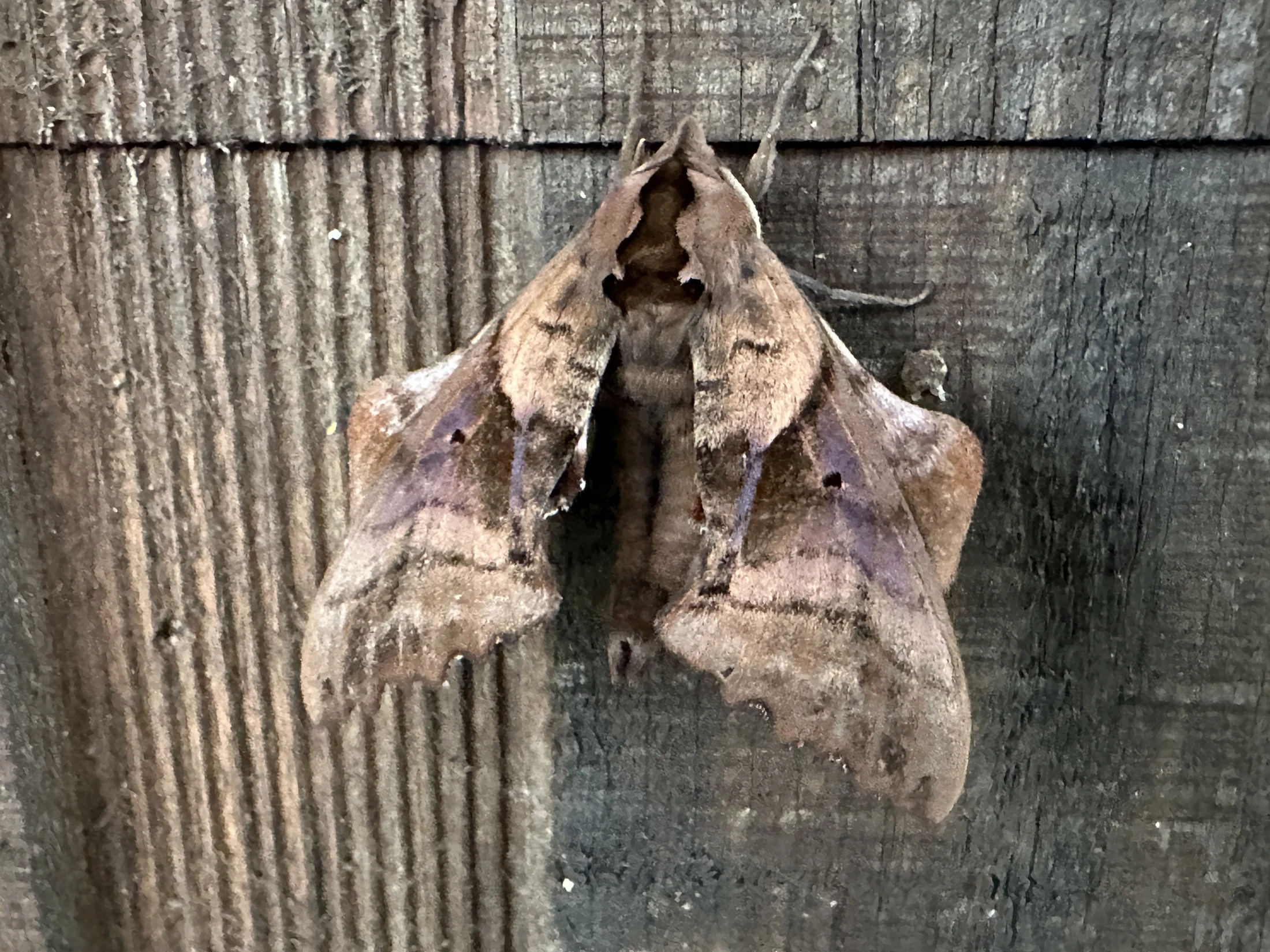
In the landscape.
Plants & places
Deciduous woods and nearby gardens. If confirmed, larvae can use several native hardwoods.
A sensible first response
Protect native host trees and let the moth remain undisturbed. An opportunistic natural hindwing view would improve the identification.
When to look
Filename record: July 26, Henderson County. The reference gives May–September for much of the range; high-elevation timing can differ.
Identification
IMG_9740 shows a robust sphinx body, strongly scalloped outer forewing edges, brown and mauve shading, and a dark thoracic center. The forewing shape supports Paonias excaecata.
Lookalikes & limits
The pink hindwing patch and blue eyespot are concealed. Other Paonias and related sphinx moths should be excluded with an additional view; do not force the wings open.
In the garden
If the identification is confirmed, adults do not feed. Its ecological connection is through tree-feeding caterpillars and the woodland food web.