Wildlife & landscape pests · Western North Carolina field companion
Black vine weevil
Otiorhynchus sulcatus
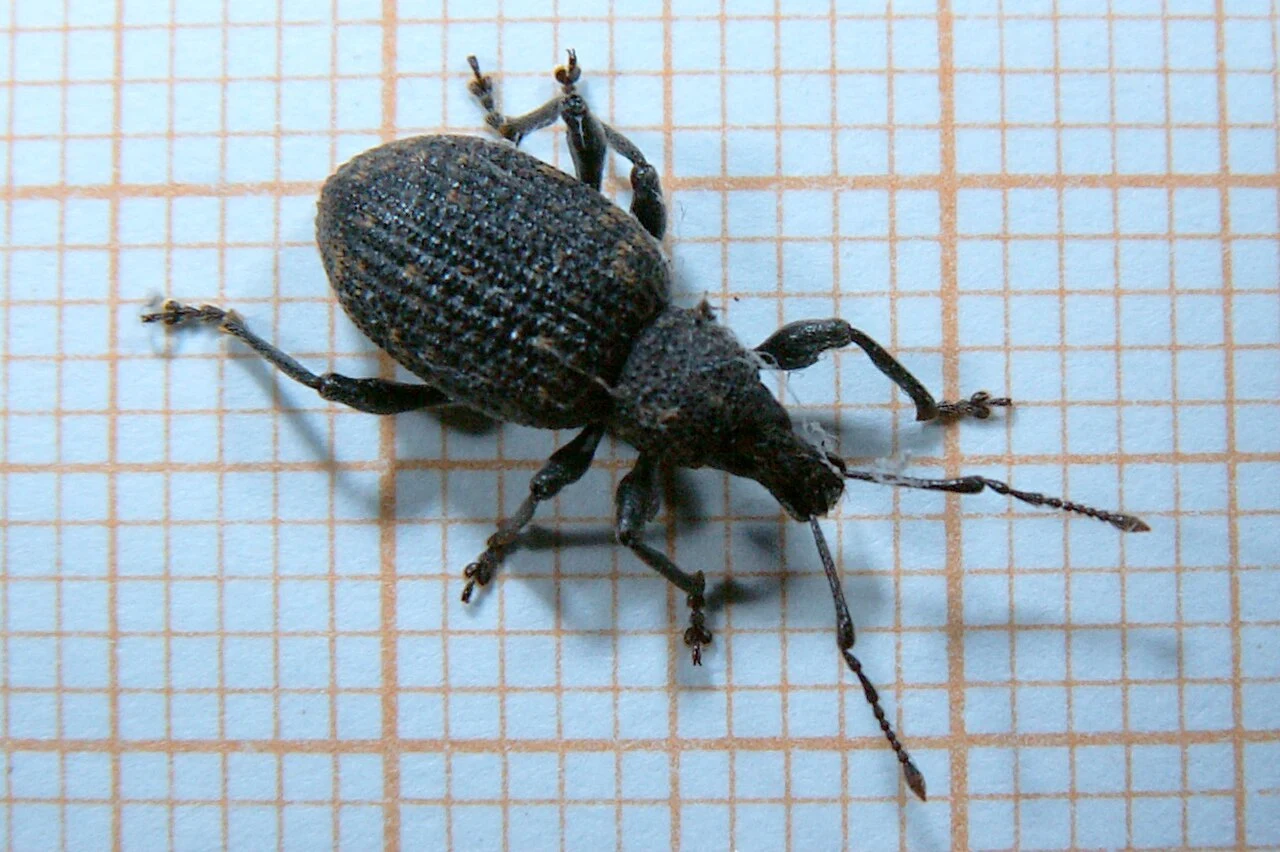
Black vine weevil · broad snout and textured wing coversOpuntia ↗ · CC BY-SA 3.0Photo contextThe notching adult is shown; its pale larvae feed around roots.
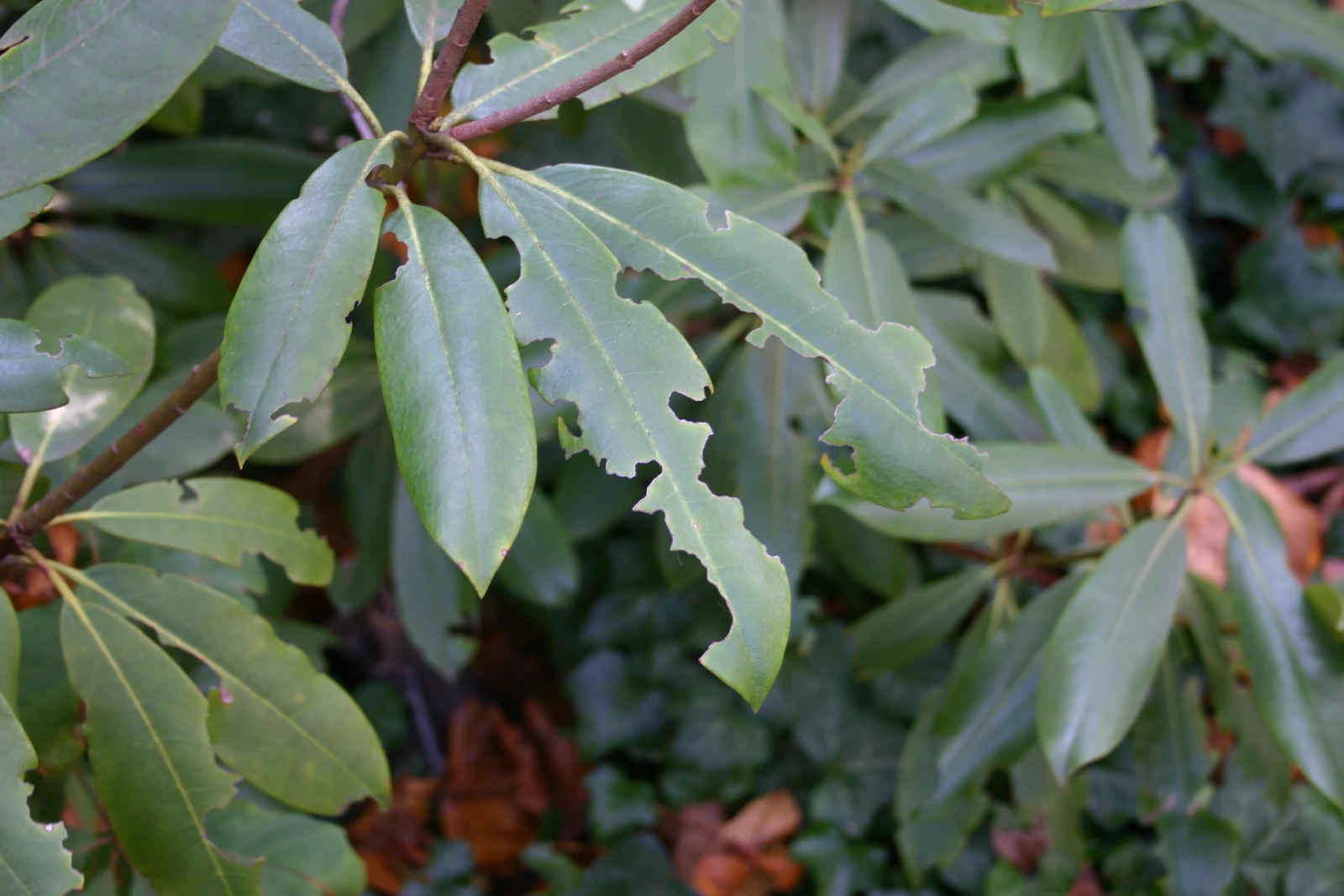
Notched leaf edges may be a warning that larvae are feeding out of sight around roots.
Rhododendron, yew, heuchera, and many nursery or landscape plants.
Recognize the damage
Adults notch margins; root-feeding larvae can weaken plants and cause wilting or collapse.
Before you act
Inspect foliage after dark and examine roots of failing plants, especially recently purchased containers.
A sensible first response
Inspect incoming plants and isolate suspect stock. Confirm larvae before choosing a soil treatment; biological controls require appropriate conditions and correct timing.
When to look
Adult notching during the growing season; larvae persist around roots between adult generations.
In Western North Carolina
Relevant to WNC nursery stock, containers, and established ornamental beds; adult damage can be less serious than root injury.
Identification, lookalikes & further notes
Identification
Dark, broad-snouted adult weevils feed at night; larvae are pale, curved, and legless with brown heads.
Lookalikes & limits
Other root weevils also notch leaves. Leafcutter bees make smoother round cuts; drought and root rot can cause wilt.
In the garden
Adults notch margins; root-feeding larvae can weaken plants and cause wilting or collapse.
What would help next
Record the host plant, date, fresh damage, and a clear photograph of the animal or insect. A damage match narrows the search; it does not establish an identification.
LOOK CLOSELY
Two views, a closer look.
Place two photographs beside one another. Compare the overall plant with leaves, flowers, or bark when those views are available. Captions identify what each photograph actually shows. Images are not at the same scale; species references may show different cultivars.
Black vine weevil · broad snout and textured wing coversOpuntia ↗ · CC BY-SA 3.0Photo contextThe notching adult is shown; its pale larvae feed around roots.Rhododendron leaf edges notched by black vine weevilUser:SB_Johnny ↗ · CC BY-SA 3.0Photo contextThe source identifies this as black vine weevil injury. Edge notching alone is not enough to identify the insect at a local site. Resized and converted to WebP; full composition retained.
Your margin of the garden.
Saved only in this browser on this device. Export your notes from My garden in the library.