
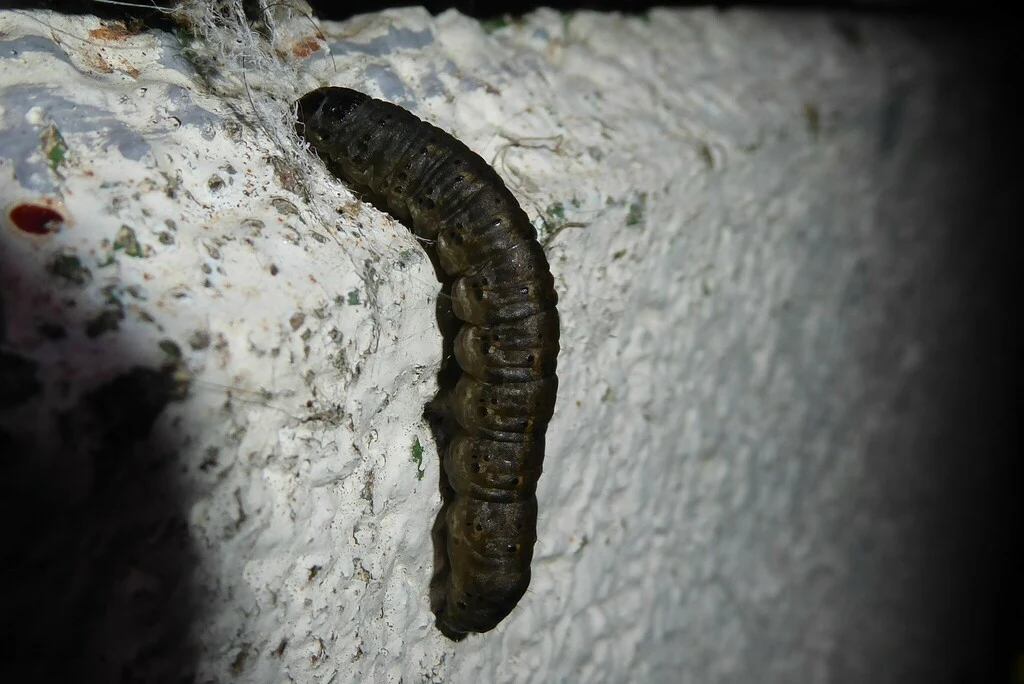
In the landscape.
Plants & places
Bentgrass and annual bluegrass; occasionally perennial ryegrass.
Recognize the damage
Clipped blades and small damaged spots around feeding shelters.
Before you act
Examine damaged margins and shallow shelters after dusk; submit a caterpillar for identification when needed.
A sensible first response
First establish that cutworms are feeding. Correct mowing and irrigation stress; use current turf guidance if numbers and continuing damage justify treatment.
When to look
Repeated activity during the growing season, with timing influenced by weather.
In Western North Carolina
Primarily a golf-green and short-turf issue; black cutworm is rarely a major home-lawn pest, unlike some other cutworms.
Identification, lookalikes & further notes
Identification
Stout, smooth caterpillars range from gray to nearly black and often curl tightly when disturbed.
Lookalikes & limits
Other cutworm species can damage home lawns and seedlings. Curling alone does not identify black cutworm.
In the garden
Clipped blades and small damaged spots around feeding shelters.
What would help next
Record the host plant, date, fresh damage, and a clear photograph of the animal or insect. A damage match narrows the search; it does not establish an identification.