
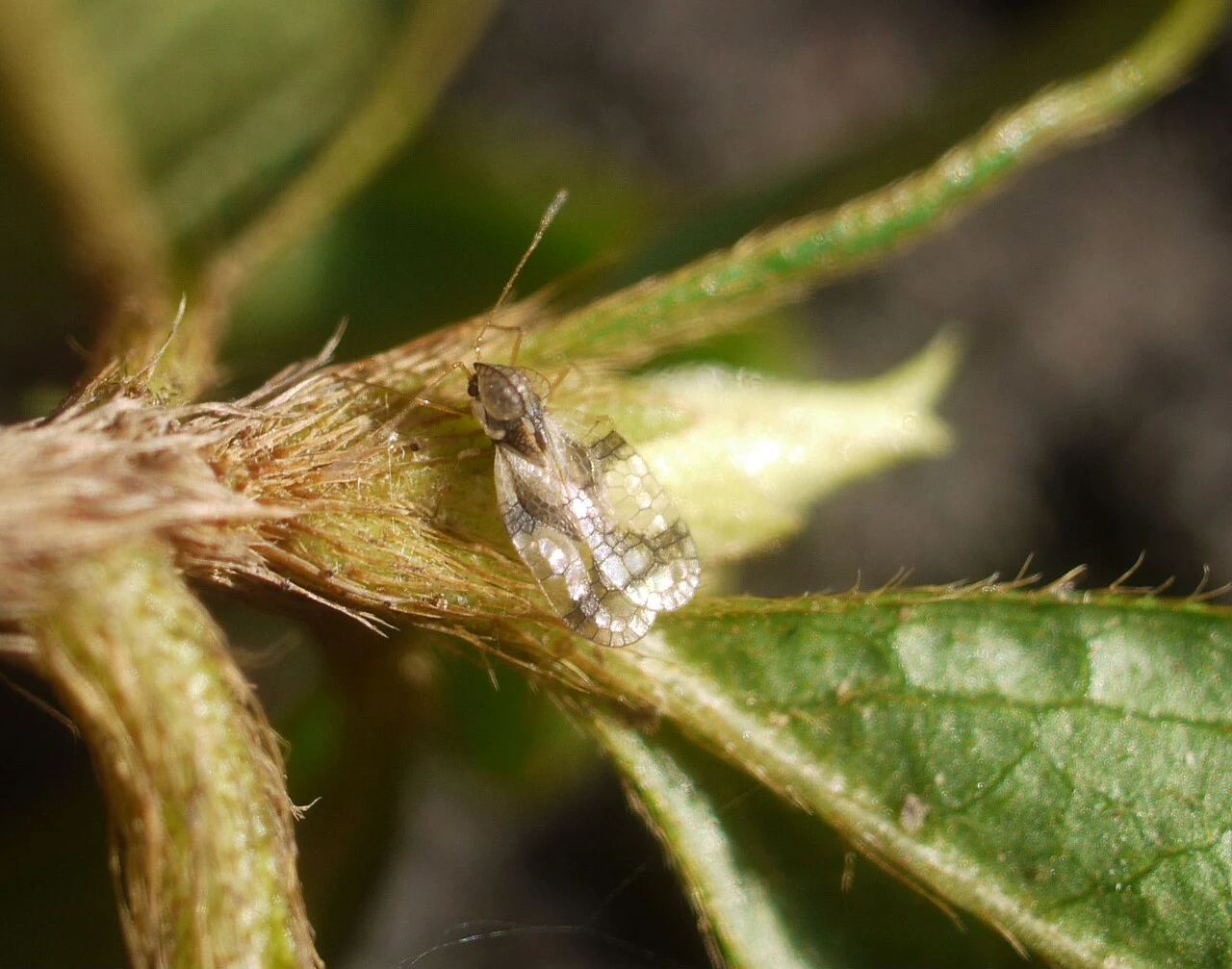

In the landscape.
Plants & places
Especially evergreen azaleas; some deciduous azaleas and mountain laurel.
Recognize the damage
Pale stippling develops into bronzed or bleached leaves; dark varnish-like waste appears underneath.
Before you act
Turn over several freshly stippled leaves and inspect with a hand lens, starting early in the season.
A sensible first response
Use a suitable site and reduce drought stress. Preserve predators and monitor early nymphs; any targeted treatment must reach leaf undersides.
When to look
Check from spring onward; multiple generations can accumulate through summer.
In Western North Carolina
A particularly useful diagnosis for azaleas in WNC landscapes, especially stressed plants in exposed sites.
Identification, lookalikes & further notes
Identification
Small adults have clear, lace-patterned wings; darker spiny nymphs cluster on leaf undersides.
Lookalikes & limits
Spider mites can also stipple leaves but lack lace wings; leaf scorch alone lacks the insects and dark waste.
In the garden
Pale stippling develops into bronzed or bleached leaves; dark varnish-like waste appears underneath.
What would help next
Record the host plant, date, fresh damage, and a clear photograph of the animal or insect. A damage match narrows the search; it does not establish an identification.