
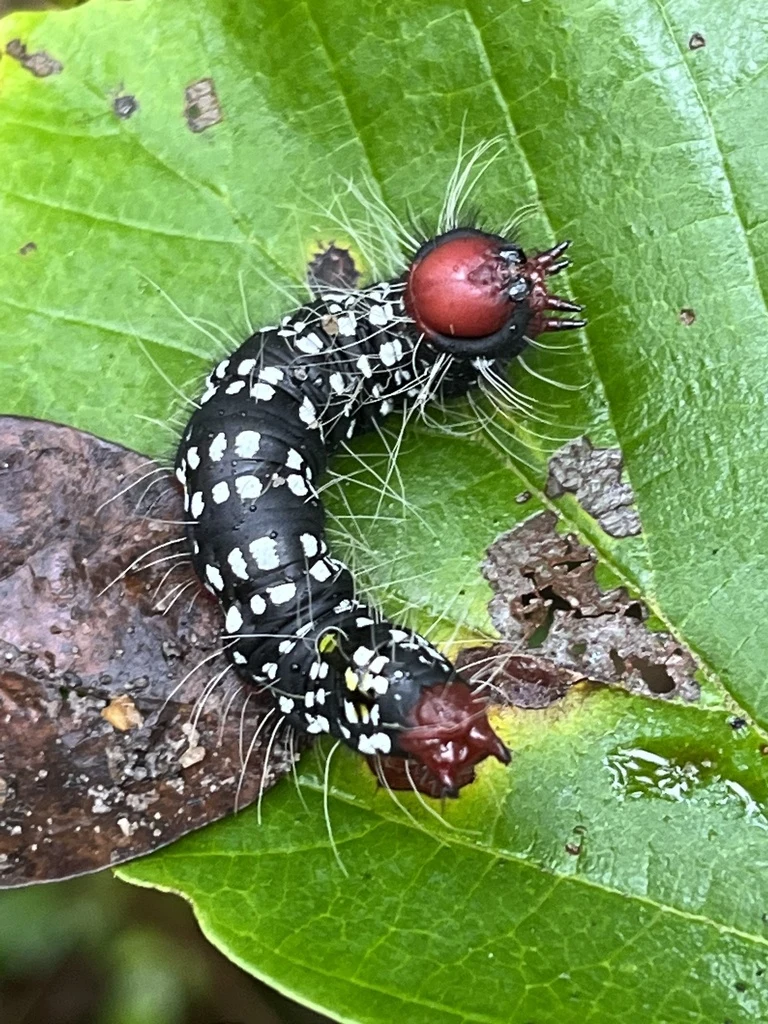
In the landscape.
Plants & places
Primarily azaleas; occasionally other shrubs and fruiting plants.
Recognize the damage
Grouped larvae consume leaves, sometimes leaving bare branches surprisingly quickly.
Before you act
Inspect azalea branches from below and check adjacent shoots; look for small colonies before leaves disappear.
A sensible first response
Hand-remove reachable colonies when damage matters. Recheck nearby branches, and judge urgency by plant size, stress, and remaining foliage.
When to look
Usually late summer into early fall; one generation per year in NC.
In Western North Carolina
Sometimes called Labor Day worms; local weather and elevation shift the exact timing.
Identification, lookalikes & further notes
Identification
Mature larvae are dark with yellow lengthwise markings and reddish heads; disturbed larvae raise both ends.
Lookalikes & limits
Other Datana caterpillars resemble them; combine host, head color, and markings rather than relying on the pose.
In the garden
Grouped larvae consume leaves, sometimes leaving bare branches surprisingly quickly.
What would help next
Record the host plant, date, fresh damage, and a clear photograph of the animal or insect. A damage match narrows the search; it does not establish an identification.