
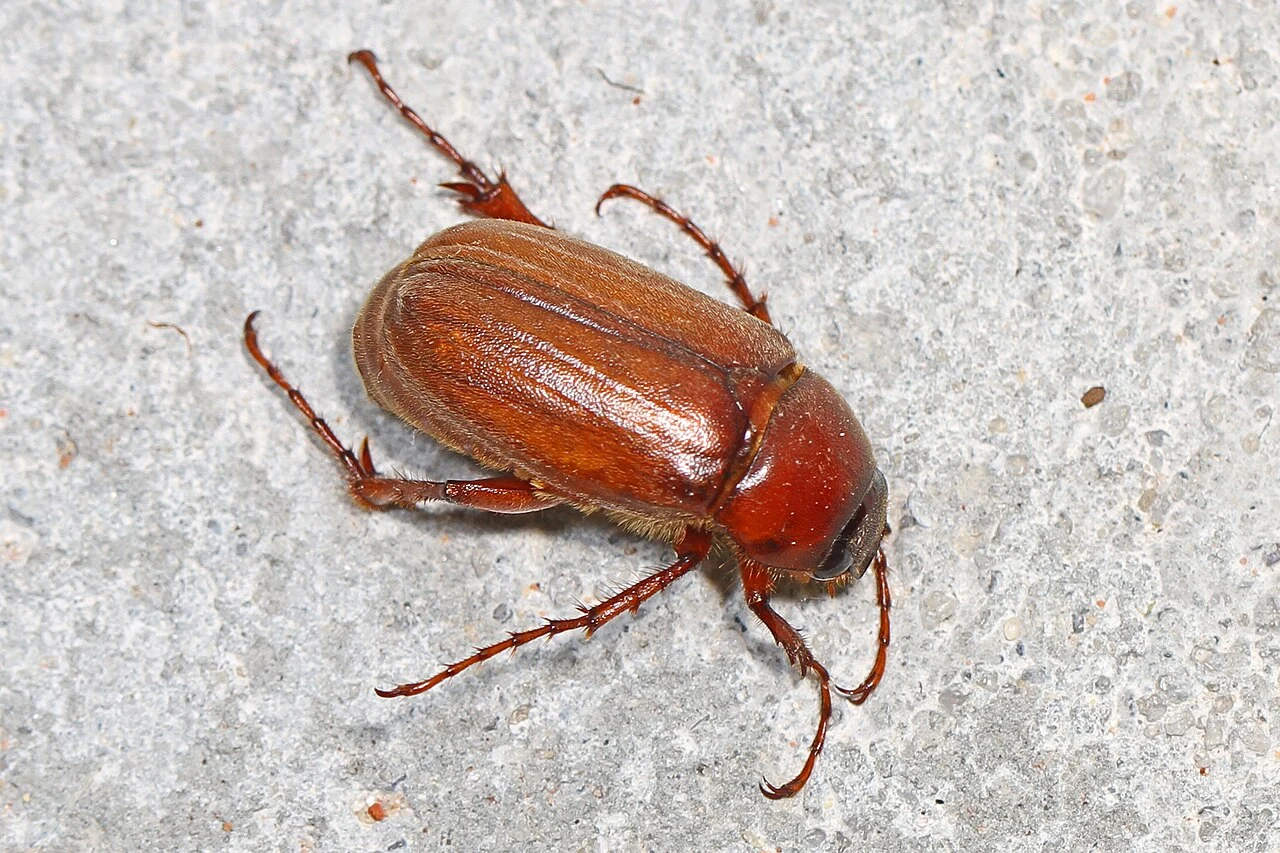

In the landscape.
Plants & places
Many ornamentals and garden plants; larvae occupy soil around roots.
Recognize the damage
Irregular holes and chewed leaf margins, often close to the ground, rather than the classic Japanese-beetle skeleton.
Before you act
Return to fresh damage after dark with a light. Check soil immediately around favored plants during the day.
A sensible first response
Hand-collect adults where practical and reassess whether feeding continues. Confirm the species before choosing a control intended for another scarab.
When to look
Summer, often most noticeable in July and August; grubs overwinter in soil.
In Western North Carolina
A landscape pest to consider in WNC; older references and photo archives use the name Maladera castanea.
Identification, lookalikes & further notes
Identification
Small chestnut-brown scarab beetles emerge to feed at night and hide in soil by day.
Lookalikes & limits
Japanese beetles are metallic and active by day; other brown scarabs may require closer identification.
In the garden
Irregular holes and chewed leaf margins, often close to the ground, rather than the classic Japanese-beetle skeleton.
What would help next
Record the host plant, date, fresh damage, and a clear photograph of the animal or insect. A damage match narrows the search; it does not establish an identification.