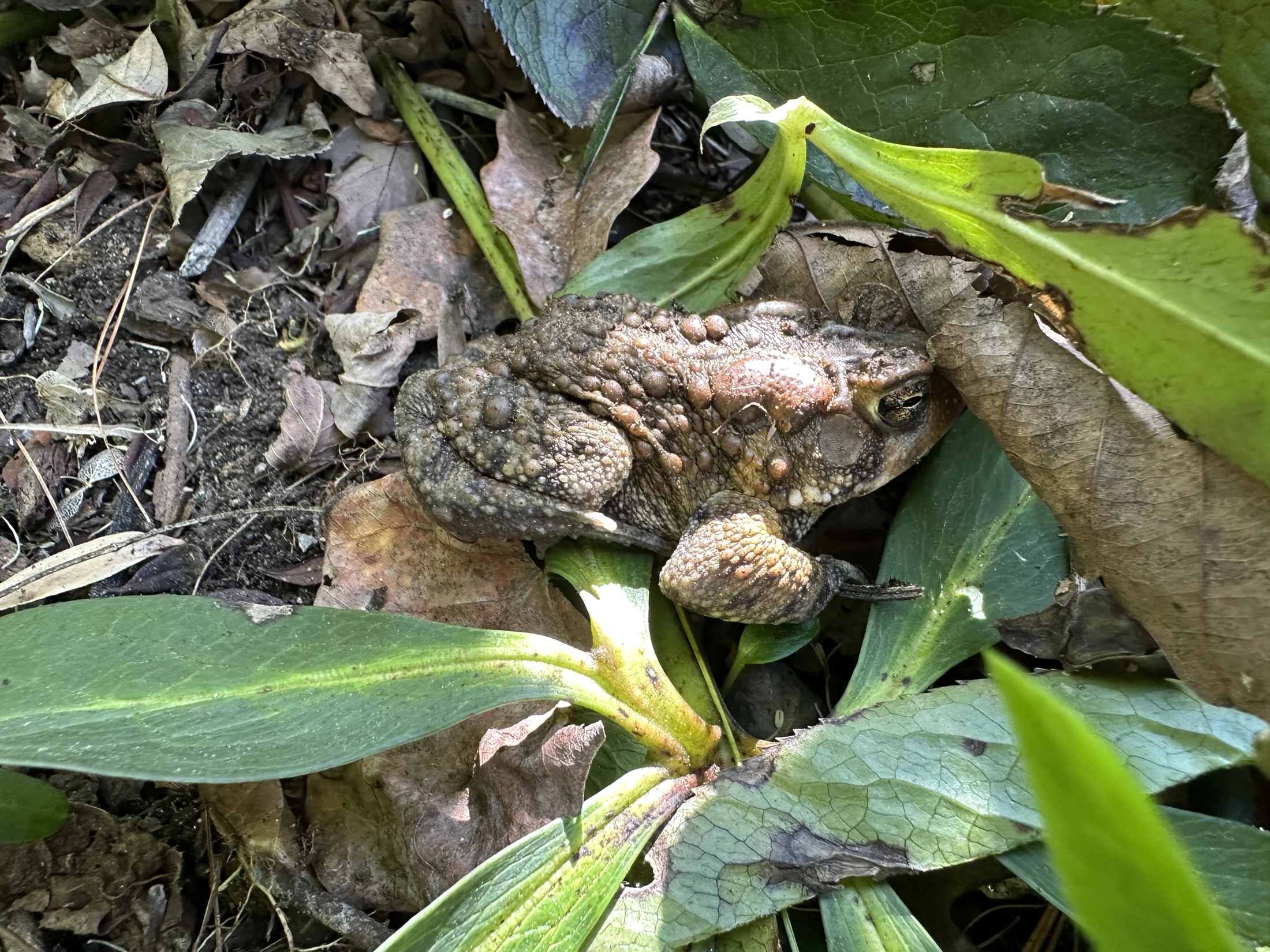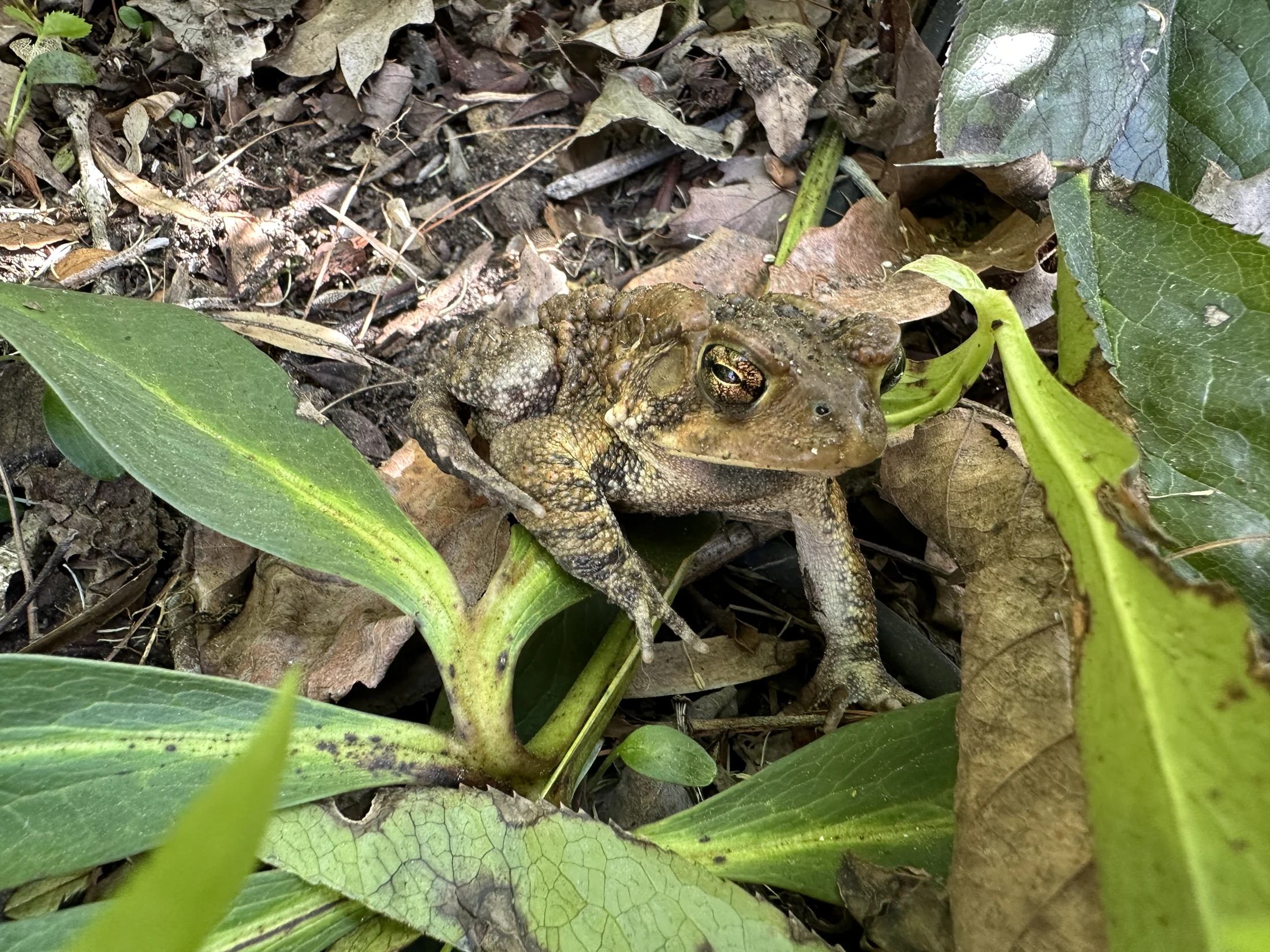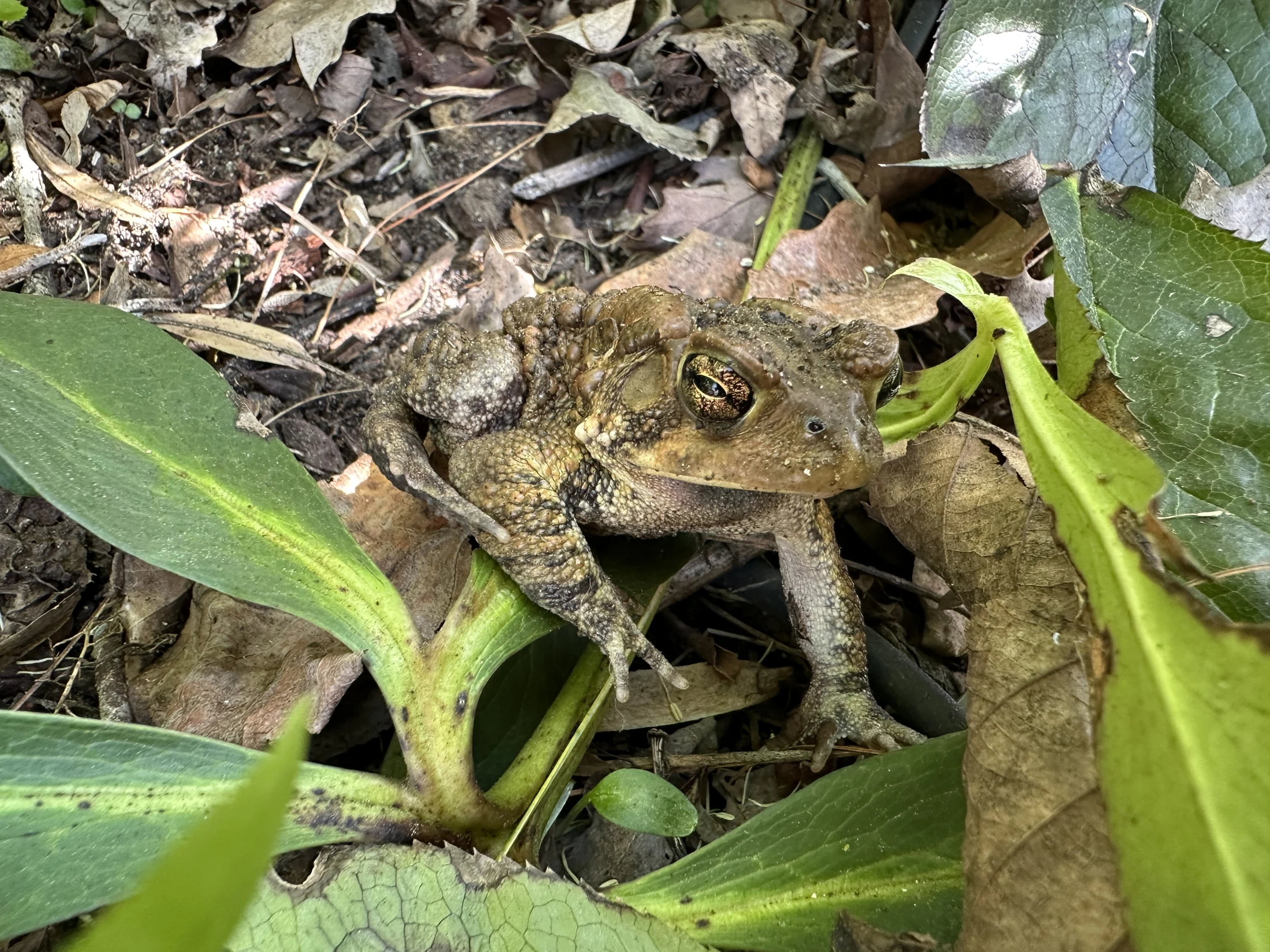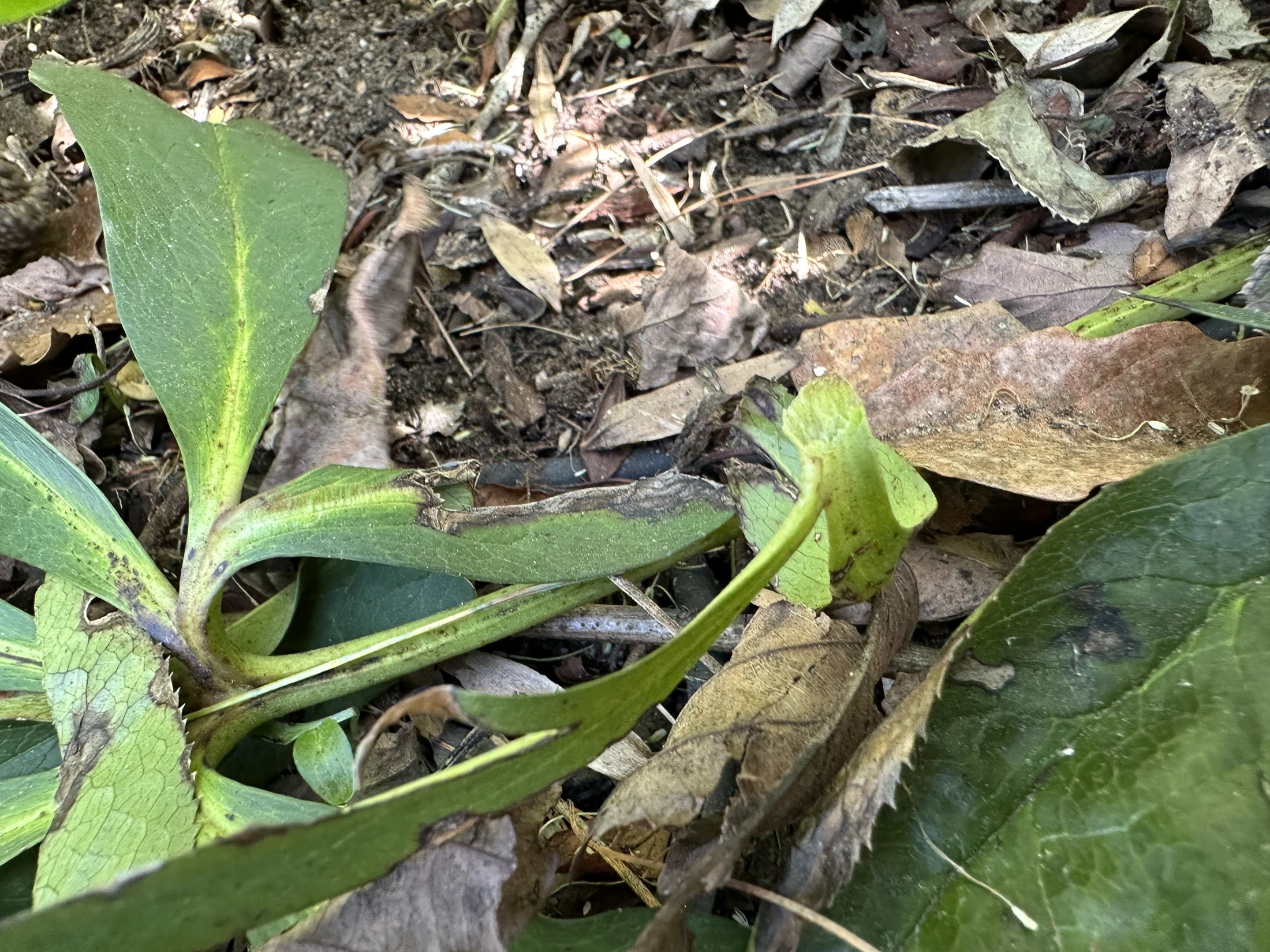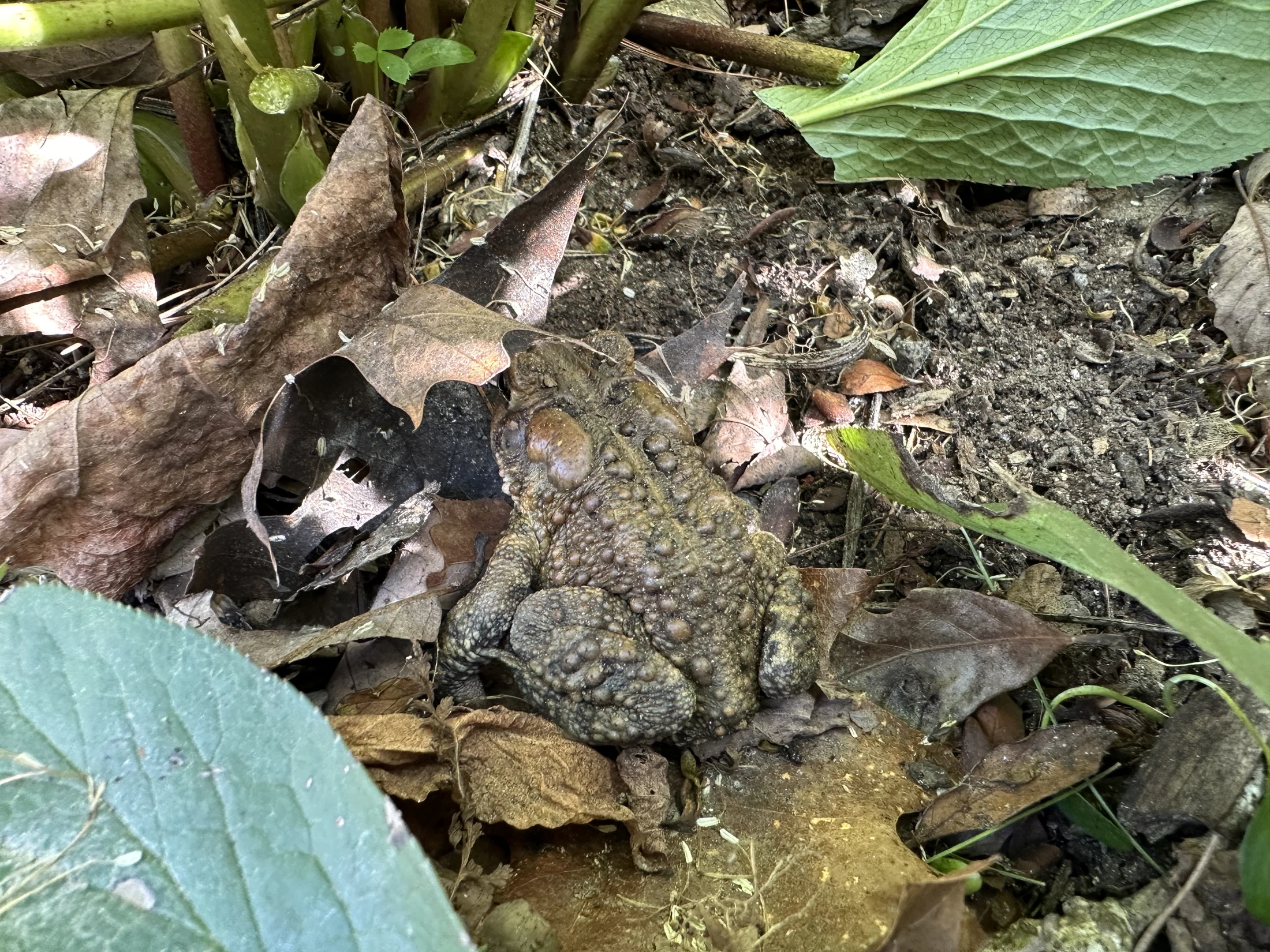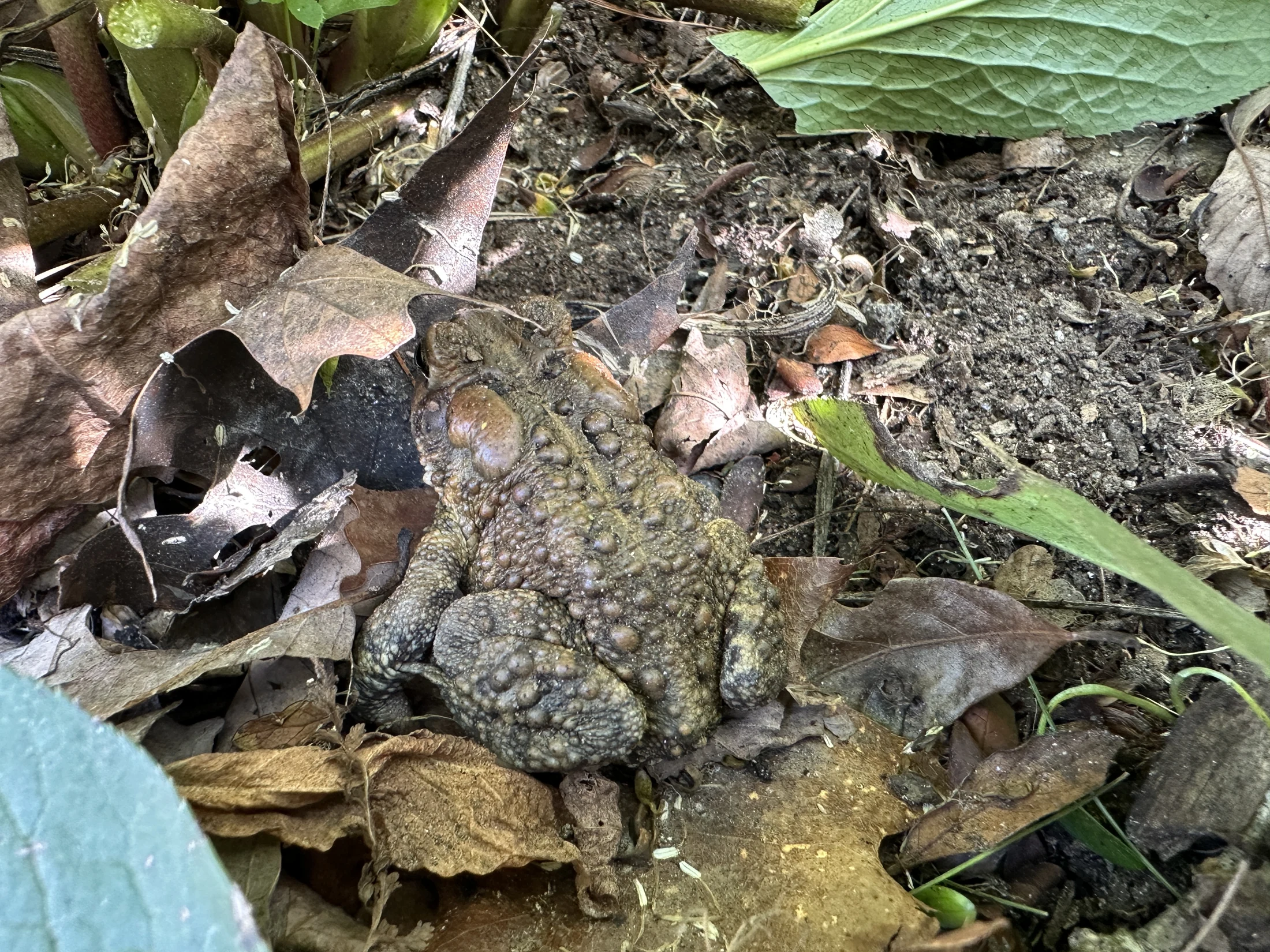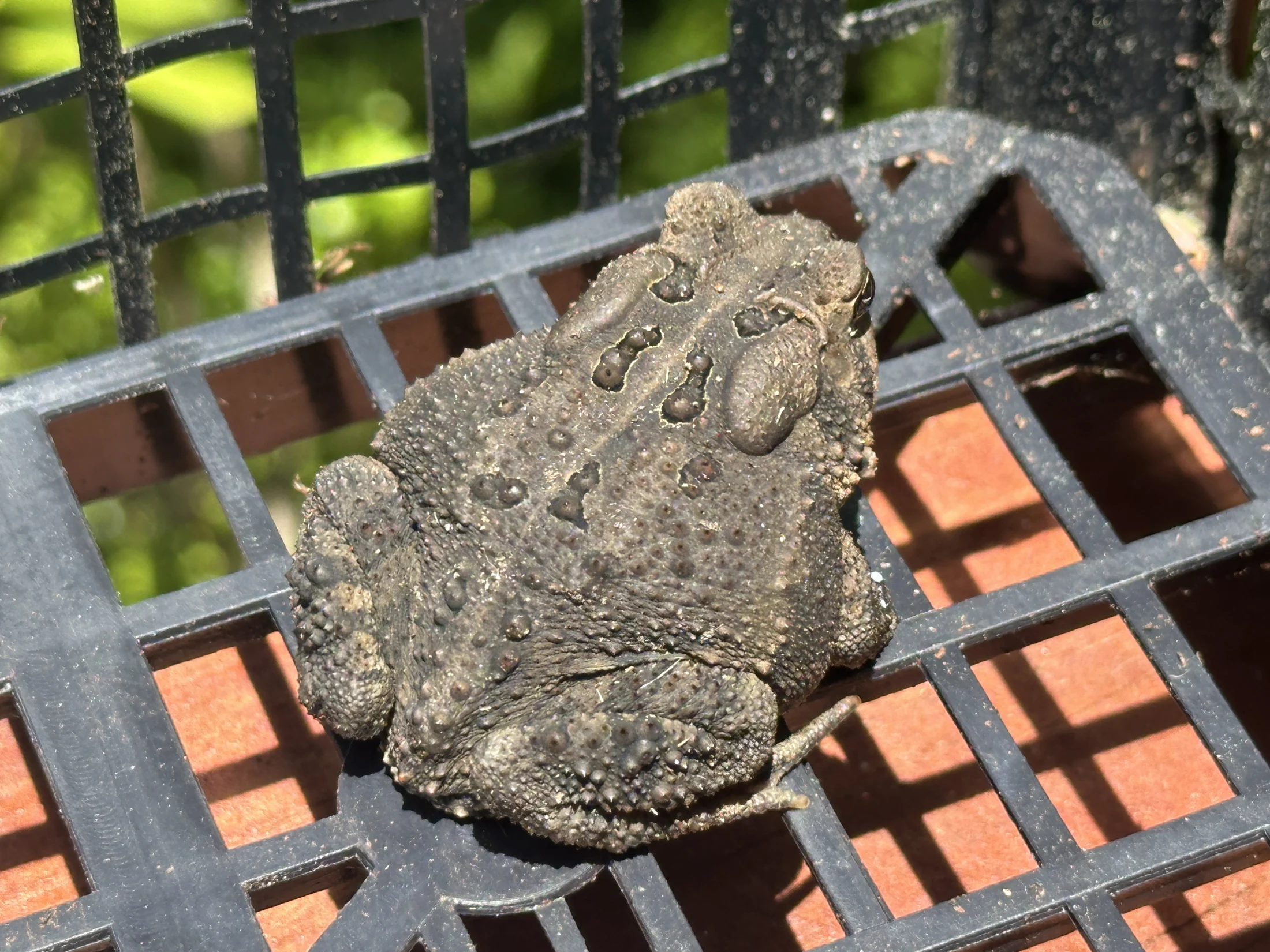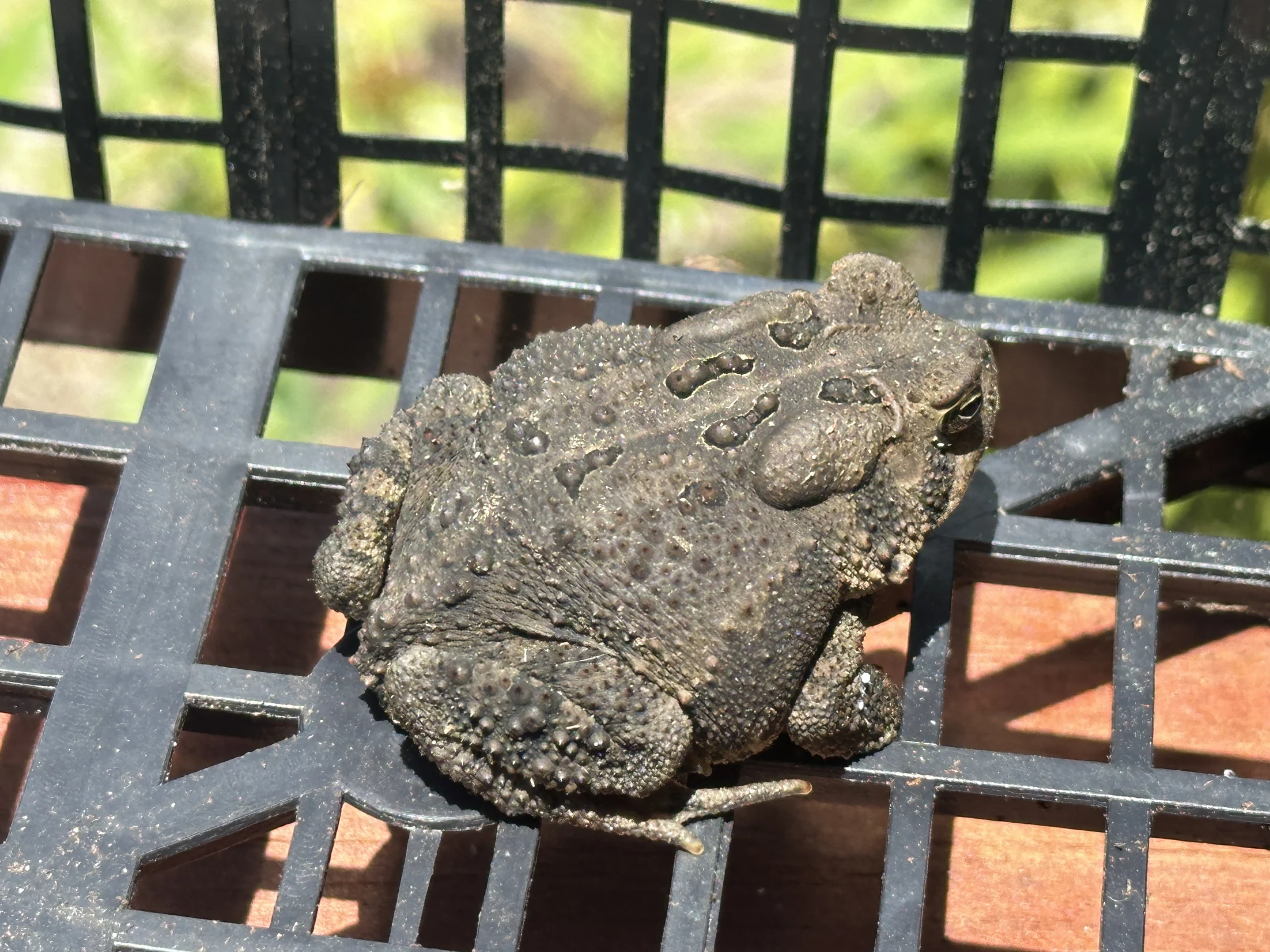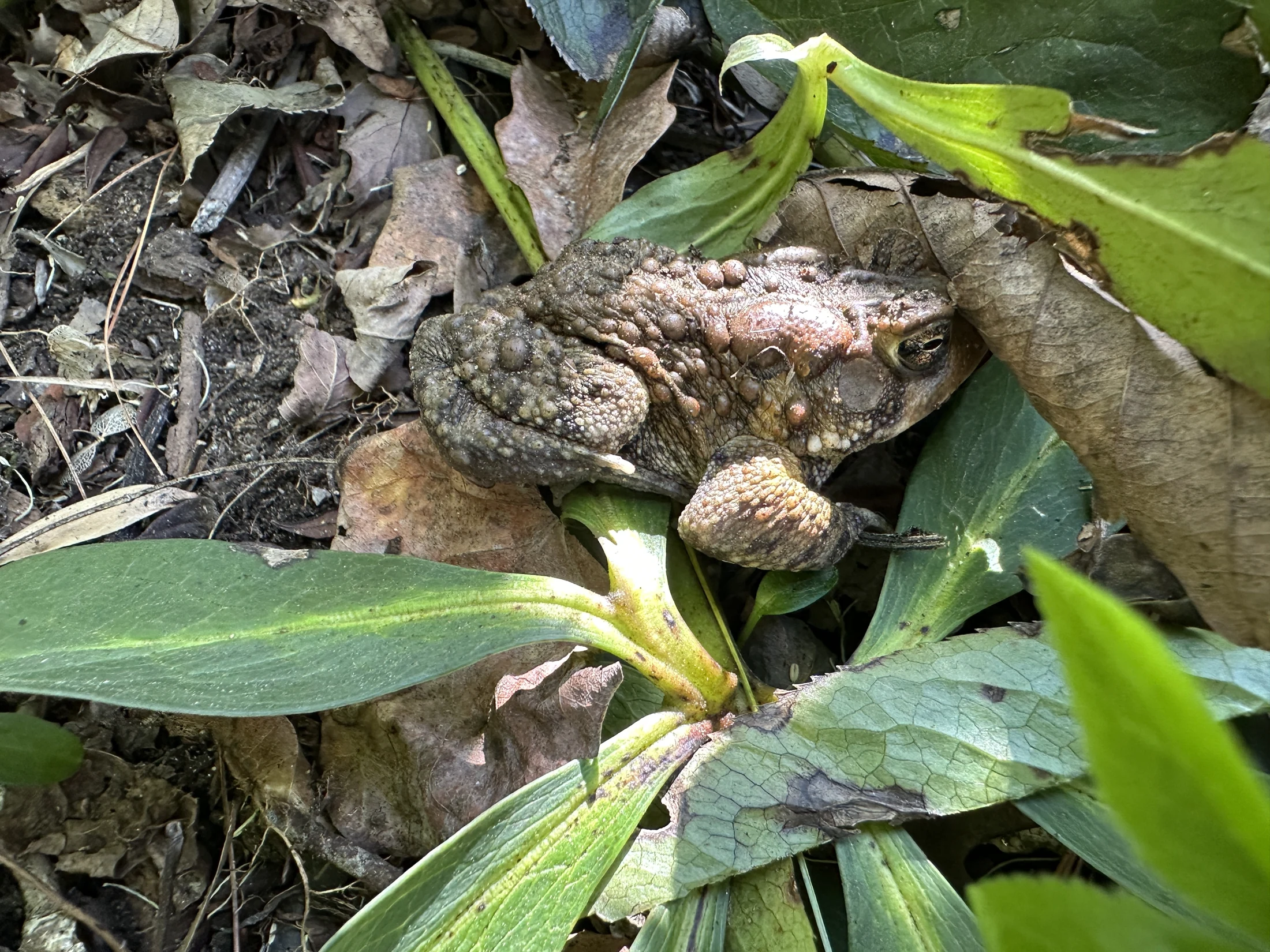
In the landscape.
Plants & places
Woodland edges, moist leaf litter and sheltered western North Carolina gardens; shallow water is needed for breeding.
A sensible first response
Keep shaded, unsprayed leaf-litter refuges and let toads come and go.
When to look
Photographed in March and May. Most visible on mild, damp days and evenings during the growing season.
Identification
All nine photographs show a stocky true toad with dry, warty skin and large parotoid glands behind the eyes. The March series has prominent individual warts and the May dorsal views show mainly one or two large warts per dark patch, supporting American toad. Species remains probable because the belly and the precise gland-to-cranial-crest relationship are not documented clearly in every view.
Lookalikes & limits
Fowler's toad can look similar and typically has more small warts per dark spot. Do not use color alone. A clear dorsal head view, wart count and belly photograph would strengthen the record; no handling is needed just to obtain them.
In the garden
A ground-level predator of small invertebrates.