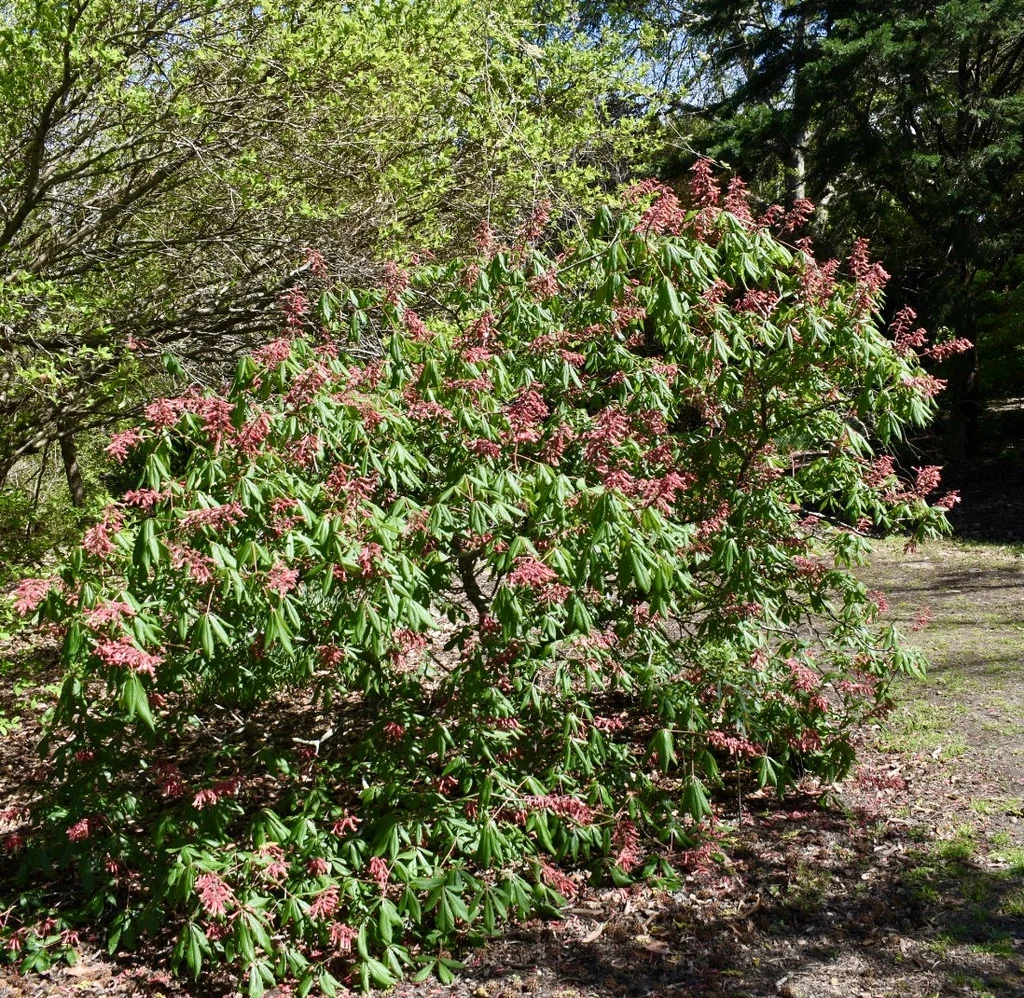
Get to know this plant.
Identification clue 1
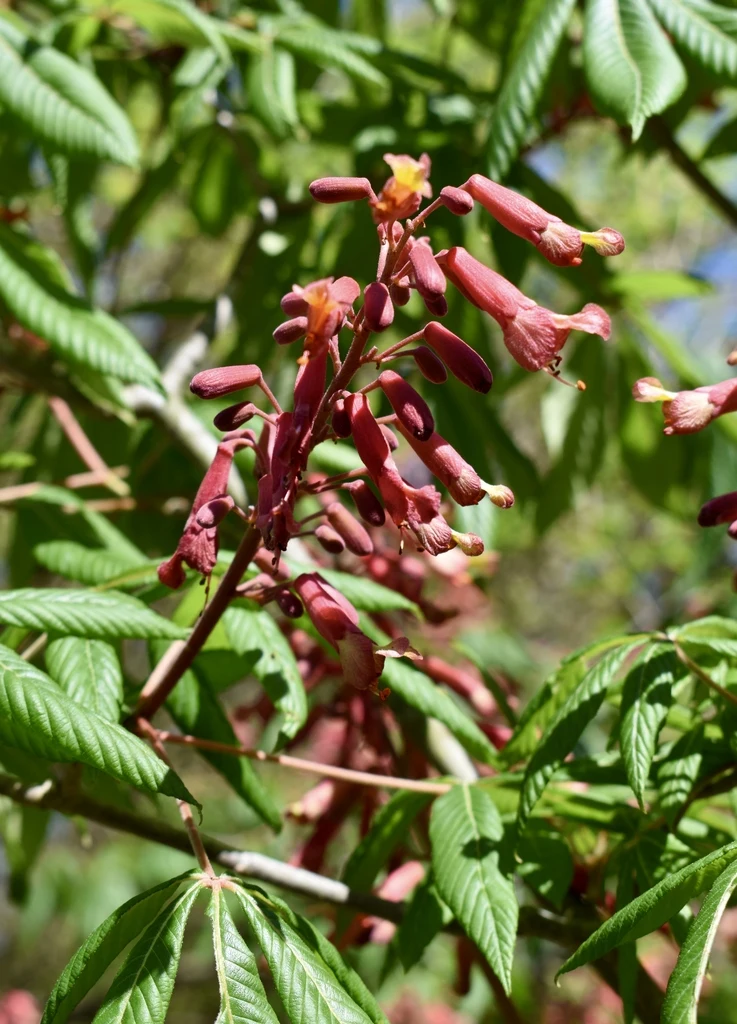
Five leaflets radiate from one point
Identification clue 2
Opposite whole leaves
Identification clue 3
Red tubular flower clusters
Diseases & insects in WNC
Problems to recognize in WNC gardens. These are documented susceptibilities, not a local outbreak report or a diagnosis. Weather, elevation and growing conditions change the risk.
Diseases & similar-looking injury
Leaf blotch can discolor foliage.
Insects to recognize
No major insect problem is emphasized in the NC State profile.
When to look
Look for leaf blotches during summer; compare tree vigor with the extent of spotting.
A useful first step
Monitor limited damage and ask for help if leaf loss is repeated or unusually early.
More growing details
Read the leaves
Follow each stalk: five toothed leaflets meet like fingers at a palm. The whole leaves attach opposite each other.
Read the bark
Gray-brown bark is fairly smooth when young and becomes scaly.
Fruit & seed
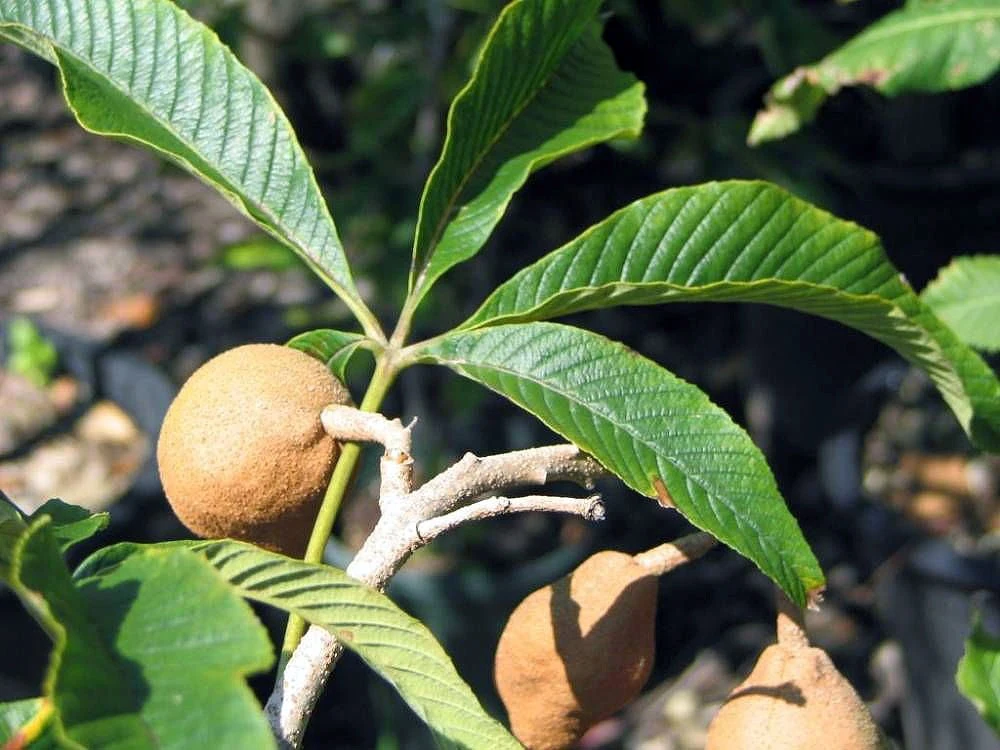
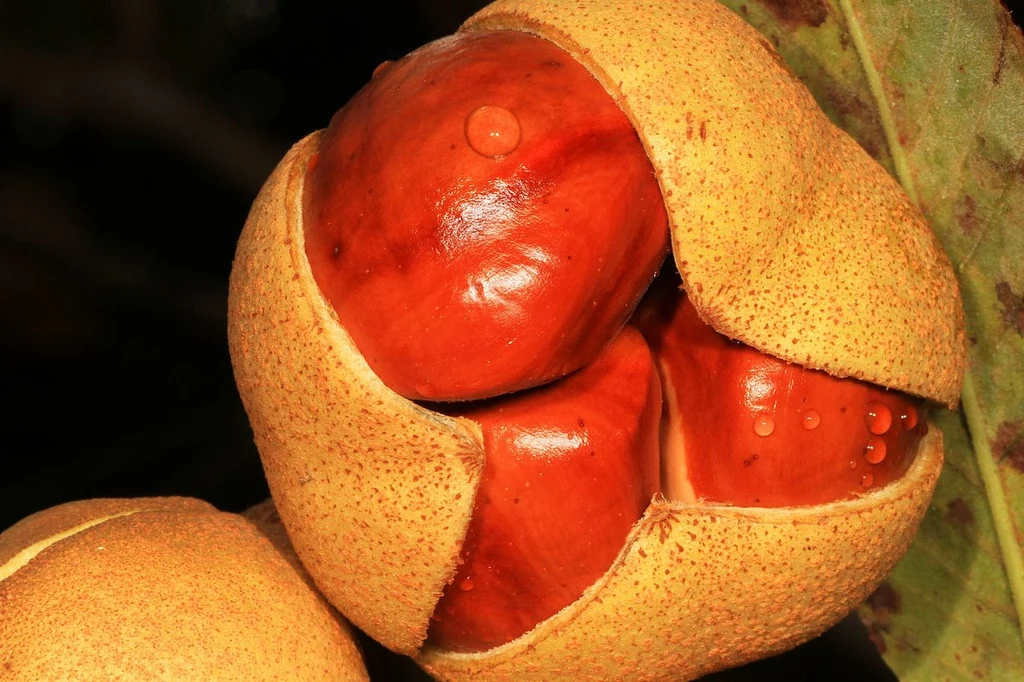
Smooth to slightly bumpy capsules enclose shiny brown seeds. Seeds are toxic; learn by observation.
Winter character
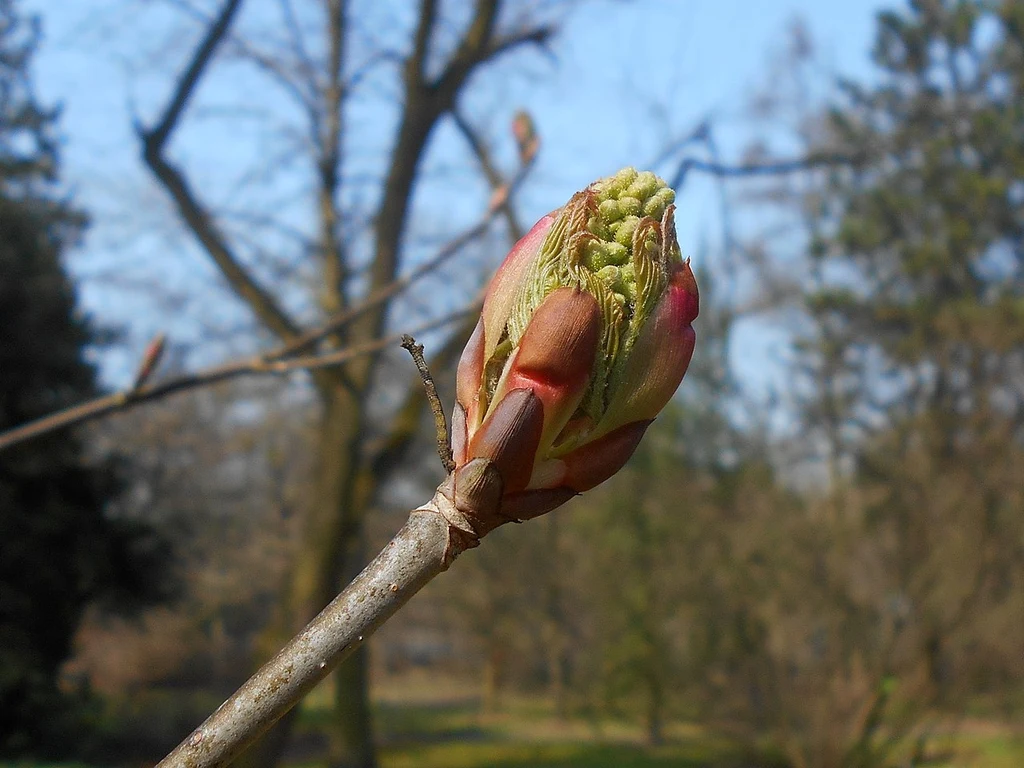
Large opposite buds and leaf scars help identify bare twigs.
Origin & place
Native to the southeastern Coastal Plain in NC, generally absent from the Appalachians in the wild. Planted red buckeye can still be studied in WNC gardens.
WNC Notes
Hummingbird-attracting native understory tree; foliage may drop early in hot dry summers.
Sun Exposure
Part sun–part shade–part shade
MATURE HEIGHT (FT)
15–25
MATURE WIDTH (FT)
10–20
BLOOM SEASON
Mid spring
BLOOM COLOR
Catkins
FALL / WINTER COLOR
Yellow; early dormancy-brown
Wet-Soil Tolerance
Moderate–high
Drought Tolerance
Low