Trees & woodland lore · Western North Carolina field companion
Sassafras
Sassafras albidum
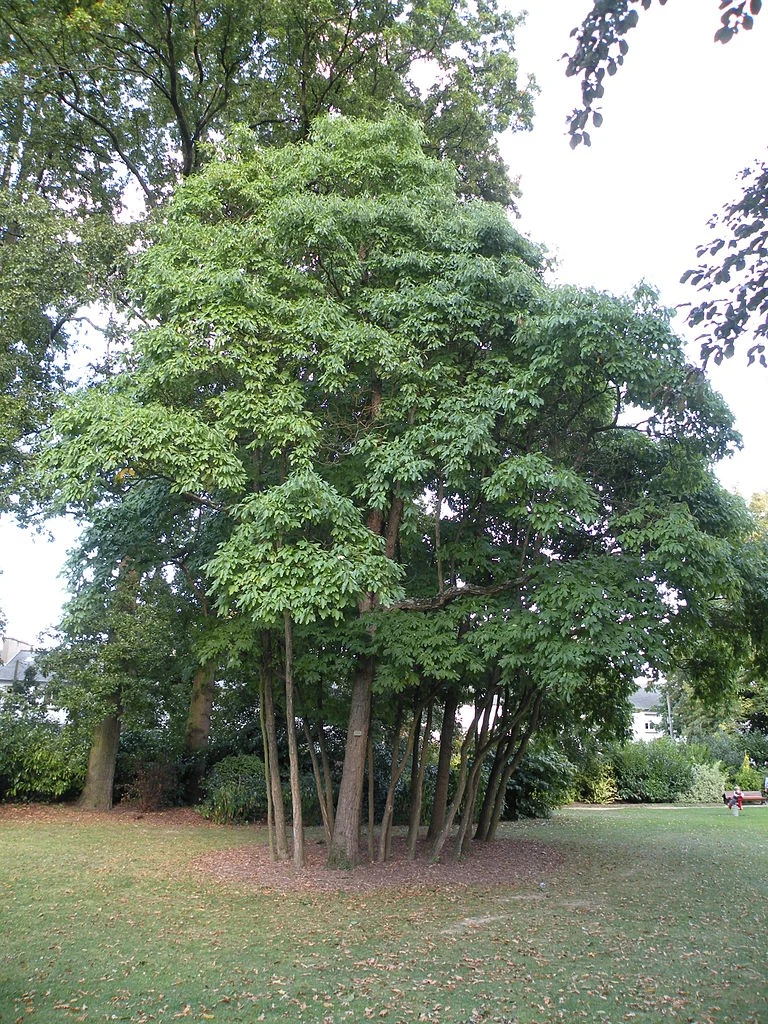
Whole tree — Sassafras albidum. Species reference; the photographed specimen does not confirm the named variety. Age, pruning, and site affect its shape.☀ Full sun · ◐ Part sun or part shadePymouss ↗ · CC BY-SA 3.0Photo contextResized and converted to WebP; full original composition retained.
Problems to recognize in WNC gardens. These are documented susceptibilities, not a local outbreak report or a diagnosis. Weather, elevation and growing conditions change the risk.
Diseases & similar-looking injury
Leaf spots and root rot can occur; wet soil increases root problems.
Insects to recognize
Leaf-feeding insects and borers may occur. Swallowtail caterpillars use sassafras and are not automatically a problem.
When to look
Check leaf damage and drainage through the growing season.
A useful first step
Identify caterpillars before acting and investigate sudden wilt. Regional threat information should be checked with Extension when unexplained decline occurs.
More growing details
Read the leaves
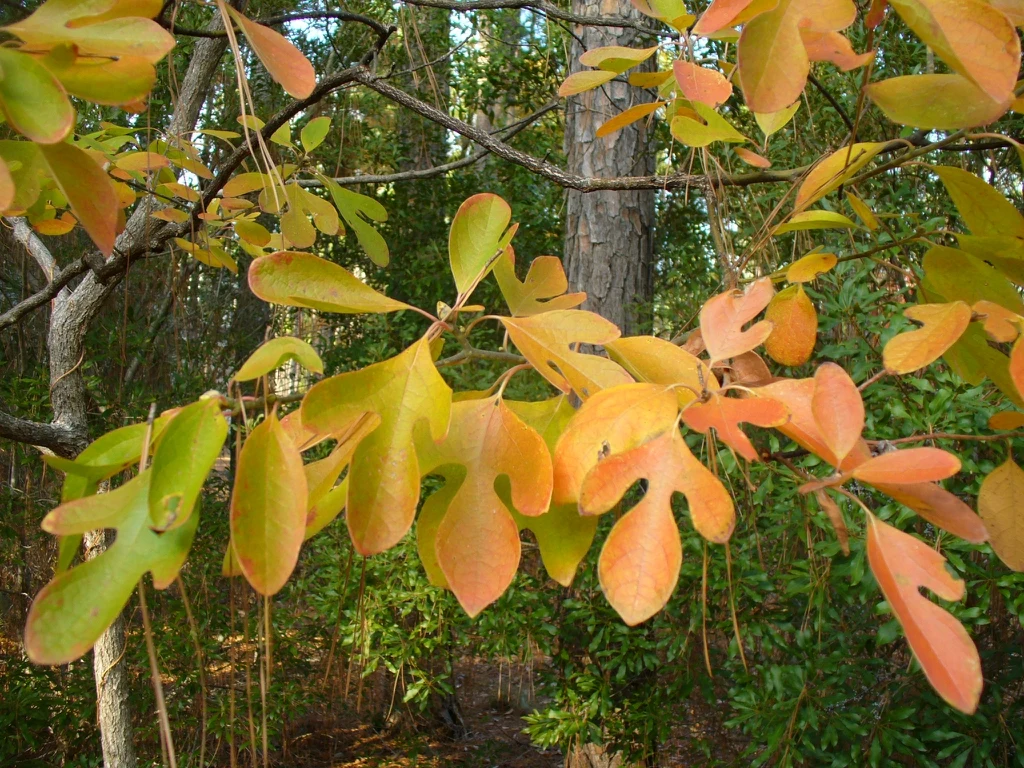
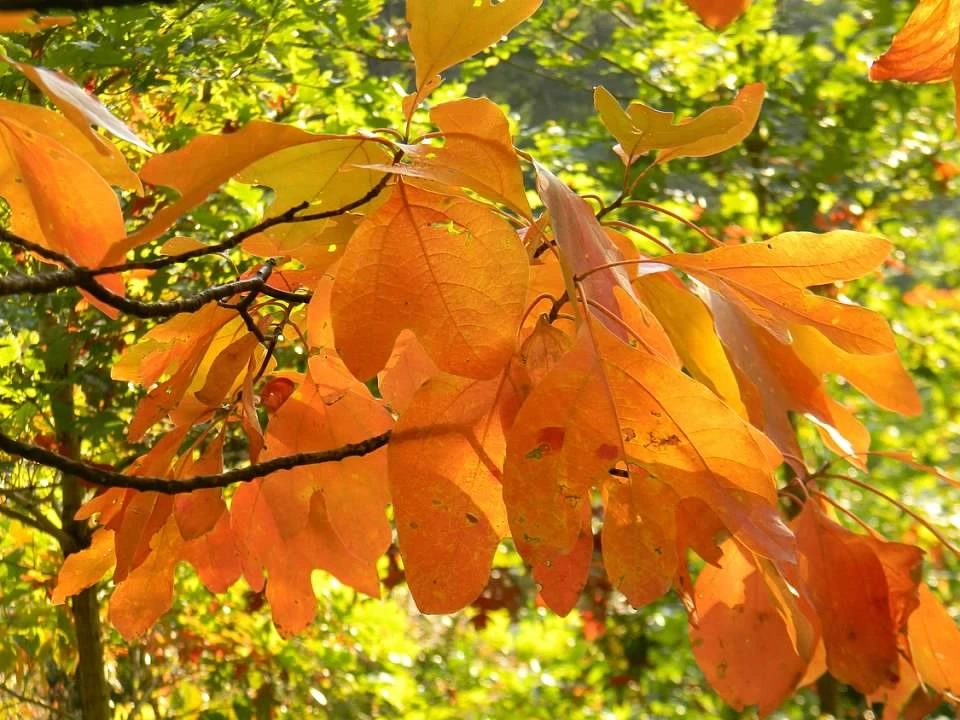
Inspect a whole branch: unlobed, one-thumb mitten, and three-lobed blades may grow together. Margins are smooth.
Read the bark
Older bark becomes deeply furrowed and reddish-brown.
Fruit & seed
Dark blue drupes on red stalks occur on female trees.
Winter character
Greenish twigs and stout buds support identification; record leaf shapes in summer for return visits.
Origin & place
The species occurs naturally in the southern Appalachian region; a planted specimen is not evidence of wild local origin.
WNC Notes
Excellent native color and wildlife tree; allow naturalistic suckering and transplant young.
Sun Exposure
Full sun–part shade
MATURE HEIGHT (FT)
30–60
MATURE WIDTH (FT)
25–40
BLOOM SEASON
Early spring
BLOOM COLOR
Yellow-green
FALL / WINTER COLOR
Orange-red-purple
Wet-Soil Tolerance
High
Drought Tolerance
Low
LOOK CLOSELY
Two views, a closer look.
Place two photographs beside one another. Compare the overall plant with leaves, flowers, or bark when those views are available. Captions identify what each photograph actually shows. Images are not at the same scale; species references may show different cultivars.
Whole tree — Sassafras albidum. Species reference; the photographed specimen does not confirm the named variety. Age, pruning, and site affect its shape.☀ Full sun · ◐ Part sun or part shadePymouss ↗ · CC BY-SA 3.0Photo contextResized and converted to WebP; full original composition retained.Species reference; does not confirm the named variety. Photograph subject: Fall leaves in Moore County. Shows 3 shapes of leaves☀ Full sun · ◐ Part sun or part shadeSusan Strine ↗ · CC BY 2.0Photo contextResized and converted to WebP; full original composition retained.Sassafras in autumn in Buncombe County, North Carolina. Look for unlobed, mitten-shaped, and three-lobed leaves on the same tree.☀ Full sun · ◐ Part sun or part shadeRandy Harter ↗ · CC BY 4.0Photo contextResized and converted to WebP; no diagnostic content altered.
Your margin of the garden.
Saved only in this browser on this device. Export your notes from My garden in the library.