Trees & woodland lore · Western North Carolina field companion
Persian parrotia
Parrotia persica
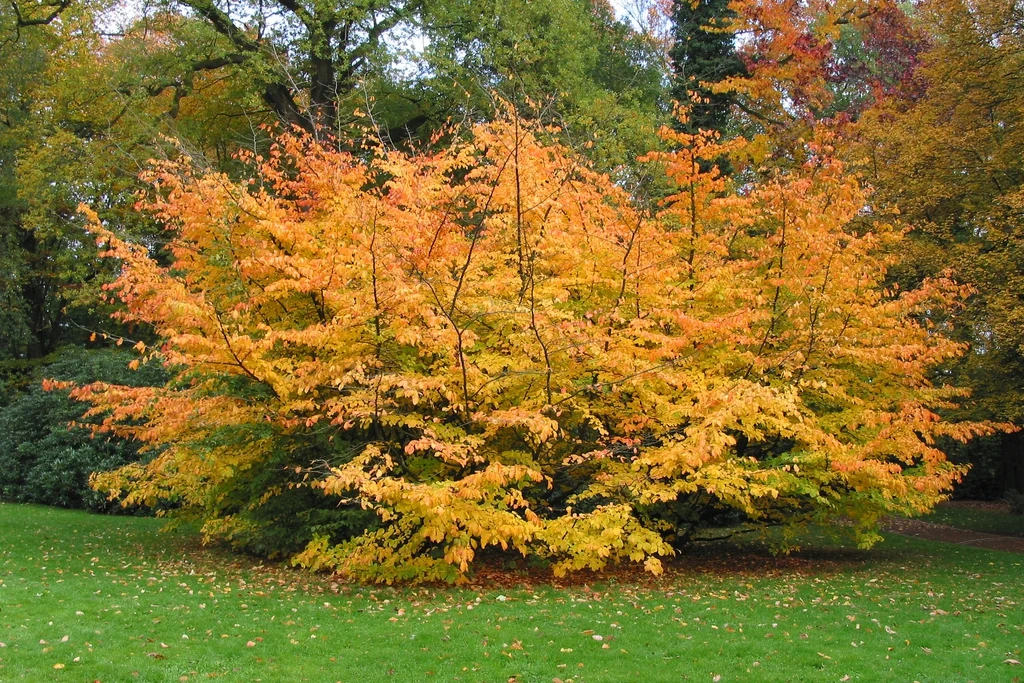
Whole tree — Parrotia persica. Species reference; the photographed specimen does not confirm the named variety. Age, pruning, and site affect its shape.☀ Full sun · ◐ Part sun or part shadeJean-Pol GRANDMONT ↗ · CC BY-SA 3.0Photo contextResized and converted to WebP; full original composition retained.
Problems to recognize in WNC gardens. These are documented susceptibilities, not a local outbreak report or a diagnosis. Weather, elevation and growing conditions change the risk.
Diseases & similar-looking injury
NC State reports few or no serious disease problems for this tree.
Insects to recognize
NC State reports few or no serious insect problems for this tree.
When to look
Observe canopy density and new growth through spring and summer.
A useful first step
Start with planting depth, drainage and drought stress if vigor declines. Low pest susceptibility does not make a tree immune to poor site conditions.
More growing details
Read the leaves
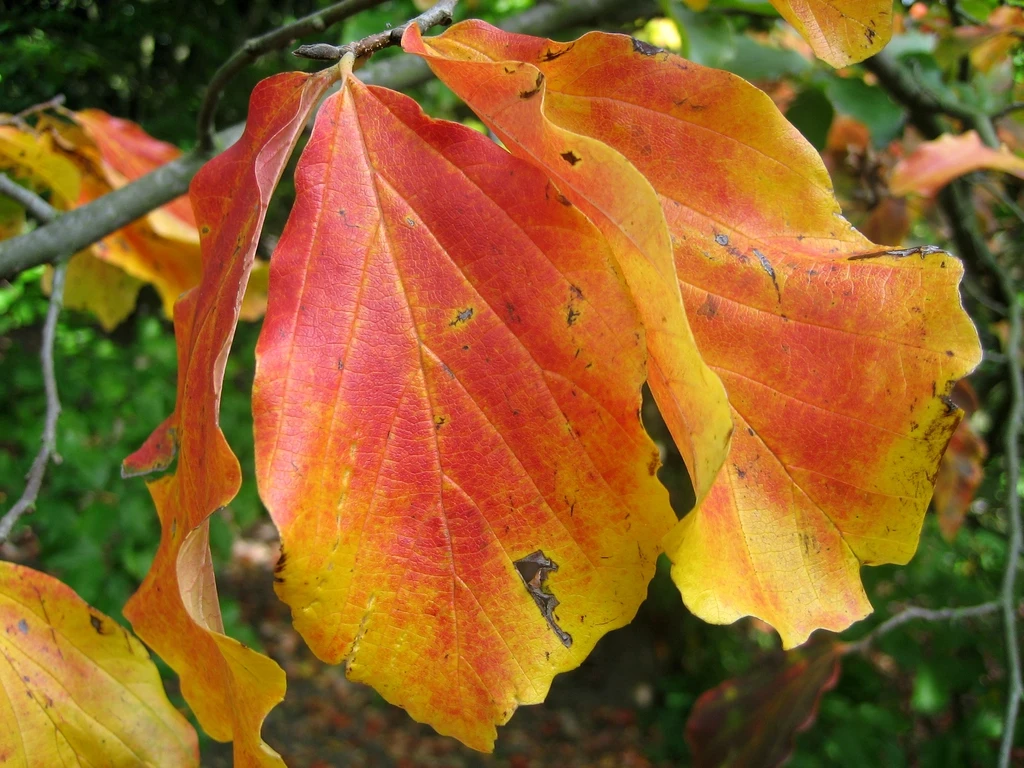
Inspect the edge: the lower portion may be smoother, with teeth or waves more evident toward the tip.
Read the bark
Older bark exfoliates in a patchwork of cream, gray, and greenish areas.
Fruit & seed
Small woody capsules follow inconspicuous early flowers with red anthers.
Winter character
Mottled bark and flowers that can precede leaves offer late-winter clues.
Origin & place
An introduced garden species or horticultural hybrid; study it as part of WNC landscapes rather than assume it belongs to the native mountain flora.
WNC Notes
Four-season small tree with excellent bark and fall color; structurally prune multi-leader forms.
Sun Exposure
Full sun–part shade
MATURE HEIGHT (FT)
15–30
MATURE WIDTH (FT)
15–30
BLOOM SEASON
Late winter
BLOOM COLOR
Red
FALL / WINTER COLOR
Yellow-orange-red
Wet-Soil Tolerance
High
Drought Tolerance
Low
LOOK CLOSELY
Two views, a closer look.
Place two photographs beside one another. Compare the overall plant with leaves, flowers, or bark when those views are available. Captions identify what each photograph actually shows. Images are not at the same scale; species references may show different cultivars.
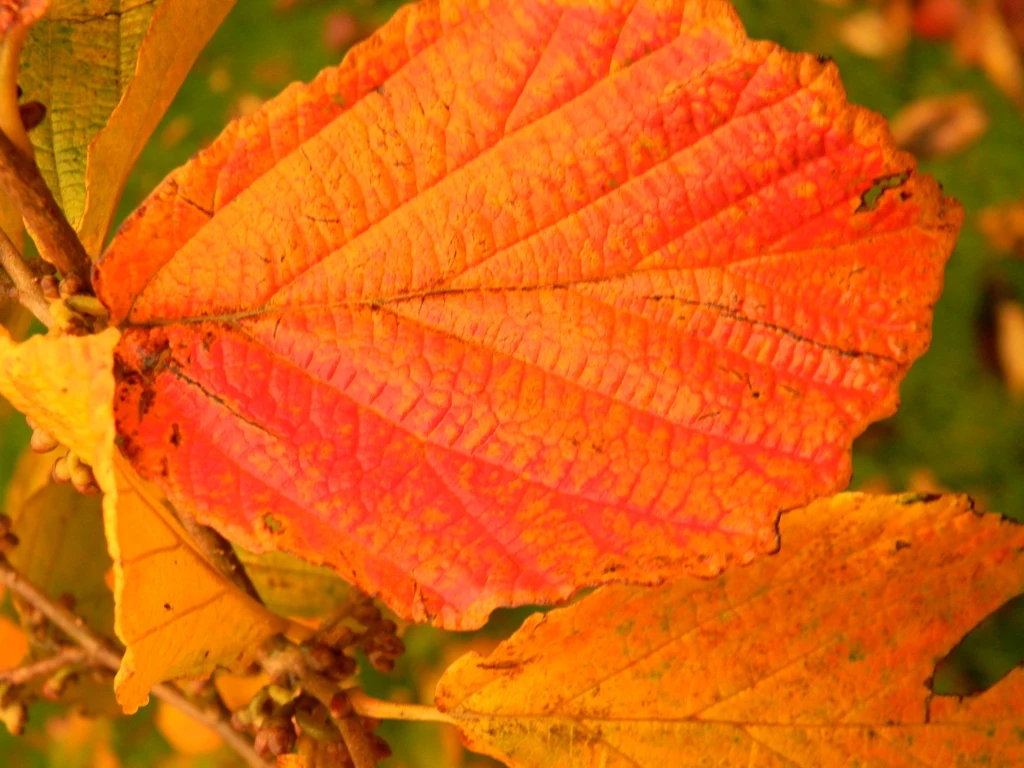
Whole tree — Parrotia persica. Species reference; the photographed specimen does not confirm the named variety. Age, pruning, and site affect its shape.☀ Full sun · ◐ Part sun or part shadeJean-Pol GRANDMONT ↗ · CC BY-SA 3.0Photo contextResized and converted to WebP; full original composition retained.Species reference; does not confirm the named variety. Photograph subject: Parrotia persica☀ Full sun · ◐ Part sun or part shadeRandy Harter ↗ · CC BY 4.0Photo contextResized and converted to WebP; full original composition retained.Leaves. Taxon reference; photograph alone does not establish a named cultivar.☀ Full sun · ◐ Part sun or part shadeLynk media ↗ · CC BY-SA 3.0Photo contextResized and converted to WebP; no diagnostic content altered.
Your margin of the garden.
Saved only in this browser on this device. Export your notes from My garden in the library.