Trees & woodland lore · Western North Carolina field companion
Thornless honeylocust
Gleditsia triacanthos var. inermis
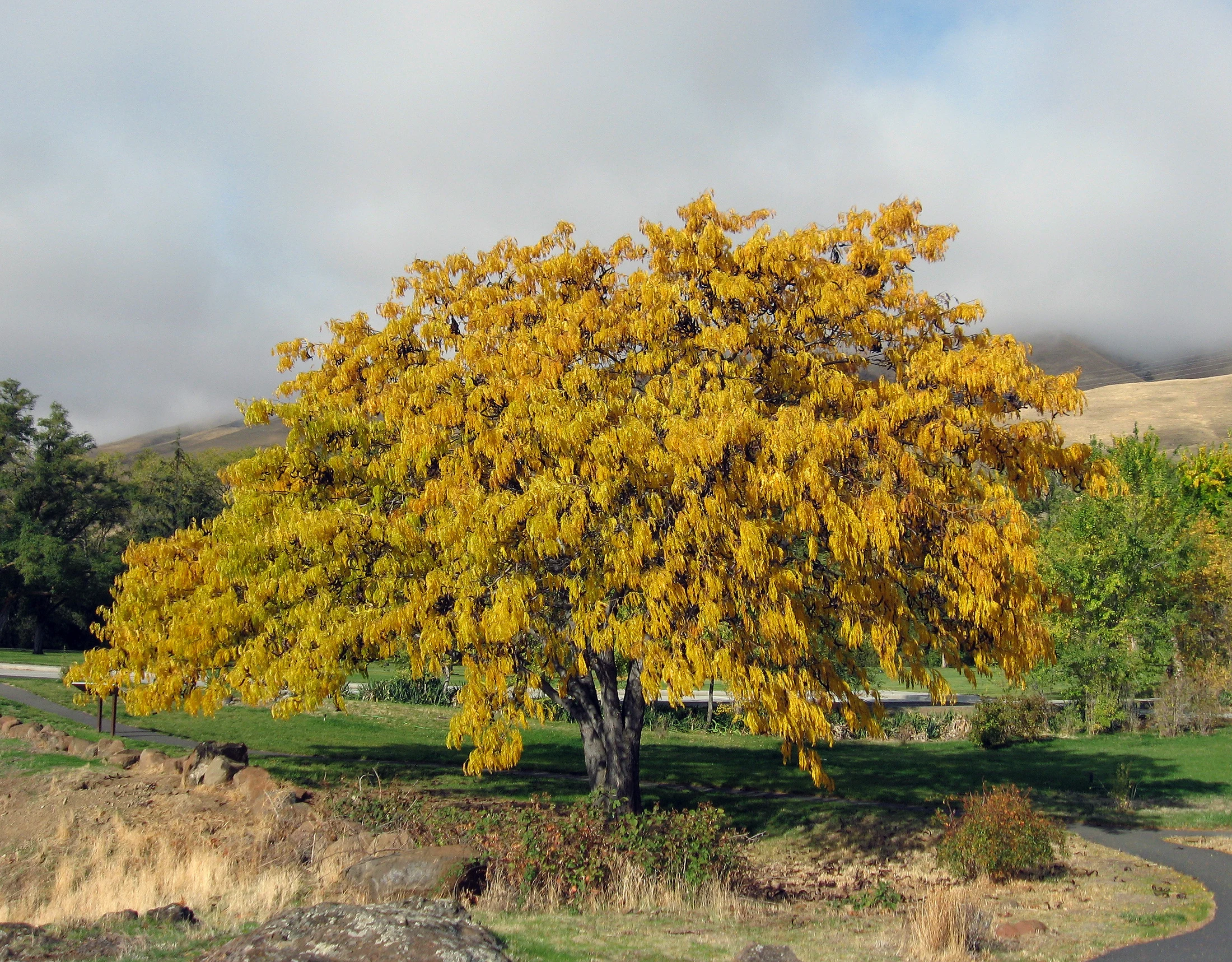
Whole tree — Gleditsia triacanthos var. inermis. Species reference; the photographed specimen does not confirm the named variety. Age, pruning, and site affect its shape.☀ Full sunKevmin ↗ · CC BY-SA 3.0Photo contextResized and converted to WebP; full original composition retained.
Problems to recognize in WNC gardens. These are documented susceptibilities, not a local outbreak report or a diagnosis. Weather, elevation and growing conditions change the risk.
Diseases & similar-looking injury
Cankers, leaf spots and mildew may occur.
Insects to recognize
Honeylocust pod gall midge can distort young leaves; webworms, borers and mites are also possible.
When to look
Check newly expanding leaves in spring and foliage during summer.
A useful first step
Compare distorted leaflets with normal new growth. Have repeated branch death or trunk damage evaluated.
More growing details
Read the leaves
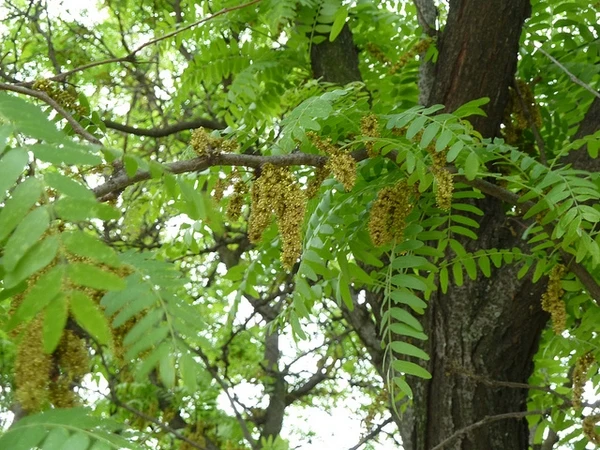
Leaves can be once- or twice-compound on one tree. The small oval leaflets have very fine marginal teeth; use a hand lens because the edges may look smooth at first.
Read the bark
Mature bark develops elongated scaly ridges.
Fruit & seed
Female and wild honeylocust trees can bear long twisted pods; some thornless garden trees produce few or no pods.
Winter character
Fine twigs and small buds need provenance for a cultivar claim; lack of thorns alone is insufficient.
Origin & place
Honeylocust is North American, but its native limits in NC are uncertain. A cultivated tree is not evidence of a wild local population.
WNC Notes
A North American shade tree with thornless garden forms. Pod production varies; a species identification does not establish a seedless tree.
Sun Exposure
Full sun
MATURE HEIGHT (FT)
30–70
MATURE WIDTH (FT)
30–50
BLOOM SEASON
Late spring
BLOOM COLOR
Greenish
FALL / WINTER COLOR
Yellow
Wet-Soil Tolerance
High
Drought Tolerance
Low
LOOK CLOSELY
Two views, a closer look.
Place two photographs beside one another. Compare the overall plant with leaves, flowers, or bark when those views are available. Captions identify what each photograph actually shows. Images are not at the same scale; species references may show different cultivars.
Whole tree — Gleditsia triacanthos var. inermis. Species reference; the photographed specimen does not confirm the named variety. Age, pruning, and site affect its shape.☀ Full sunKevmin ↗ · CC BY-SA 3.0Photo contextResized and converted to WebP; full original composition retained.Gleditsia triacanthos. Taxon reference; photograph alone does not establish a named cultivar.☀ Full sunWendy Cutler ↗ · CC BY 2.0Photo contextResized and converted to WebP; no diagnostic content altered.
Your margin of the garden.
Saved only in this browser on this device. Export your notes from My garden in the library.