Trees & woodland lore · Western North Carolina field companion
Kentucky coffeetree
Gymnocladus dioicus
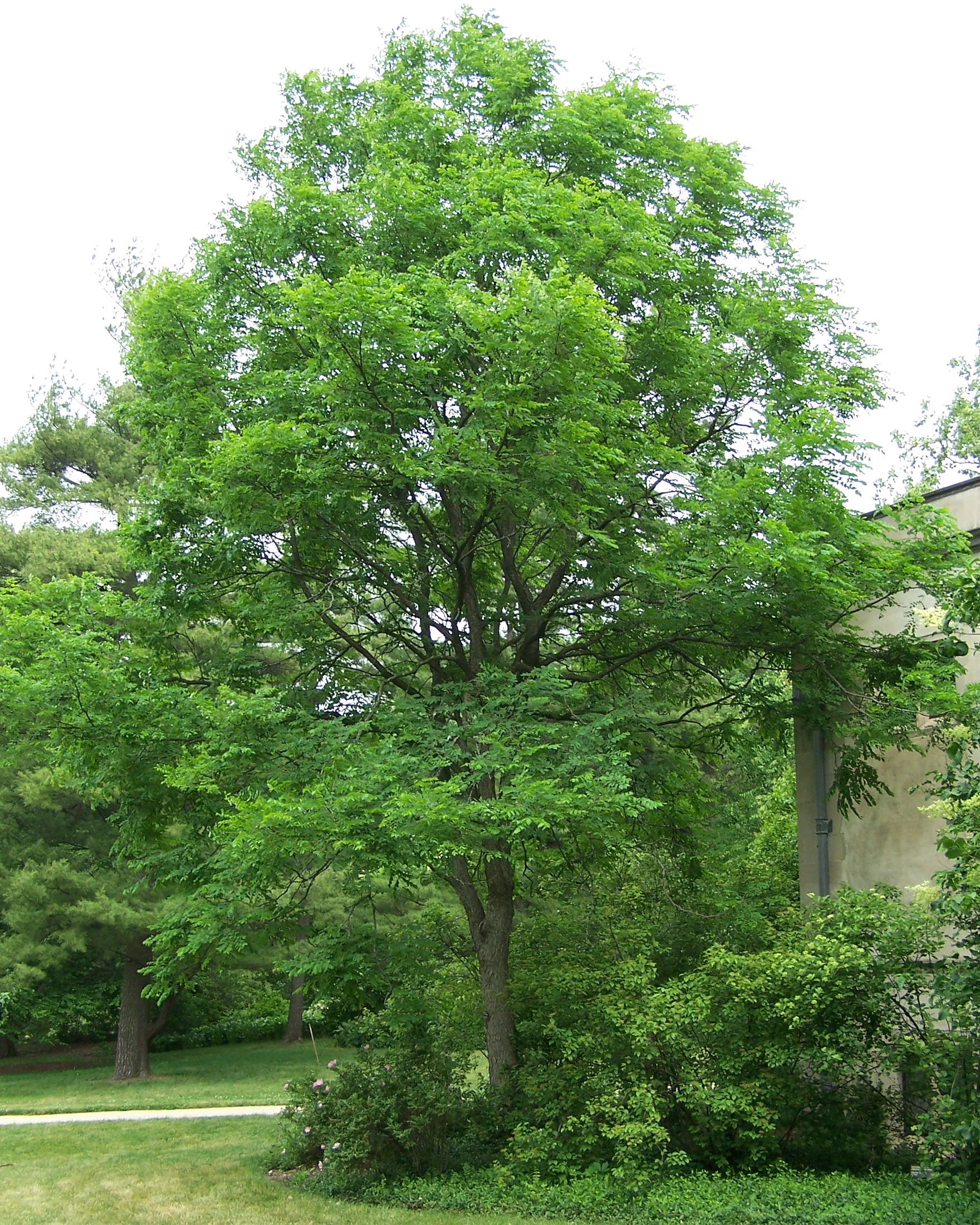
Whole tree — Gymnocladus dioicus. Species reference; the photographed specimen does not confirm the named variety. Age, pruning, and site affect its shape.☀ Full sunBruce Marlin ↗ · CC BY 3.0Photo contextResized and converted to WebP; full original composition retained.
Problems to recognize in WNC gardens. These are documented susceptibilities, not a local outbreak report or a diagnosis. Weather, elevation and growing conditions change the risk.
Diseases & similar-looking injury
NC State reports few or no serious disease problems for this tree.
Insects to recognize
NC State reports few or no serious insect problems for this tree.
When to look
Observe canopy density and new growth through spring and summer.
A useful first step
Start with planting depth, drainage and drought stress if vigor declines. Low pest susceptibility does not make a tree immune to poor site conditions.
More growing details
Read the leaves
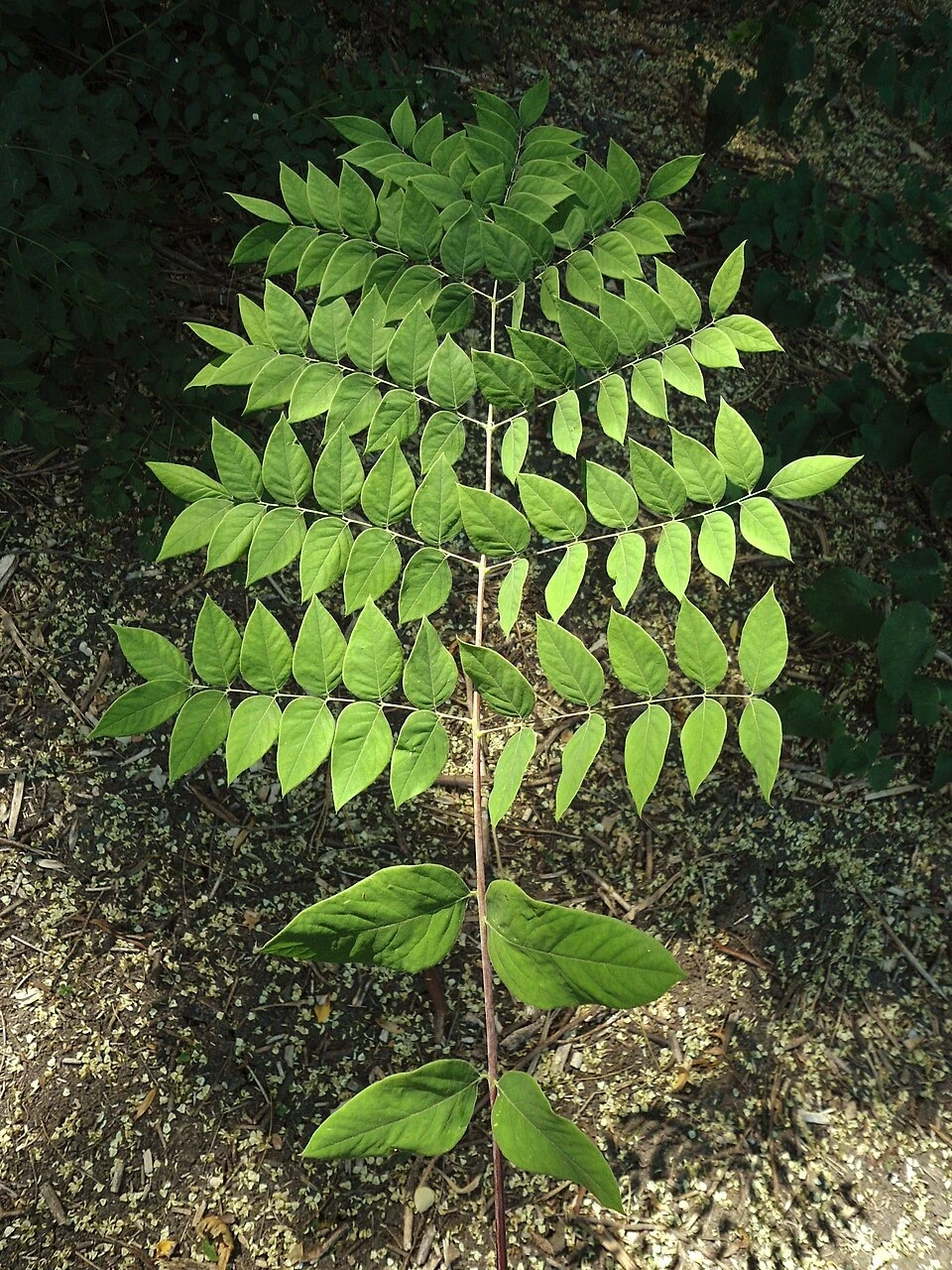
Trace a leaflet back: it joins a side stalk that joins the main leaf stalk. This twice-divided architecture is a strong clue.
Read the bark
Rough bark develops scaly ridges with age.
Fruit & seed
Female Kentucky coffeetrees can bear thick dark pods; male trees do not. Pod absence does not rule out the species.
Winter character
Stout sparsely branched twigs and large leaf scars create a distinctive bare silhouette.
Origin & place
A North American species native chiefly west of the Appalachians; NC records include planted trees and rare escapes.
WNC Notes
A North American shade tree with bold winter branching. Female trees can produce large pods; selected male garden trees may not.
Sun Exposure
Full sun
MATURE HEIGHT (FT)
60–80
MATURE WIDTH (FT)
40–55
BLOOM SEASON
Spring
BLOOM COLOR
Inconspicuous
FALL / WINTER COLOR
Yellow
Wet-Soil Tolerance
High
Drought Tolerance
Low
LOOK CLOSELY
Two views, a closer look.
Place two photographs beside one another. Compare the overall plant with leaves, flowers, or bark when those views are available. Captions identify what each photograph actually shows. Images are not at the same scale; species references may show different cultivars.
Whole tree — Gymnocladus dioicus. Species reference; the photographed specimen does not confirm the named variety. Age, pruning, and site affect its shape.☀ Full sunBruce Marlin ↗ · CC BY 3.0Photo contextResized and converted to WebP; full original composition retained.Kentucky coffeetree compound foliage. A complete leaf branches again into leaflet-bearing divisions. Species reference; this photograph does not establish.☀ Full sunДимитър Найденов / Dimìtar Nàydenov ↗ · CC BY-SA 4.0Photo contextResized and converted to WebP; no diagnostic content altered.
Your margin of the garden.
Saved only in this browser on this device. Export your notes from My garden in the library.