Trees & woodland lore · Western North Carolina field companion
Deodar cedar
Cedrus deodara
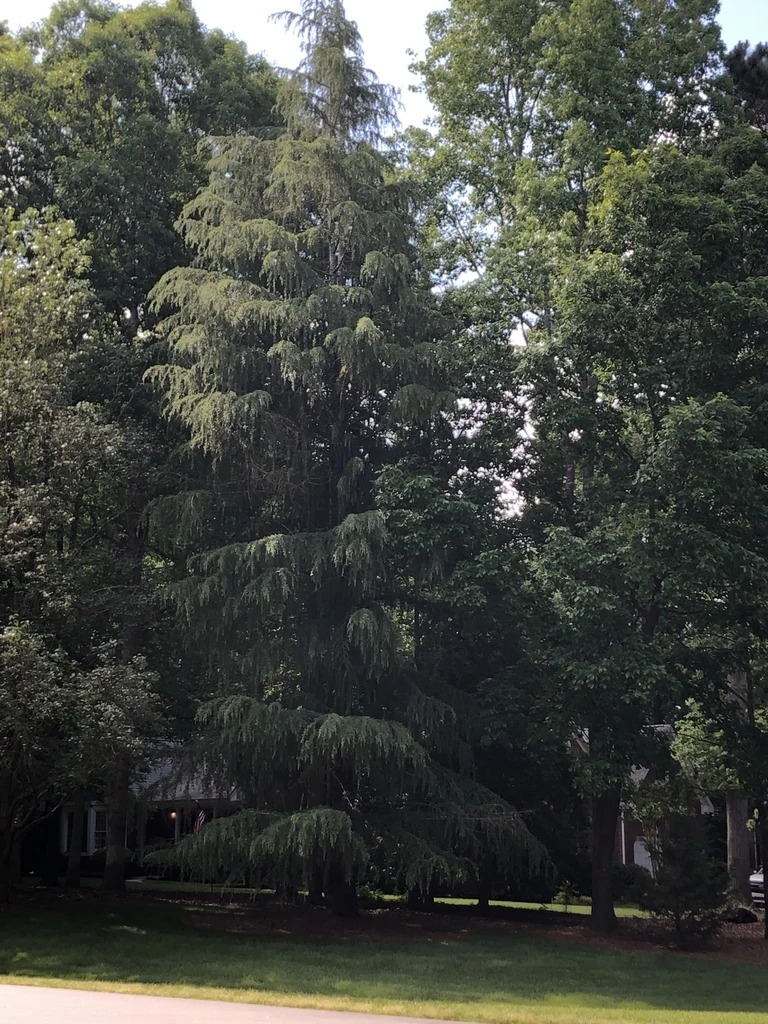
Whole tree — Cedrus deodara. Species reference; the photographed specimen does not confirm the named variety. Age, pruning, and site affect its shape.☀ Full sunCathy Dewitt ↗ · CC BY 4.0Photo contextResized and converted to WebP; full original composition retained.
Problems to recognize in WNC gardens. These are documented susceptibilities, not a local outbreak report or a diagnosis. Weather, elevation and growing conditions change the risk.
Diseases & similar-looking injury
Armillaria and Phytophthora root rots can cause decline.
Insects to recognize
Scale, borers and sawflies are possible pests.
When to look
Inspect roots and drainage after wet periods, and foliage during the growing season.
A useful first step
Check drainage and investigate progressive thinning or boring debris rather than relying on needle color alone.
More growing details
Read the leaves
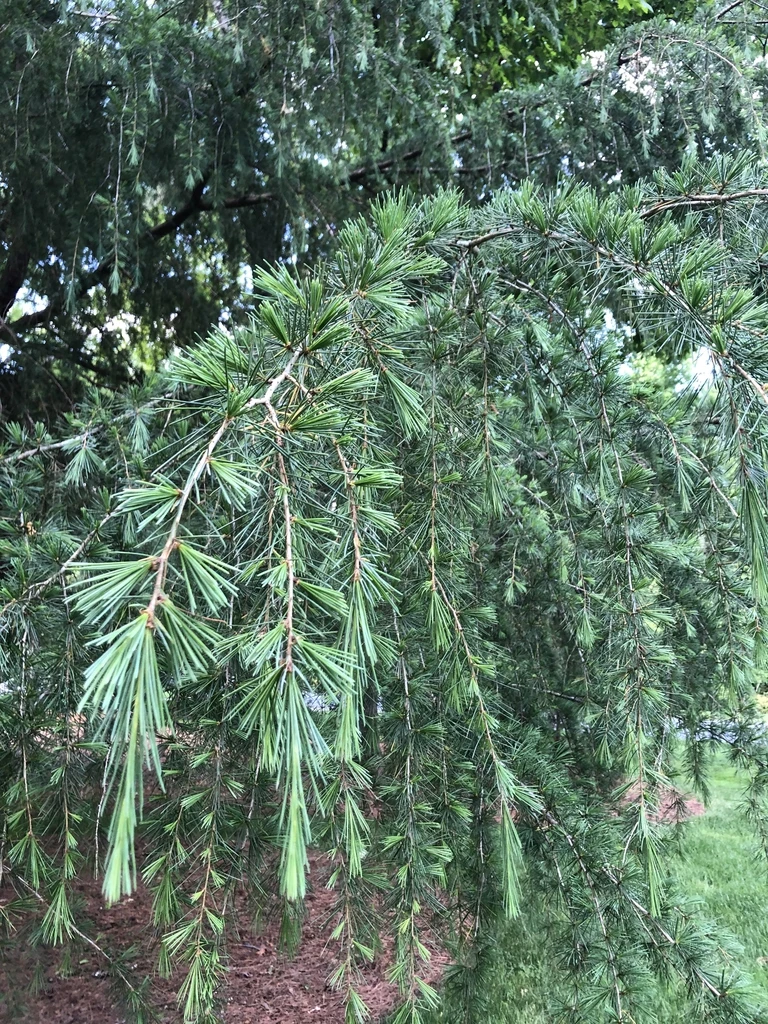
Many needles radiate from each short woody spur. This rosette differs from a pine's two-, three-, or five-needle bundle.
Read the bark
Gray bark becomes dark and fissured with age.
Fruit & seed
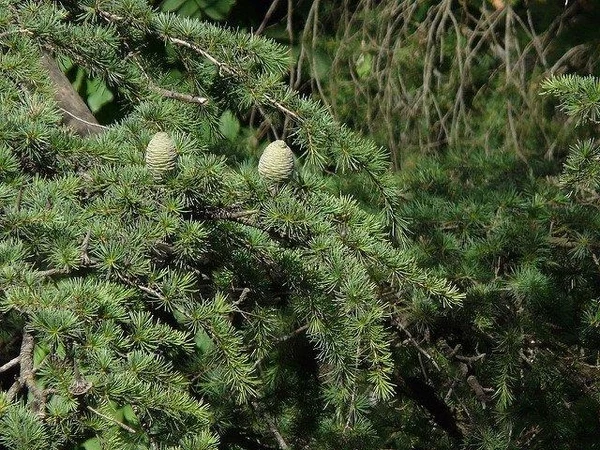
Upright barrel-shaped cones break apart on the tree; full cones are less likely to be found intact below it.
Winter character
Evergreen needle rosettes and pendent leaders support the cedar identification.
Origin & place
An introduced garden species or horticultural hybrid; study it as part of WNC landscapes rather than assume it belongs to the native mountain flora.
WNC Notes
Use a cold-hardy selection on protected lower-elevation sites; winter injury possible in exposed Zone 7a.
Sun Exposure
Full sun
MATURE HEIGHT (FT)
30–50
MATURE WIDTH (FT)
30–40
BLOOM SEASON
Spring
BLOOM COLOR
Inconspicuous
FALL / WINTER COLOR
Evergreen
Wet-Soil Tolerance
High
Drought Tolerance
Low
LOOK CLOSELY
Two views, a closer look.
Place two photographs beside one another. Compare the overall plant with leaves, flowers, or bark when those views are available. Captions identify what each photograph actually shows. Images are not at the same scale; species references may show different cultivars.
Whole tree — Cedrus deodara. Species reference; the photographed specimen does not confirm the named variety. Age, pruning, and site affect its shape.☀ Full sunCathy Dewitt ↗ · CC BY 4.0Photo contextResized and converted to WebP; full original composition retained.Cedrus deodara. Taxon reference; photograph alone does not establish a named cultivar.☀ Full sunCathy Dewitt ↗ · CC BY 4.0Photo contextResized and converted to WebP; no diagnostic content altered.Upright developing cones of deodar cedar — species reference; cultivar identity not inferred.☀ Full sunPhoto by Dinesh Valke ↗ · CC-BY-SA 2.0Photo contextResized and converted to WebP; full original composition retained.
Your margin of the garden.
Saved only in this browser on this device. Export your notes from My garden in the library.