Trees & woodland lore · Western North Carolina field companion
Pitch pine
Pinus rigida
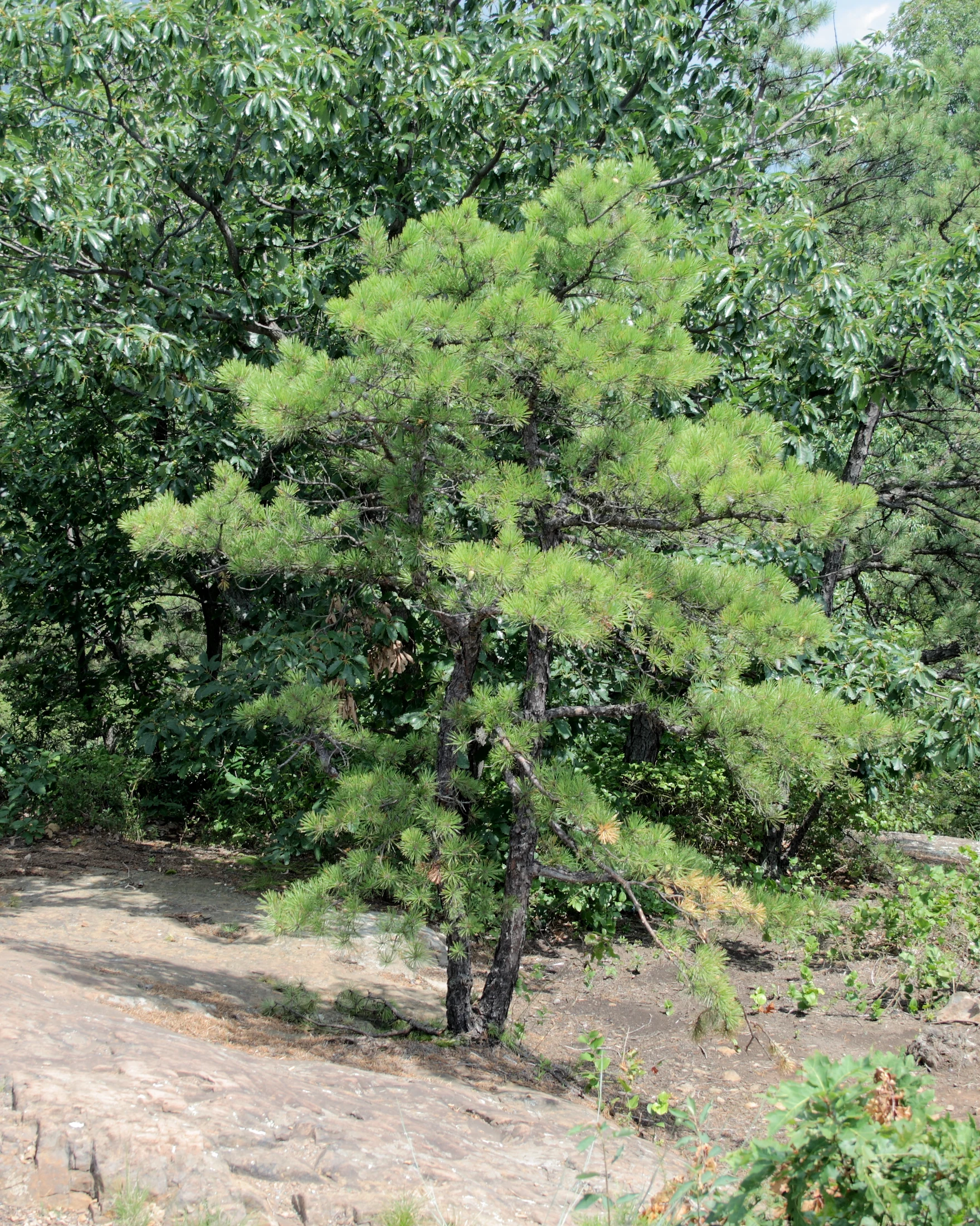
Whole tree — Pinus rigida. Species reference; the photographed specimen does not confirm the named variety. Age, pruning, and site affect its shape.☀ Full sunRagesoss ↗ · CC BY-SA 3.0Photo contextResized and converted to WebP; full original composition retained.
Problems to recognize in WNC gardens. These are documented susceptibilities, not a local outbreak report or a diagnosis. Weather, elevation and growing conditions change the risk.
Diseases & similar-looking injury
Pine cankers and other needle or stem diseases can cause dieback; pitch canker is a documented Virginia pine susceptibility.
Insects to recognize
Bark beetles and needle-feeding insects are concerns on pines, especially stressed trees.
When to look
Watch for fresh resin, boring debris and rapid foliage browning during the growing season.
A useful first step
Investigate spreading decline promptly. An arborist or Extension can distinguish insects, disease and drought injury.
More growing details
Read the leaves
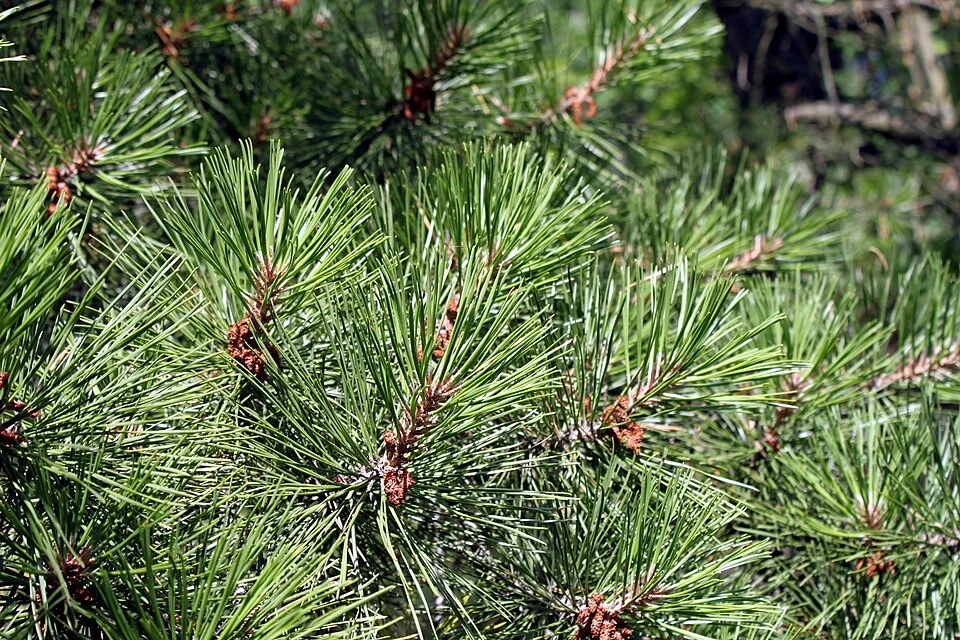
Count three needles sharing each intact bundle. Stiffness and direct sprouts from trunk or older wood support the identification.
Read the bark
Thick dark bark forms irregular plates on older trees.
Fruit & seed
Ovoid cones bear scale prickles; some persist unopened, but not all trees show that behavior.
Winter character
Persistent three-needle bundles and trunk sprouts provide useful winter clues.
Origin & place
The species occurs naturally in the southern Appalachian region; a planted specimen is not evidence of wild local origin.
WNC Notes
Rugged native for dry acidic sites; coarse naturalistic character.
Sun Exposure
Full sun
MATURE HEIGHT (FT)
40–60
MATURE WIDTH (FT)
30–50
BLOOM SEASON
Spring
BLOOM COLOR
Inconspicuous
FALL / WINTER COLOR
Evergreen
Wet-Soil Tolerance
High
Drought Tolerance
High
LOOK CLOSELY
Two views, a closer look.
Place two photographs beside one another. Compare the overall plant with leaves, flowers, or bark when those views are available. Captions identify what each photograph actually shows. Images are not at the same scale; species references may show different cultivars.
Whole tree — Pinus rigida. Species reference; the photographed specimen does not confirm the named variety. Age, pruning, and site affect its shape.☀ Full sunRagesoss ↗ · CC BY-SA 3.0Photo contextResized and converted to WebP; full original composition retained.Pitch pine foliage. Inspect complete needle bundles for the characteristic grouping of three; combine this with the cone and bark.☀ Full sunCrusier ↗ · CC BY-SA 3.0Photo contextResized and converted to WebP; no diagnostic content altered.
Your margin of the garden.
Saved only in this browser on this device. Export your notes from My garden in the library.