Trees & woodland lore · Western North Carolina field companion
Eastern white pine
Pinus strobus
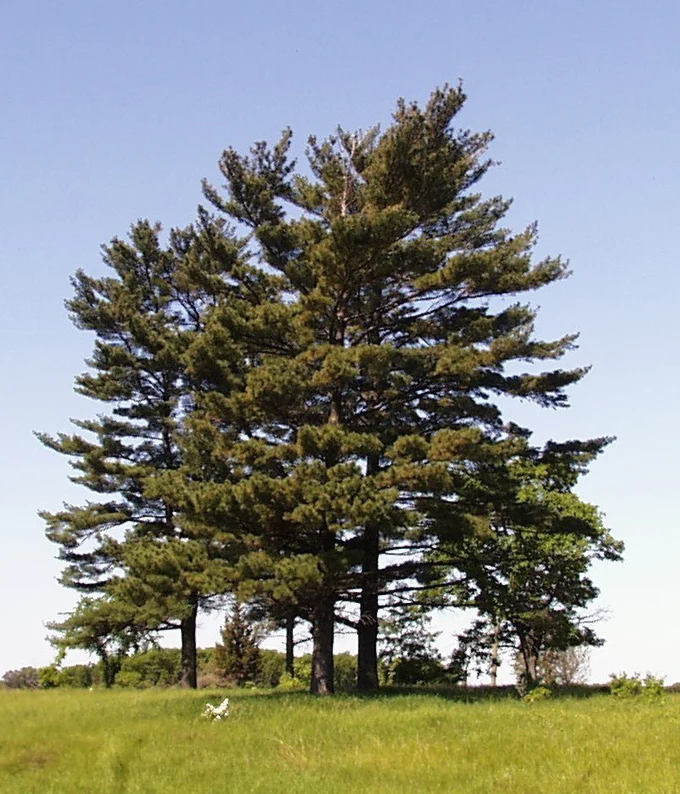
Whole tree — Pinus strobus. Species reference; the photographed specimen does not confirm the named variety. Age, pruning, and site affect its shape.☀ Full sun · ◐ Part sun or part shadeUS FWS ↗ · Public domainPhoto contextResized and converted to WebP; full original composition retained.
Problems to recognize in WNC gardens. These are documented susceptibilities, not a local outbreak report or a diagnosis. Weather, elevation and growing conditions change the risk.
Diseases & similar-looking injury
White pine blister rust and other cankers can injure branches and stems. Root and site stress can also cause decline.
Insects to recognize
White pine weevil, bark beetles, sawflies and scale are concerns. A wilted leading shoot can indicate weevil damage.
When to look
Inspect the top shoot in spring and check for fresh boring debris or needle feeding through summer.
A useful first step
Have persistent leader death or rapid browning assessed; keep roots protected from compaction and drought.
More growing details
Read the leaves
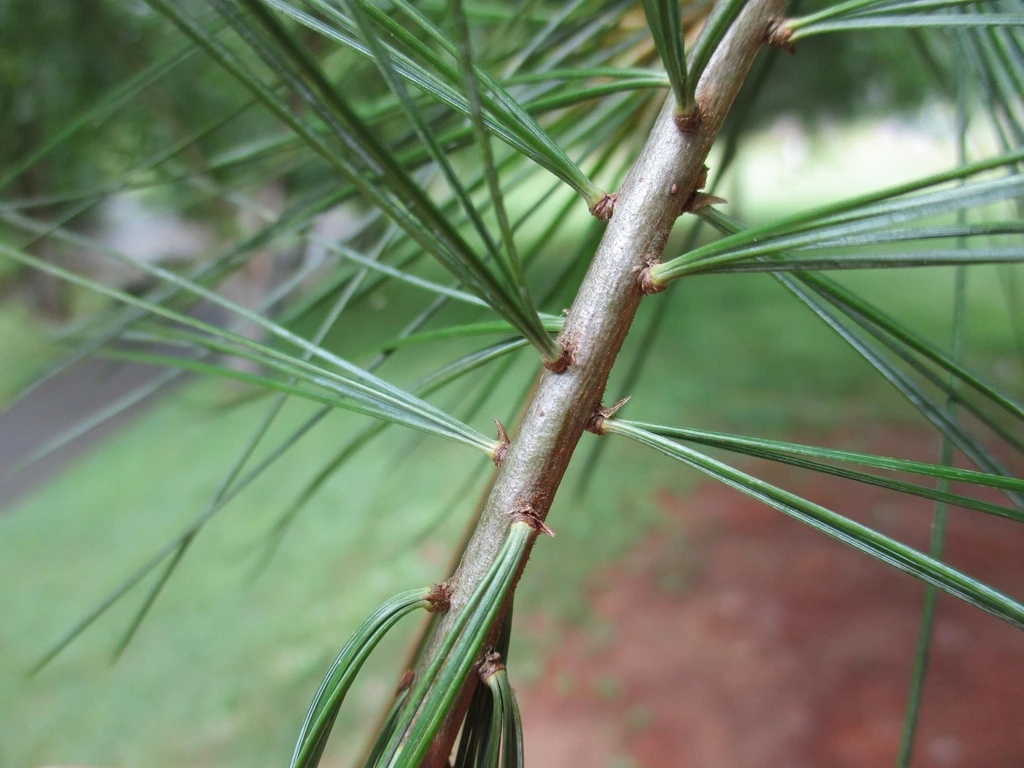
Count five needles emerging together from one bundle, using an intact cluster. Bundle count is more reliable than softness alone.
Read the bark
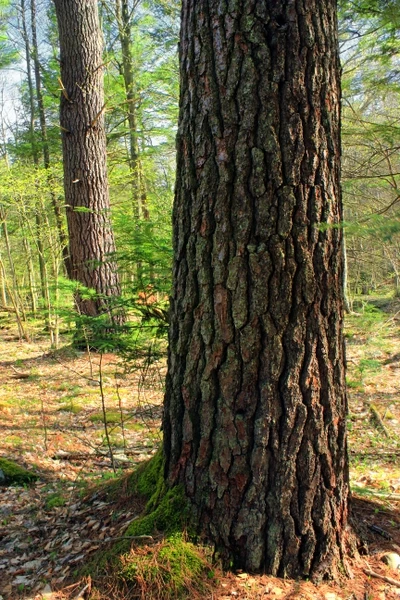
Smooth gray young bark becomes dark and deeply furrowed.
Fruit & seed
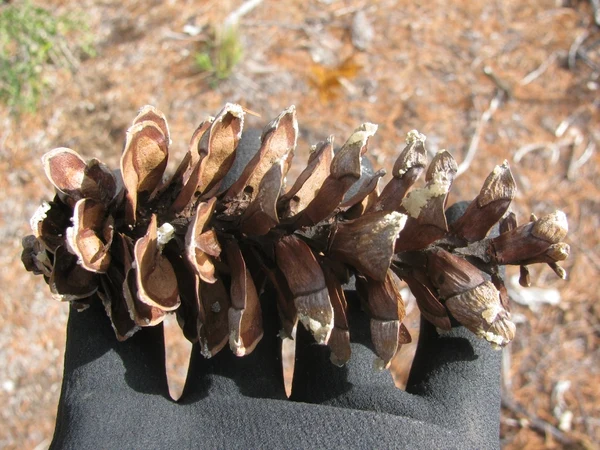
Long slender cones lack the sharp, stout scale prickles of many hard pines.
Winter character
Evergreen five-needle bundles remain the best easy clue.
Origin & place
The species occurs naturally in the southern Appalachian region; a planted specimen is not evidence of wild local origin.
WNC Notes
Native mountain conifer for large sites; vulnerable to white-pine weevil, ice, and salt exposure.
Sun Exposure
Full sun–part shade
MATURE HEIGHT (FT)
50–80
MATURE WIDTH (FT)
20–40
BLOOM SEASON
Spring
BLOOM COLOR
Inconspicuous
FALL / WINTER COLOR
Evergreen
Wet-Soil Tolerance
Low–moderate
Drought Tolerance
Moderate
LOOK CLOSELY
Two views, a closer look.
Place two photographs beside one another. Compare the overall plant with leaves, flowers, or bark when those views are available. Captions identify what each photograph actually shows. Images are not at the same scale; species references may show different cultivars.
Whole tree — Pinus strobus. Species reference; the photographed specimen does not confirm the named variety. Age, pruning, and site affect its shape.☀ Full sun · ◐ Part sun or part shadeUS FWS ↗ · Public domainPhoto contextResized and converted to WebP; full original composition retained.Eastern white pine needles and their attachment in bundles (fascicles). Examine an intact bundle when counting needles.☀ Full sun · ◐ Part sun or part shadeTom Glasgow ↗ · CC BY 4.0Photo contextResized and converted to WebP; no diagnostic content altered.Mature eastern white pine trunk and bark — species reference; cultivar identity not inferred.☀ Full sun · ◐ Part sun or part shadeNicholas A. Tonelli ↗ · CC BY 4.0Photo contextResized and converted to WebP; full original composition retained.Open eastern white pine seed cone with thin, unarmed scales — species reference; cultivar identity not inferred.☀ Full sun · ◐ Part sun or part shadeForest and Kim Starr ↗ · CC BY 4.0Photo contextResized and converted to WebP; full original composition retained.
Your margin of the garden.
Saved only in this browser on this device. Export your notes from My garden in the library.