Trees & woodland lore · Western North Carolina field companion
Tulip poplar
Liriodendron tulipifera
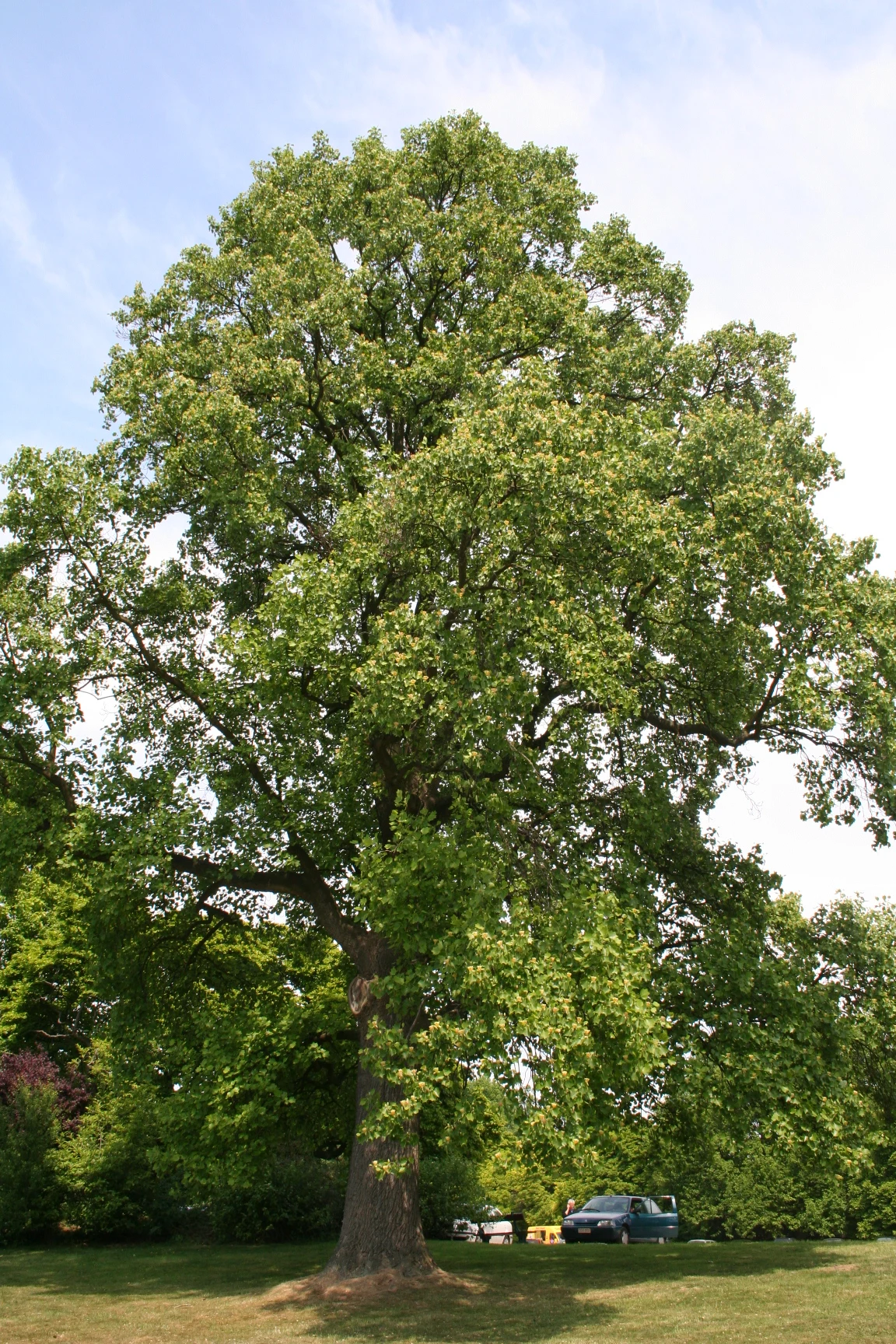
Whole tree — Liriodendron tulipifera. Species reference; the photographed specimen does not confirm the named variety. Age, pruning, and site affect its shape.☀ Full sunJean-Pol GRANDMONT ↗ · CC BY 3.0Photo contextResized and converted to WebP; full original composition retained.
Problems to recognize in WNC gardens. These are documented susceptibilities, not a local outbreak report or a diagnosis. Weather, elevation and growing conditions change the risk.
Diseases & similar-looking injury
Leaf spots, cankers and wilt can occur. Yellow leaves and leaf drop during hot, dry weather may also be a stress response.
Insects to recognize
Aphids and scale can leave sticky honeydew that supports black sooty mold.
When to look
Inspect sticky foliage in spring and summer and compare leaf drop with recent dry weather.
A useful first step
Look for the insect producing honeydew rather than treating sooty mold alone. Investigate persistent wilt and support suitable soil moisture.
More growing details
Read the leaves
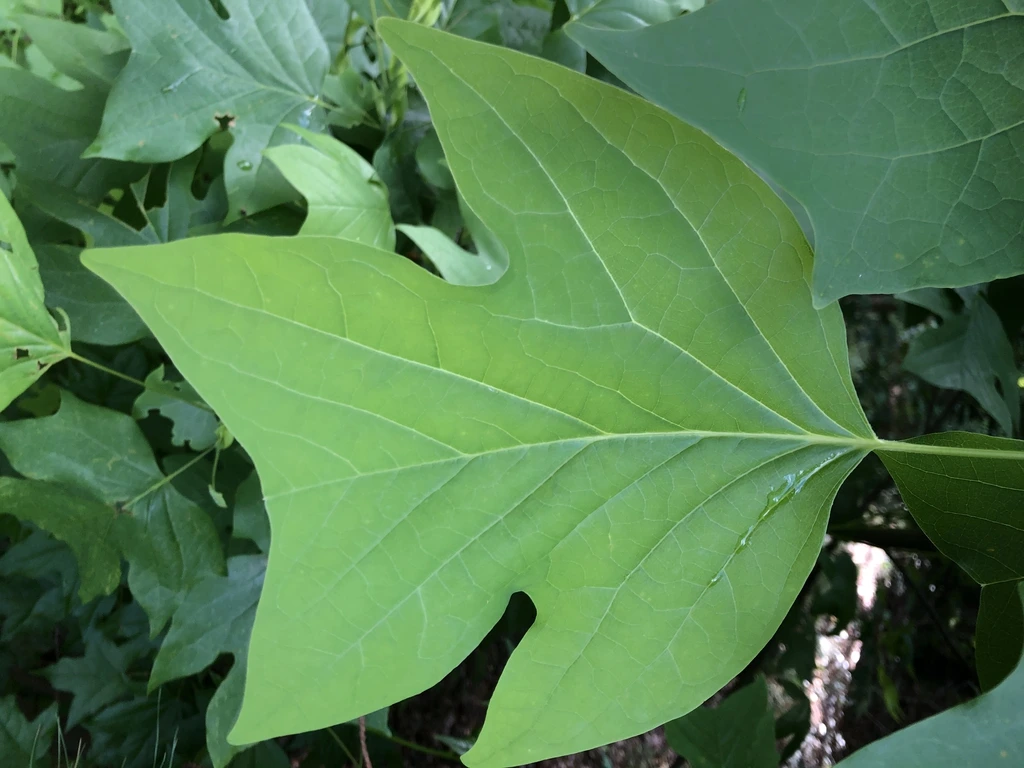
The squared or notched top looks as though the leaf tip was clipped away. This is a powerful clue on an intact mature leaf.
Read the bark
Older bark forms long pale-gray furrows and ridges.
Fruit & seed
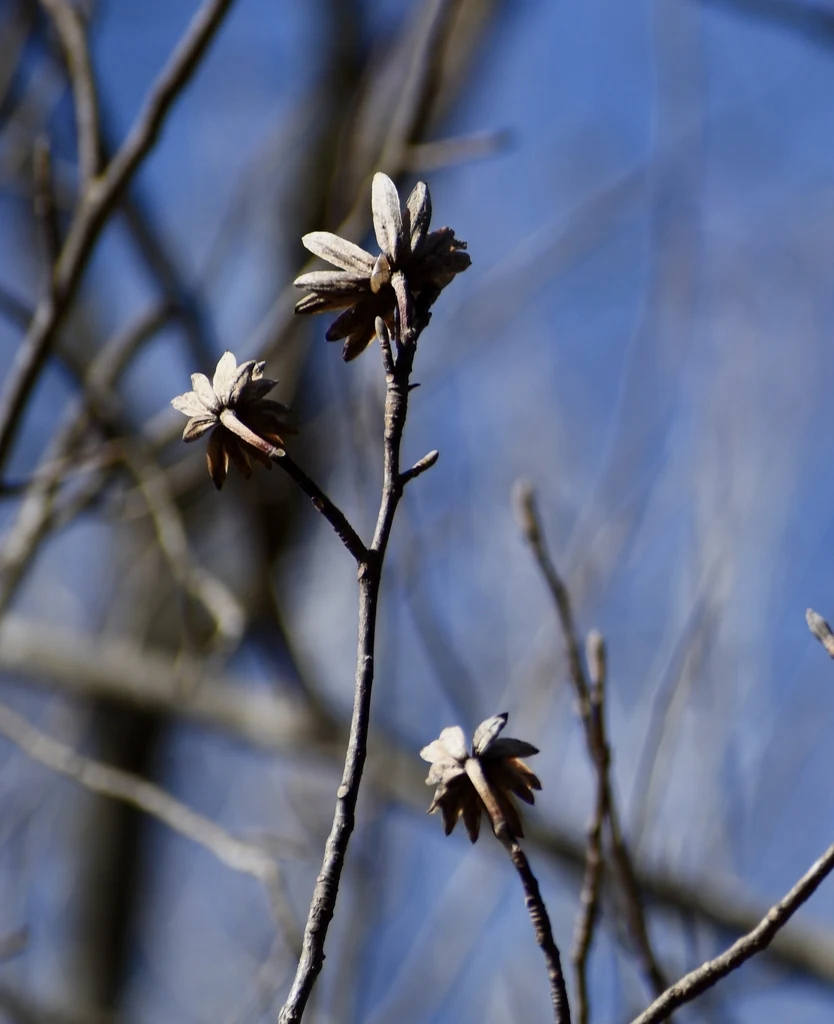
An upright cone-shaped cluster releases separate winged samaras; it is not a conifer cone.
Winter character
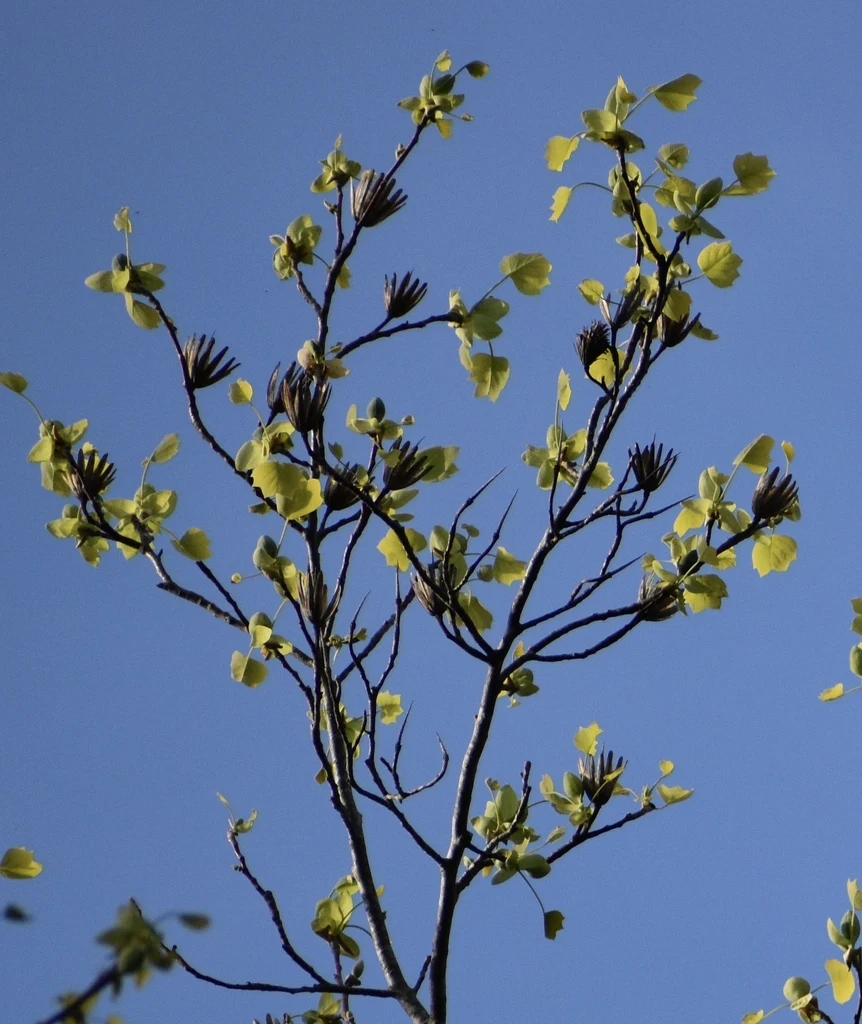
Duckbill-shaped buds and remaining upright fruit axes help identify bare twigs.
Origin & place
The species occurs naturally in the southern Appalachian region; a planted specimen is not evidence of wild local origin.
WNC Notes
Fast native canopy tree for large sites; brittle branches and enormous size exclude small yards.
Sun Exposure
Full sun
MATURE HEIGHT (FT)
80–120
MATURE WIDTH (FT)
30–60
BLOOM SEASON
Late spring
BLOOM COLOR
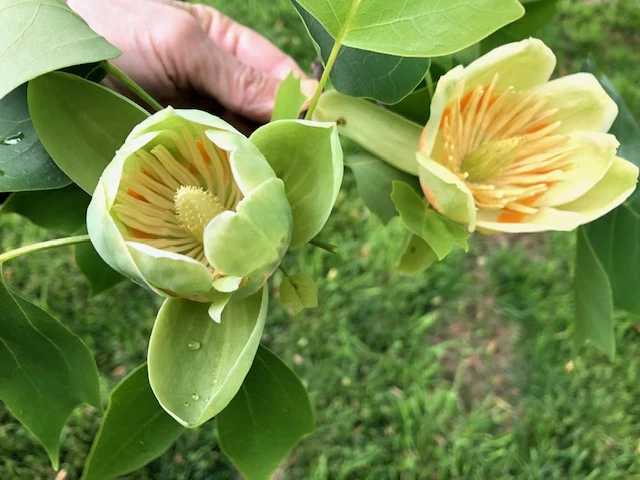
Yellow-green-orange
FALL / WINTER COLOR
Yellow
Wet-Soil Tolerance
Moderate
Drought Tolerance
Low–moderate
LOOK CLOSELY
Two views, a closer look.
Place two photographs beside one another. Compare the overall plant with leaves, flowers, or bark when those views are available. Captions identify what each photograph actually shows. Images are not at the same scale; species references may show different cultivars.
Whole tree — Liriodendron tulipifera. Species reference; the photographed specimen does not confirm the named variety. Age, pruning, and site affect its shape.☀ Full sunJean-Pol GRANDMONT ↗ · CC BY 3.0Photo contextResized and converted to WebP; full original composition retained.Species reference; does not confirm the named variety. Photograph subject: Flowers close-up showing orange-blotched tepals & many stamens☀ Full sunMark Robinson ↗ · CC BY 4.0Photo contextResized and converted to WebP; full original composition retained.Species reference; does not confirm the named variety. Photograph subject: Leaf Buds & Seed Husks - Winter - Warren Co., NC☀ Full sunCathy DeWitt ↗ · CC BY 4.0Photo contextResized and converted to WebP; full original composition retained.Tulip-tree leaf close-up: four broad lobes and a notched, almost squared-off tip.☀ Full sunCathy Dewitt ↗ · CC BY 4.0Photo contextResized and converted to WebP; no diagnostic content altered.Shoots with old, spent fruits and emerging new leaves. — species reference; cultivar identity not inferred.☀ Full sunCathy DeWitt ↗ · CC BY 4.0Photo contextResized and converted to WebP; full original composition retained.
Your margin of the garden.
Saved only in this browser on this device. Export your notes from My garden in the library.

_-_Laeken.JPG)