Trees & woodland lore · Western North Carolina field companion
Sweetbay magnolia
Magnolia virginiana
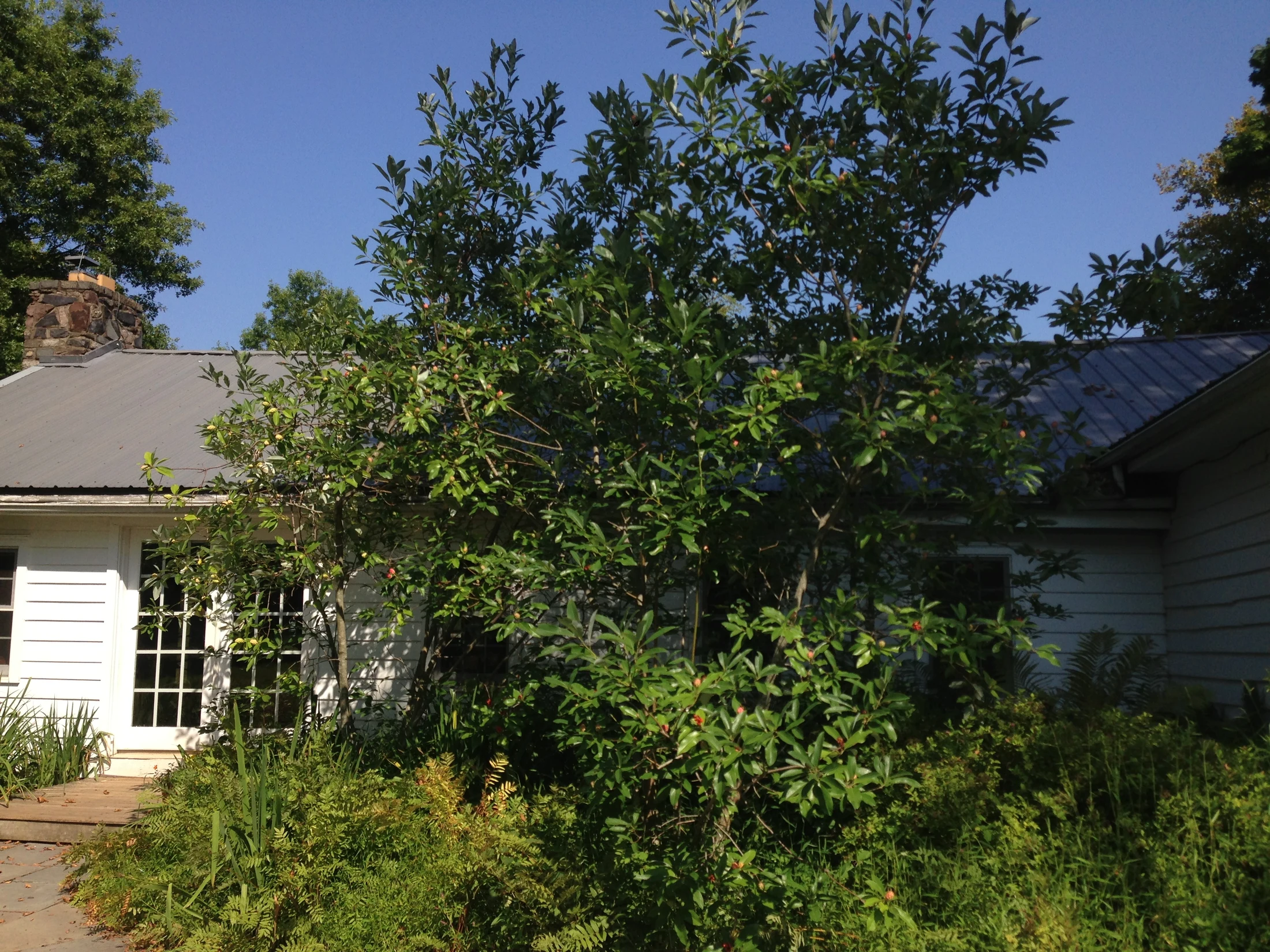
Whole tree — Magnolia virginiana. Species reference; the photographed specimen does not confirm the named variety. Age, pruning, and site affect its shape.☀ Full sun · ◐ Part sun or part shadeFamartin ↗ · CC BY-SA 4.0Photo contextResized and converted to WebP; full original composition retained.
Problems to recognize in WNC gardens. These are documented susceptibilities, not a local outbreak report or a diagnosis. Weather, elevation and growing conditions change the risk.
Diseases & similar-looking injury
Leaf spots and occasional cankers may occur. Early-flowering magnolias can lose blooms to frost without having a disease.
Insects to recognize
Magnolia scale is a key insect to recognize: attached bumps on twigs, sticky honeydew and black sooty mold.
When to look
Check twigs and sticky foliage during the growing season; assess flower damage after late frosts.
A useful first step
Identify scale before choosing control timing. Compare normal seasonal leaf shedding with persistent leaf loss or branch dieback.
More growing details
Read the leaves
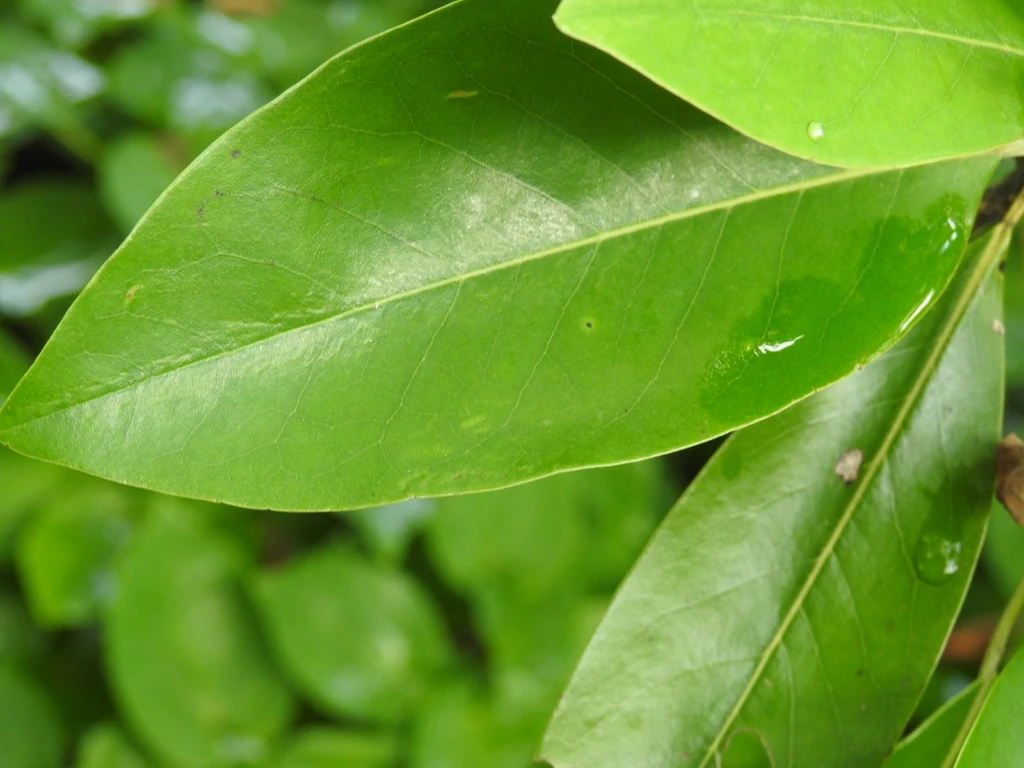
Turn over a smooth-edged leaf: the underside is pale silver. Foliage persistence varies with climate and cultivar.
Read the bark
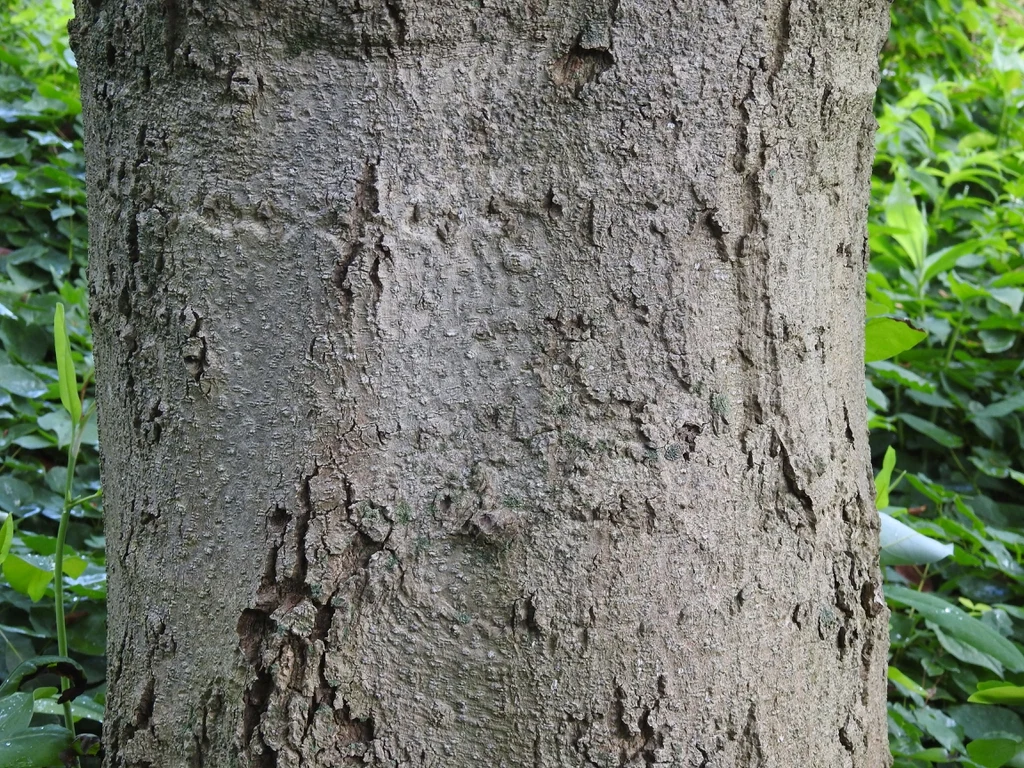
Gray bark is comparatively smooth on younger trees and becomes more textured with age.
Fruit & seed
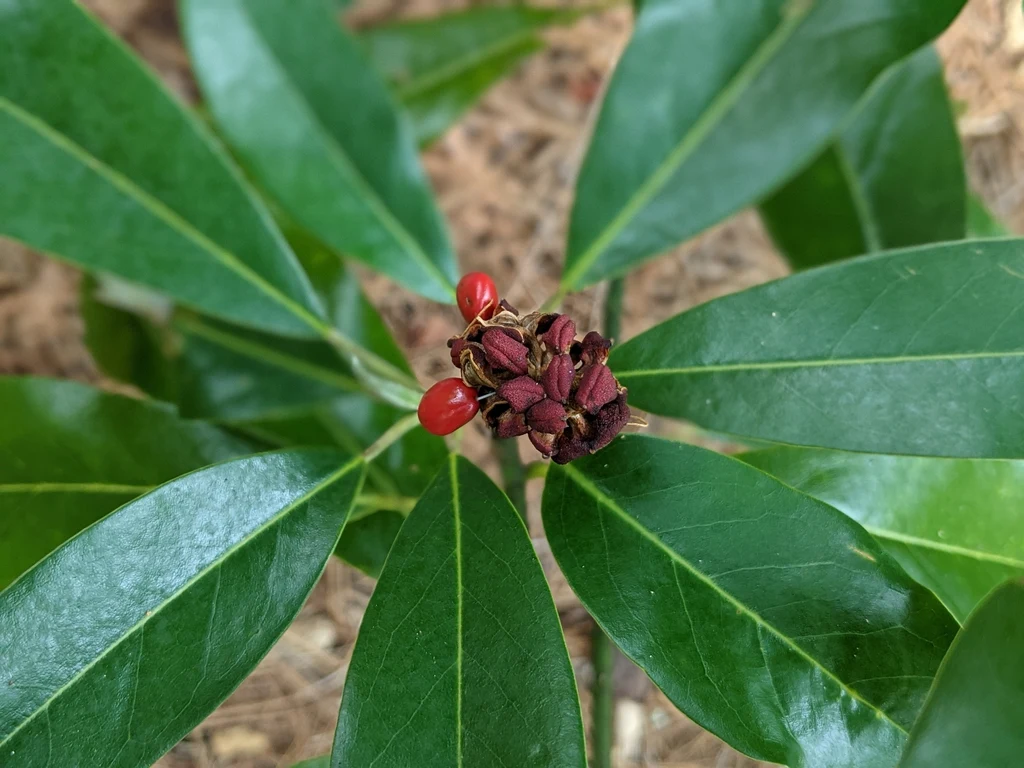
Small cone-like aggregates expose red seeds; these are fruits rather than conifer cones.
Winter character
Look for terminal buds and leaf undersides where leaves persist; cold sites may lose foliage.
Origin & place
A cultivated selection of a mainly lowland eastern species. Local planting and natural WNC distribution are different questions.
WNC Notes
A southeastern magnolia that appreciates moist soil. Leaf persistence varies with climate and the planted tree.
Sun Exposure
Full sun–part shade
MATURE HEIGHT (FT)
10–35
MATURE WIDTH (FT)
10–35
BLOOM SEASON
Late spring–summer
BLOOM COLOR
Creamy white
FALL / WINTER COLOR
Yellow to evergreen
Wet-Soil Tolerance
High
Drought Tolerance
Low–moderate
LOOK CLOSELY
Two views, a closer look.
Place two photographs beside one another. Compare the overall plant with leaves, flowers, or bark when those views are available. Captions identify what each photograph actually shows. Images are not at the same scale; species references may show different cultivars.
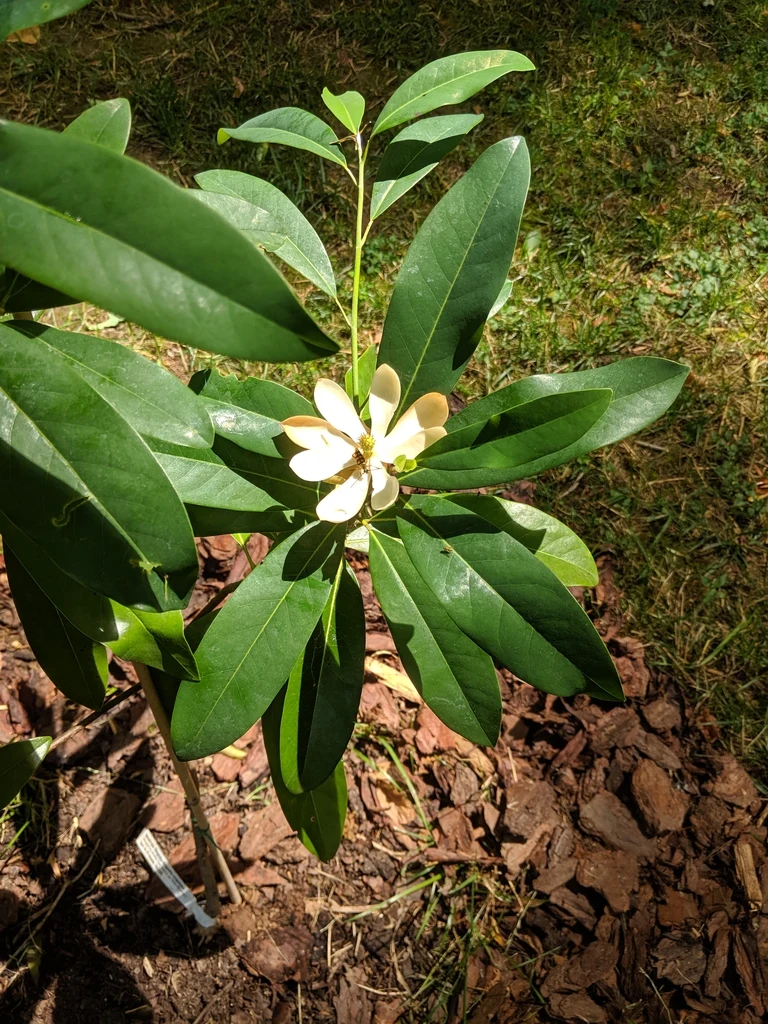
Whole tree — Magnolia virginiana. Species reference; the photographed specimen does not confirm the named variety. Age, pruning, and site affect its shape.☀ Full sun · ◐ Part sun or part shadeFamartin ↗ · CC BY-SA 4.0Photo contextResized and converted to WebP; full original composition retained.Species reference; does not confirm the named variety. Photograph subject: flower and leaves, Cabarrus County☀ Full sun · ◐ Part sun or part shadeHope Duckworth ↗ · CC BY 4.0Photo contextResized and converted to WebP; full original composition retained.var australis upper leaf. Taxon reference; photograph alone does not establish a named cultivar.☀ Full sun · ◐ Part sun or part shadeKathleen Moore ↗ · CC BY 2.0Photo contextResized and converted to WebP; no diagnostic content altered.var australis bark — species reference; cultivar identity not inferred.☀ Full sun · ◐ Part sun or part shadeKathleen Moore ↗ · CC BY 2.0Photo contextResized and converted to WebP; full original composition retained.fruits July 2021 — species reference; cultivar identity not inferred.☀ Full sun · ◐ Part sun or part shadeHope Duckworth ↗ · CC BY 4.0Photo contextResized and converted to WebP; full original composition retained.
Your margin of the garden.
Saved only in this browser on this device. Export your notes from My garden in the library.