Get to know this plant.
Identification clue 1
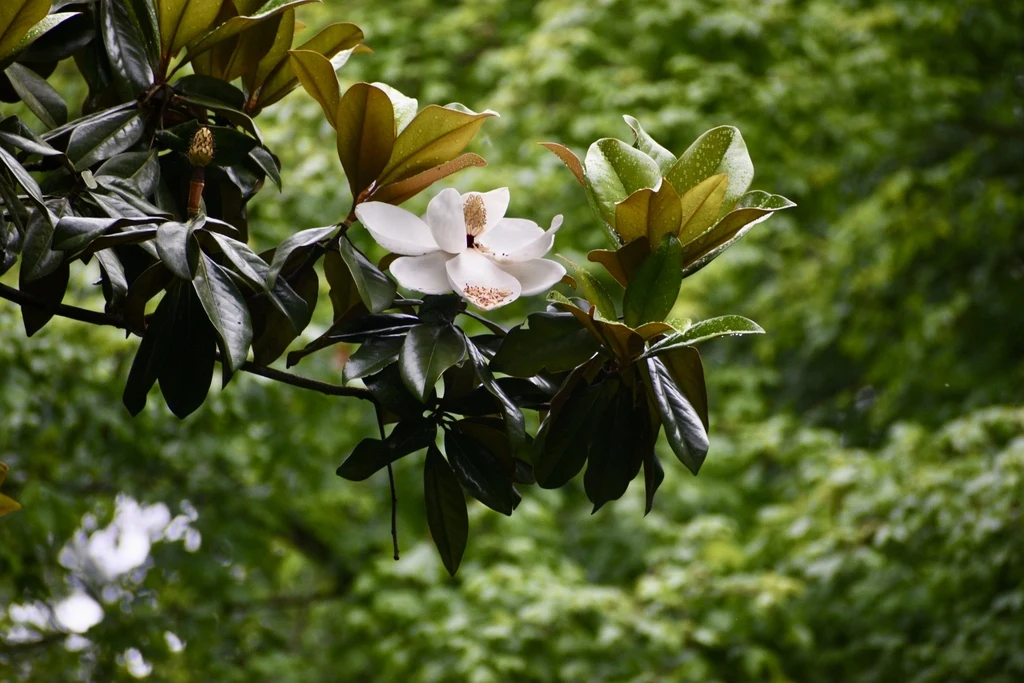
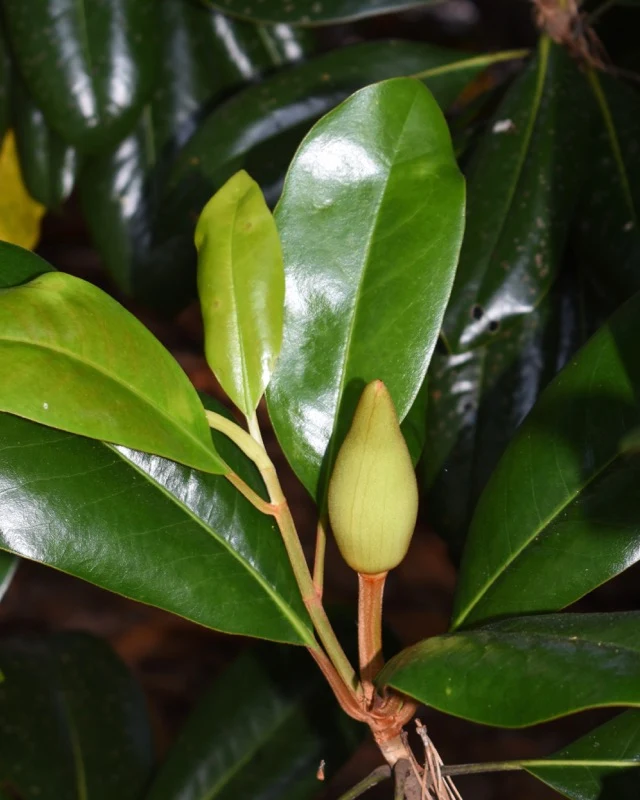
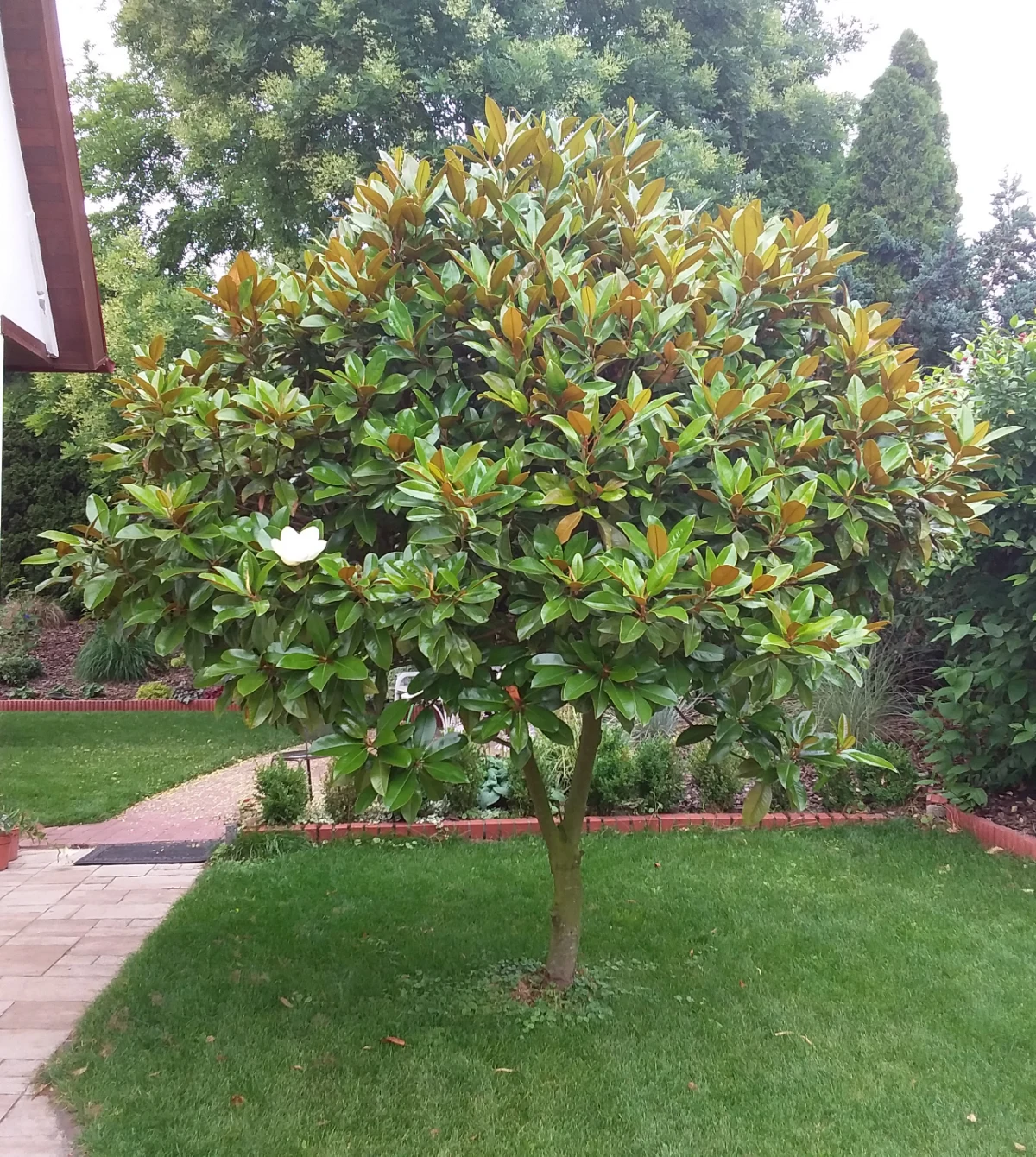
Thick glossy evergreen leaves
Identification clue 2
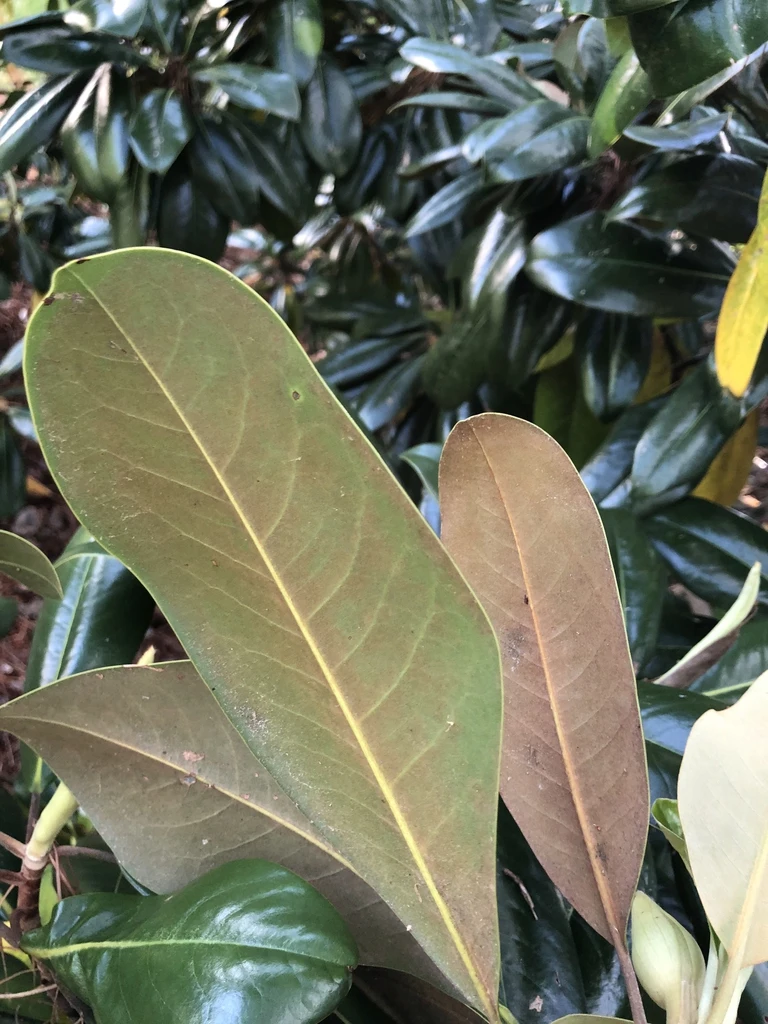
Often rusty-hairy leaf undersides
Identification clue 3
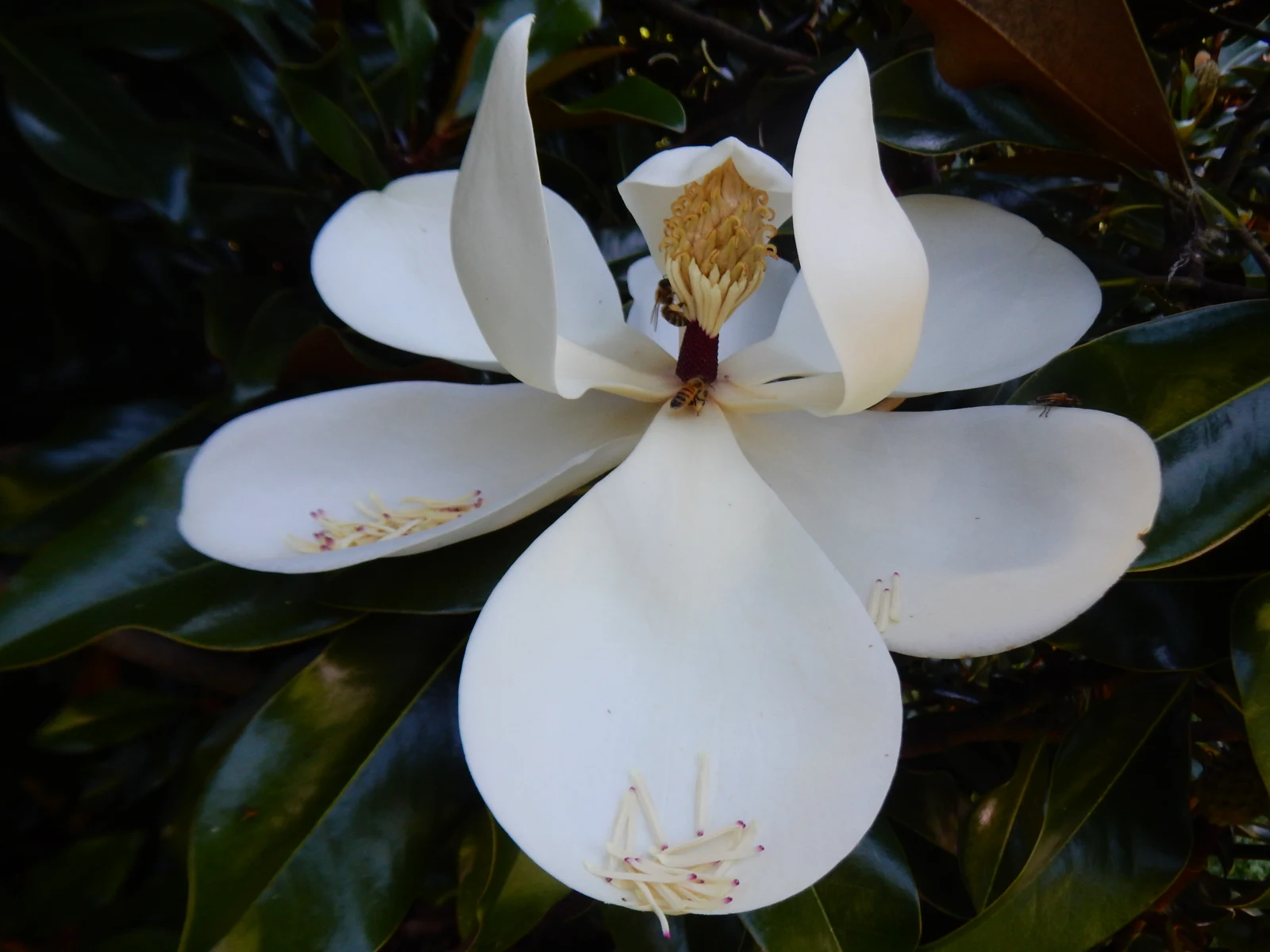
Large white summer flowers
Diseases & insects in WNC
Problems to recognize in WNC gardens. These are documented susceptibilities, not a local outbreak report or a diagnosis. Weather, elevation and growing conditions change the risk.
Diseases & similar-looking injury
Leaf spots and occasional cankers may occur. Early-flowering magnolias can lose blooms to frost without having a disease.
Insects to recognize
Magnolia scale is a key insect to recognize: attached bumps on twigs, sticky honeydew and black sooty mold.
When to look
Check twigs and sticky foliage during the growing season; assess flower damage after late frosts.
A useful first step
Identify scale before choosing control timing. Compare normal seasonal leaf shedding with persistent leaf loss or branch dieback.
More growing details
Read the leaves
A leathery simple leaf has a smooth edge. Turn it over for dense rusty hairs; their abundance varies by selection.
Read the bark
Gray young bark becomes darker and scaly on older trunks.
Fruit & seed
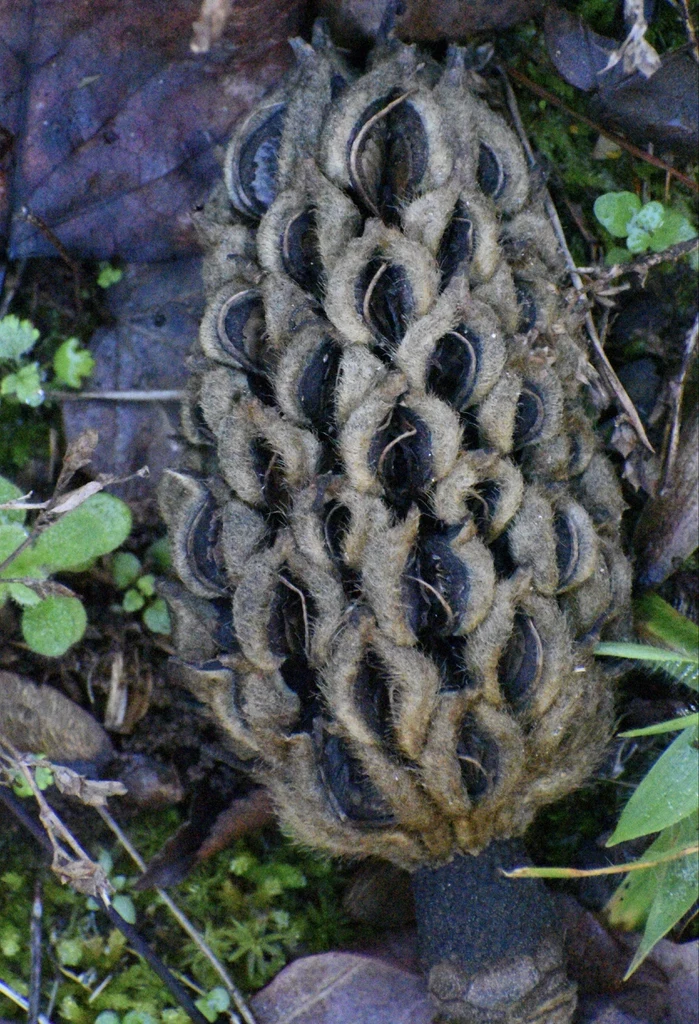
An upright cone-like aggregate releases bright red seeds on slender threads; botanically it is a fruit, not a conifer cone.
Winter character
Persistent leaves and large fuzzy terminal buds offer year-round clues.
Origin & place
A southeastern U.S. species, naturally chiefly coastal; a planted WNC tree does not establish wild local nativity.
WNC Notes
A large southeastern evergreen magnolia. Garden forms differ greatly in mature size; confirm the expected size before planting.
Sun Exposure
Full sun–part shade
MATURE HEIGHT (FT)
60–80
MATURE WIDTH (FT)
30–50
BLOOM SEASON
Late spring–summer
BLOOM COLOR
White
FALL / WINTER COLOR
Evergreen
Wet-Soil Tolerance
Moderate
Drought Tolerance
Moderate
At Lynn’s Nursery · Bracken's Brown Beauty
Magnolia grandiflora Summer/Fall 2026 catalog. Confirm current availability with the nursery. Mature height × width: 20–30 ft × 10–15 ft. Light: Full sun to part shade. Habit: Dense, pyramidal evergreen tree. Flowers & season: Large fragrant white; late spring–summer. Evergreen specimen or screen; room for roots and canopy.