Trees & woodland lore · Western North Carolina field companion
American beech
Fagus grandifolia
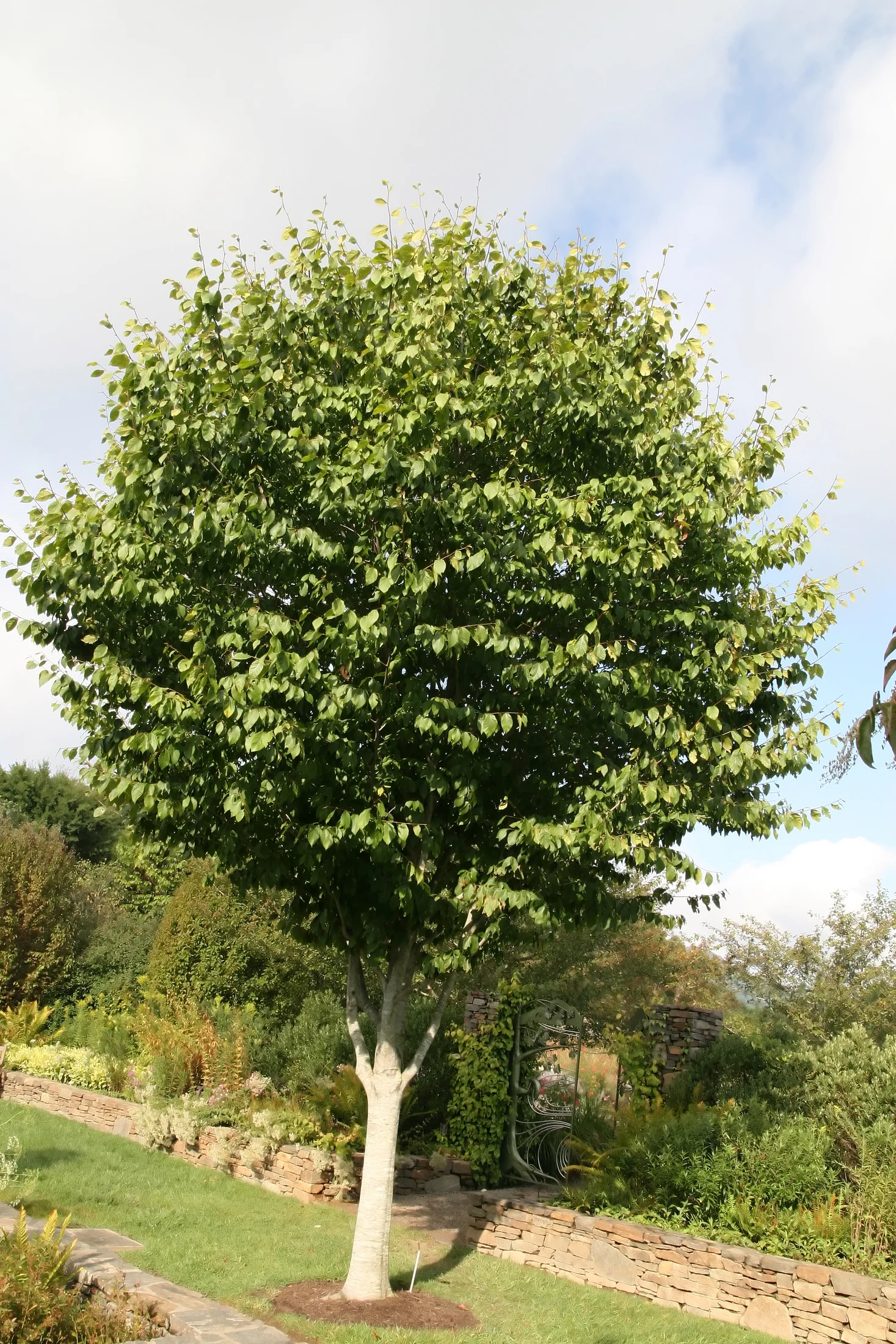
Whole tree — Fagus grandifolia. Species reference; the photographed specimen does not confirm the named variety. Age, pruning, and site affect its shape.☀ Full sun · ☾ ShadePhoto by David J. Stang ↗ · CC BY-SA 4.0Photo contextResized and converted to WebP; full original composition retained.
Problems to recognize in WNC gardens. These are documented susceptibilities, not a local outbreak report or a diagnosis. Weather, elevation and growing conditions change the risk.
Diseases & similar-looking injury
Beech bark disease involves beech scale and fungal infection; rough, damaged bark and canopy decline need expert assessment.
Insects to recognize
Beech blight aphids can form conspicuous white woolly colonies on branches; these are different from beech scale on bark.
When to look
Look at bark year-round and inspect woolly branch colonies during the growing season.
A useful first step
Identify the insect before acting. Have bark injury, persistent dieback or unusual leaf changes assessed; this guide is not a complete survey of emerging beech threats.
More growing details
Read the leaves
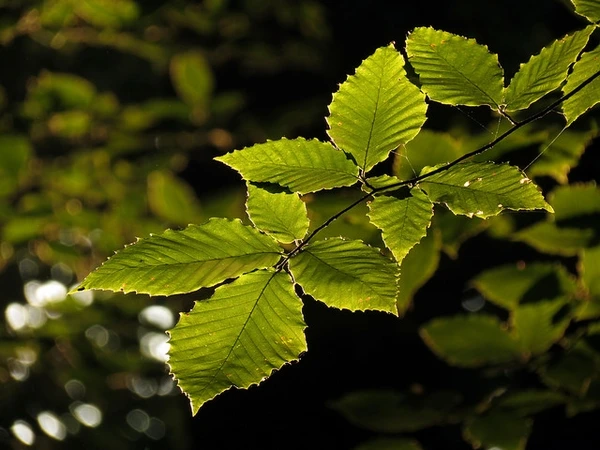
Each strong lateral vein runs almost straight to a marginal tooth. Look for alternate leaves on fine twigs.
Read the bark
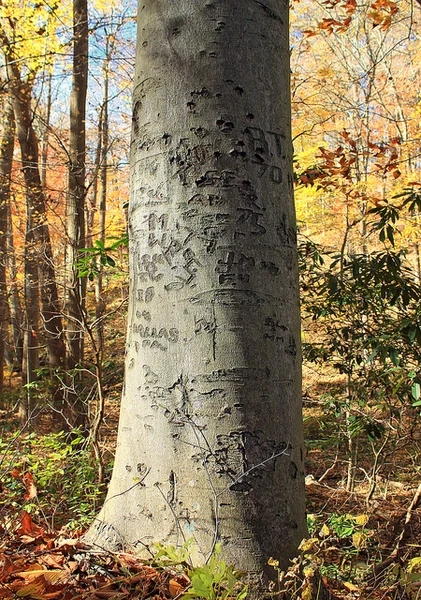
Smooth gray bark often persists even on large trunks; never carve or damage it.
Fruit & seed
Small triangular nuts sit within a prickly four-part husk.
Winter character
Very long, slim, pointed buds are especially distinctive; young trees may retain tan leaves.
Origin & place
The species occurs naturally in the southern Appalachian region; a planted specimen is not evidence of wild local origin.
WNC Notes
Majestic long-lived native for large undisturbed sites; sensitive to compaction and root-zone disturbance.
Sun Exposure
Full sun–shade
MATURE HEIGHT (FT)
60–80
MATURE WIDTH (FT)
40–80
BLOOM SEASON
Spring
BLOOM COLOR
Inconspicuous
FALL / WINTER COLOR
Golden bronze
Wet-Soil Tolerance
Moderate
Drought Tolerance
Low–moderate
LOOK CLOSELY
Two views, a closer look.
Place two photographs beside one another. Compare the overall plant with leaves, flowers, or bark when those views are available. Captions identify what each photograph actually shows. Images are not at the same scale; species references may show different cultivars.
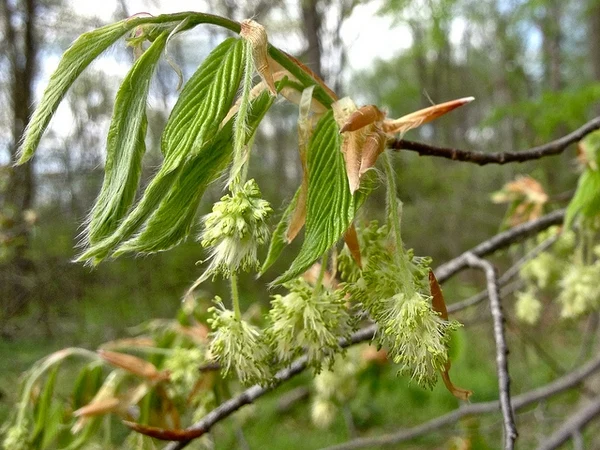
Whole tree — Fagus grandifolia. Species reference; the photographed specimen does not confirm the named variety. Age, pruning, and site affect its shape.☀ Full sun · ☾ ShadePhoto by David J. Stang ↗ · CC BY-SA 4.0Photo contextResized and converted to WebP; full original composition retained.Species reference; does not confirm the named variety. Photograph subject: Male flowers☀ Full sun · ☾ ShadeFritz Flohr Reynolds ↗ · CC-BY-SA 2.0Photo contextResized and converted to WebP; full original composition retained.American beech leaves: parallel side veins each run to a tooth along the edge.☀ Full sun · ☾ ShadeKatja Schulz ↗ · CC BY 2.0Photo contextResized and converted to WebP; no diagnostic content altered.Bark — species reference; cultivar identity not inferred.☀ Full sun · ☾ ShadeNicholas ↗ · CC BY 2.0Photo contextResized and converted to WebP; full original composition retained.
Your margin of the garden.
Saved only in this browser on this device. Export your notes from My garden in the library.