Trees & woodland lore · Western North Carolina field companion
Eastern redbud
Cercis canadensis
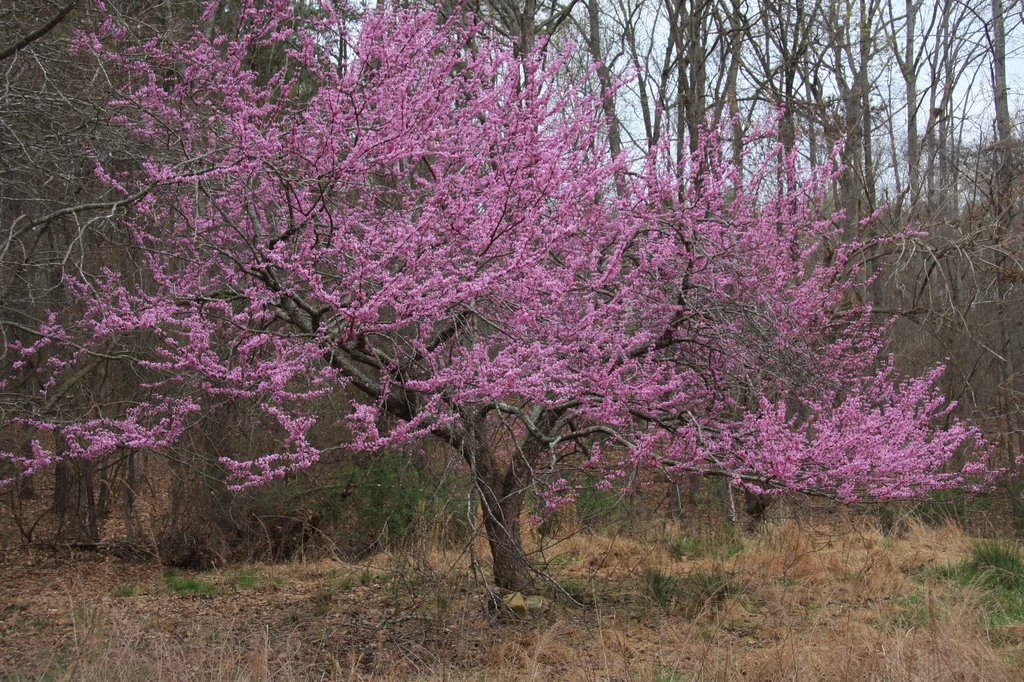
Whole tree — Cercis canadensis. Species reference; the photographed specimen does not confirm the named variety. Age, pruning, and site affect its shape.☀ Full sun · ◐ Part sun or part shadeDcrjsr ↗ · CC BY 3.0Photo contextResized and converted to WebP; full original composition retained.
Problems to recognize in WNC gardens. These are documented susceptibilities, not a local outbreak report or a diagnosis. Weather, elevation and growing conditions change the risk.
Diseases & similar-looking injury
Cankers, branch dieback and Verticillium wilt are concerns; a suddenly wilting branch deserves attention. Leaf spots and mildew can also occur.
Insects to recognize
Scale, borers, Japanese beetles and webworms may visit. Look for sticky foliage, webbing or fresh borer debris.
When to look
Check shoots in spring and inspect stressed branches during summer drought.
A useful first step
Protect the trunk from mower wounds and support consistent soil moisture. Have persistent dieback diagnosed before pruning extensively.
More growing details
Read the leaves
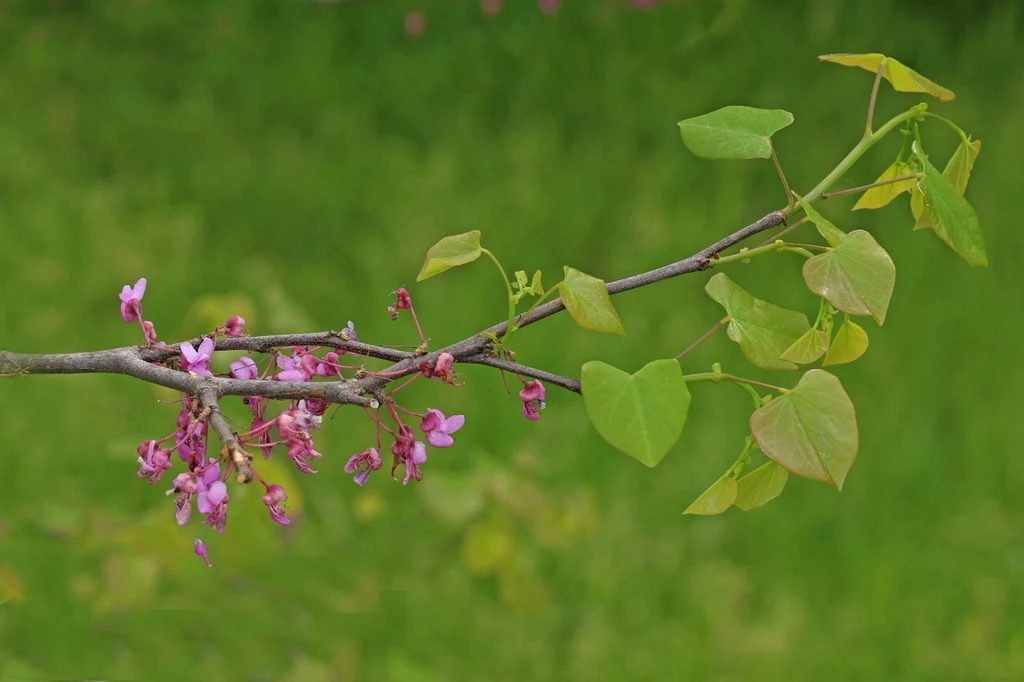
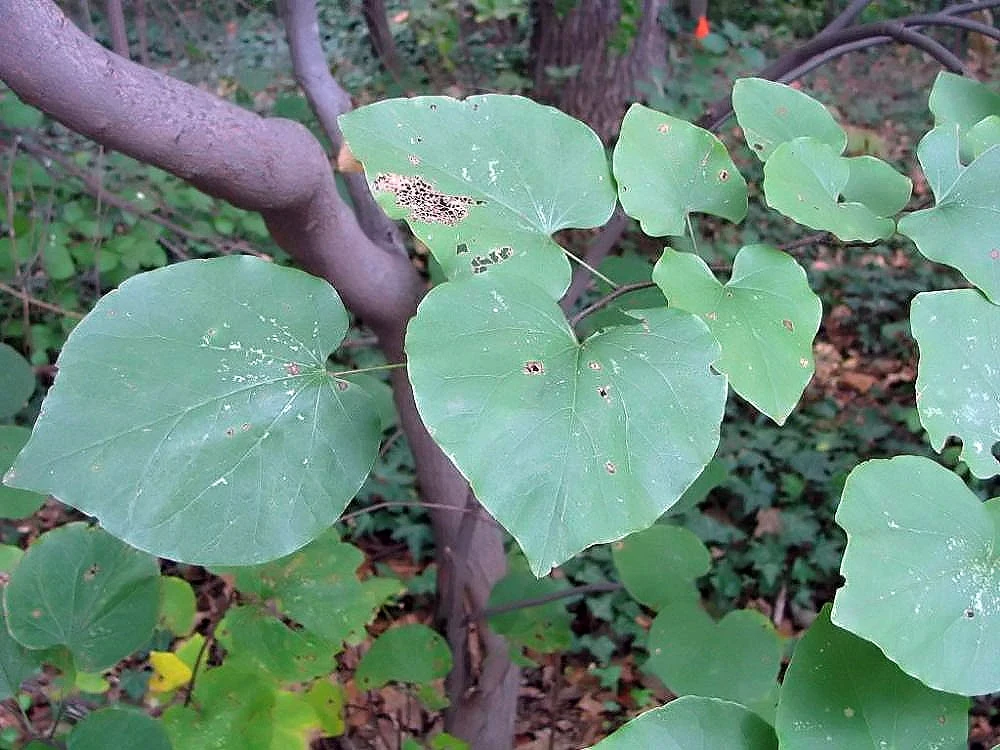
A broad heart-shaped blade has veins radiating from its base. Follow the stalk to an alternate bud.
Read the bark
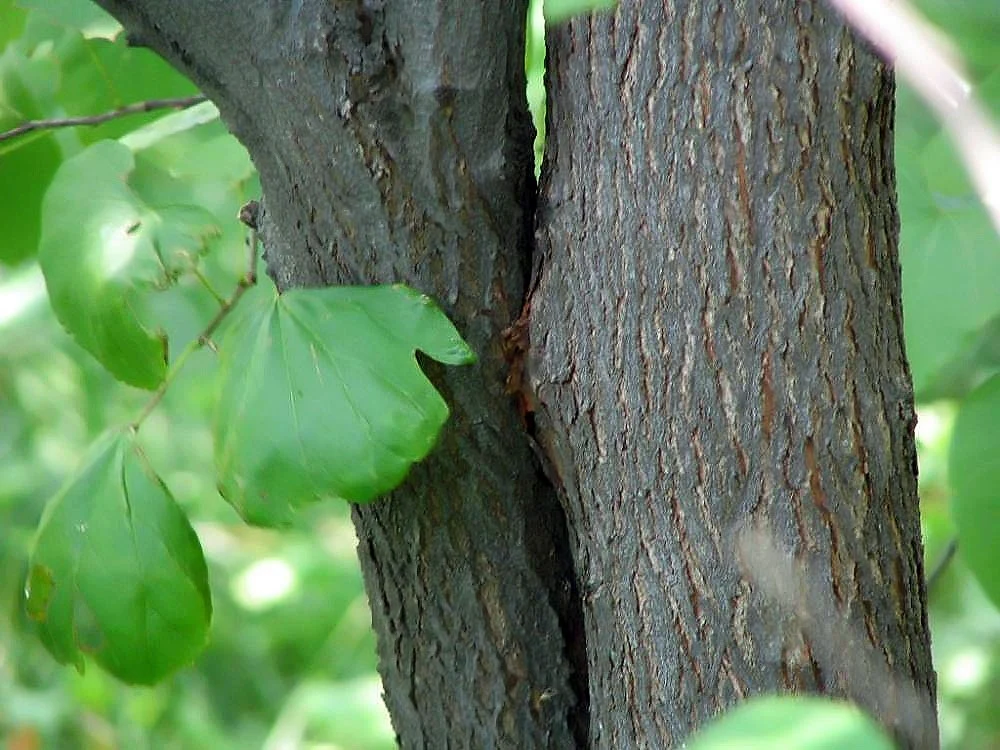
Young bark is relatively smooth; older trunks develop small, thin plates.
Fruit & seed
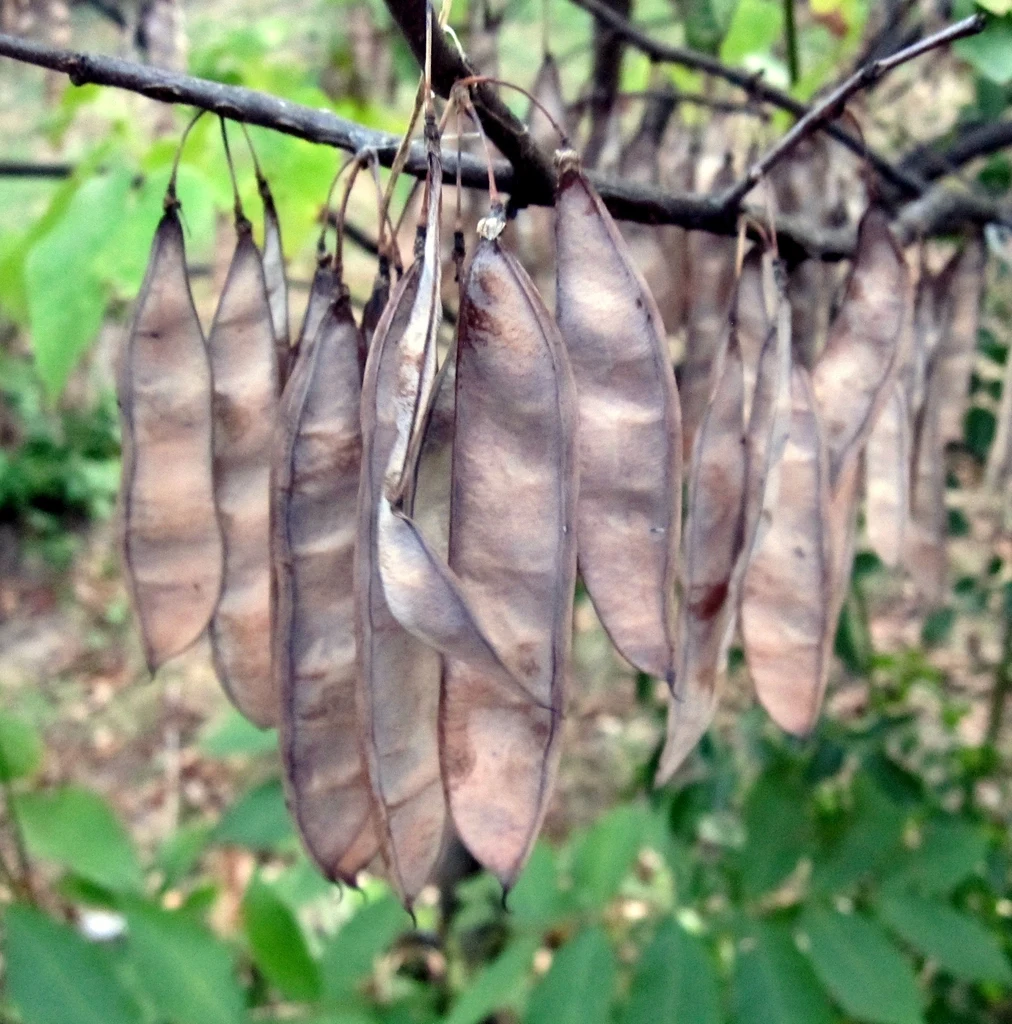
Flat bean-like pods often linger on branches. Pods support a redbud identification even when flowers are gone.
Winter character
Dark zigzag twigs, alternate buds, and lingering pods offer useful clues.
Origin & place
The species occurs naturally in the southern Appalachian region; a planted specimen is not evidence of wild local origin.
WNC Notes
A native flowering understory tree. Leaf color and mature habit vary; provide drainage and protection from extreme site stress.
Sun Exposure
Full sun–part shade
MATURE HEIGHT (FT)
20–30
MATURE WIDTH (FT)
25–35
BLOOM SEASON
Early spring
BLOOM COLOR
Pink
FALL / WINTER COLOR
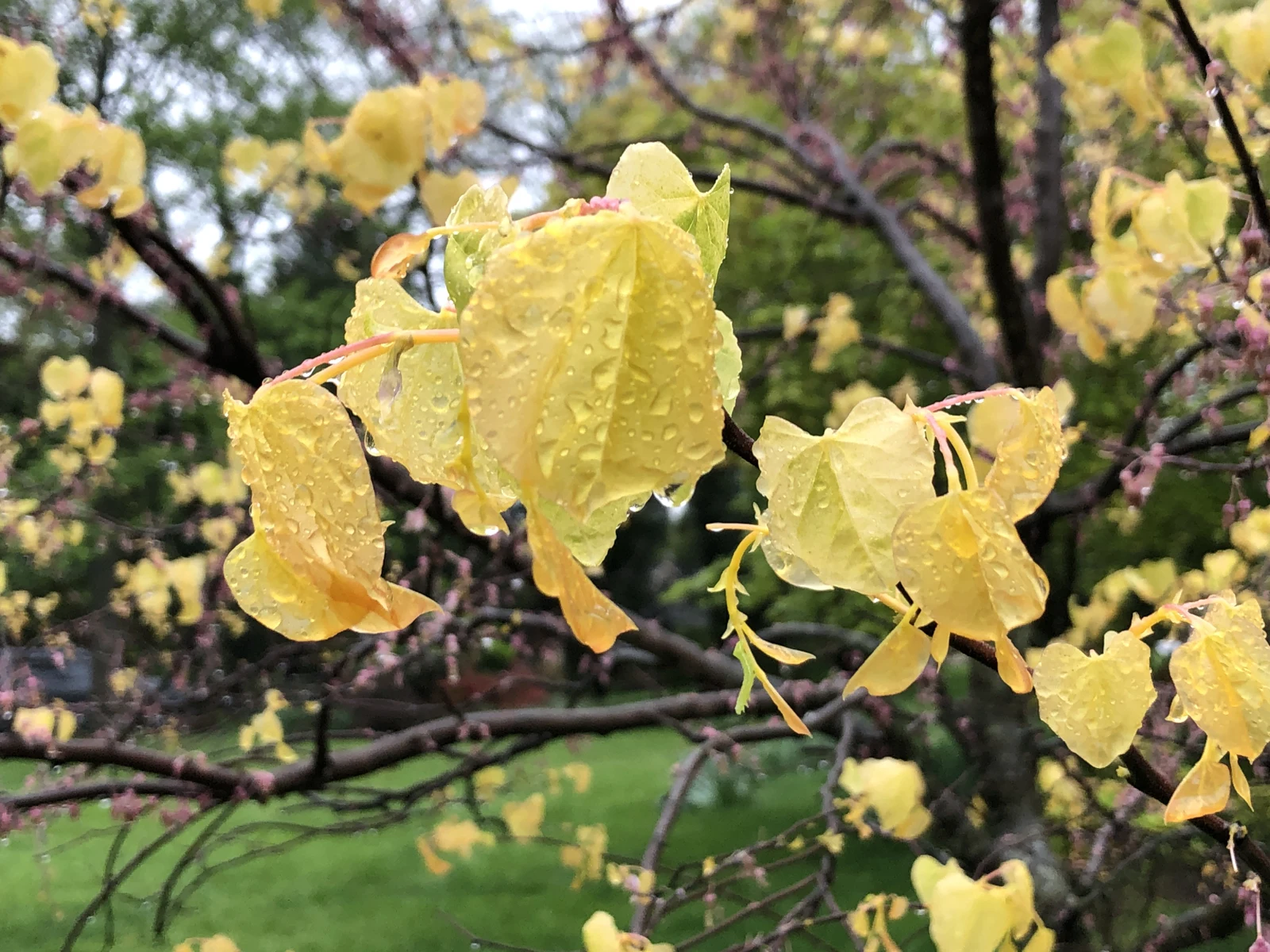
Yellow-orange foliage
Wet-Soil Tolerance
Low–moderate
Drought Tolerance
Moderate
LOOK CLOSELY
Two views, a closer look.
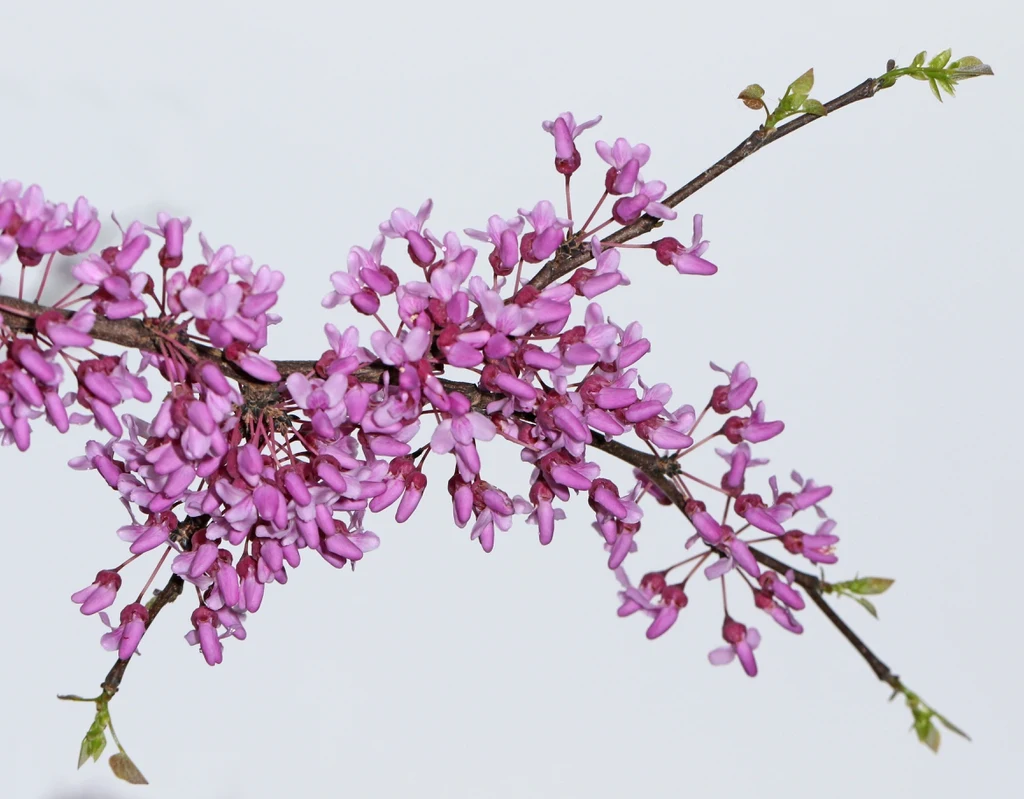
Place two photographs beside one another. Compare the overall plant with leaves, flowers, or bark when those views are available. Captions identify what each photograph actually shows. Images are not at the same scale; species references may show different cultivars.
Whole tree — Cercis canadensis. Species reference; the photographed specimen does not confirm the named variety. Age, pruning, and site affect its shape.☀ Full sun · ◐ Part sun or part shadeDcrjsr ↗ · CC BY 3.0Photo contextResized and converted to WebP; full original composition retained.Species reference; does not confirm the named variety. Photograph subject: blooms and leaves emerging☀ Full sun · ◐ Part sun or part shadeJudy Gallagher ↗ · CC BY 2.0Photo contextResized and converted to WebP; full original composition retained.Species reference; does not confirm the named variety. Photograph subject: buds and new leaves☀ Full sun · ◐ Part sun or part shadeJudy Gallagher ↗ · CC BY 2.0Photo contextResized and converted to WebP; full original composition retained.Yellow spring foliage on an eastern redbud; species reference only. The photograph does not establish cultivar identity.☀ Full sun · ◐ Part sun or part shadeFamartin ↗ · CC BY-SA 4.0Photo contextResized and converted to WebP; no diagnostic content altered.Heart-shaped leaves. Taxon reference; photograph alone does not establish a named cultivar.☀ Full sun · ◐ Part sun or part shadeDavid J. Stang ↗ · CC BY-SA 4.0Photo contextResized and converted to WebP; no diagnostic content altered.Rough brown bark — species reference; cultivar identity not inferred.☀ Full sun · ◐ Part sun or part shadeDavid J. Stang ↗ · CC BY-SA 4.0Photo contextResized and converted to WebP; full original composition retained.Group of dangling, dried bean pods — species reference; cultivar identity not inferred.☀ Full sun · ◐ Part sun or part shadeJDMcGreg ↗ · CC BY-SA 3.0Photo contextResized and converted to WebP; full original composition retained.
Your margin of the garden.
Saved only in this browser on this device. Export your notes from My garden in the library.