
Get to know this plant.
Identification clue 1
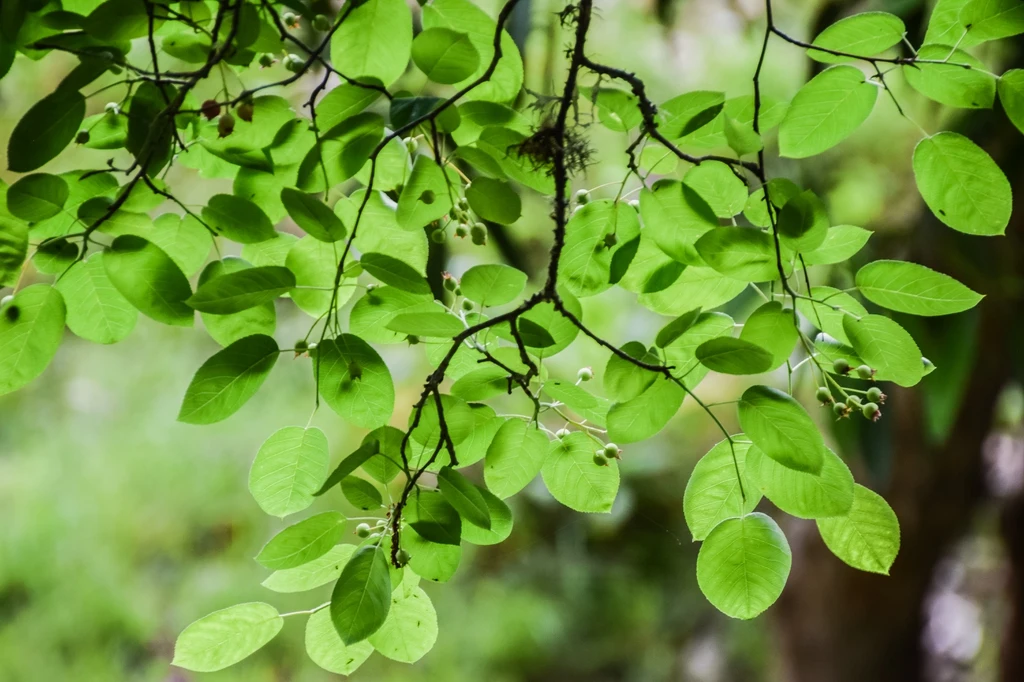
Fine teeth on oval leaves
Identification clue 2
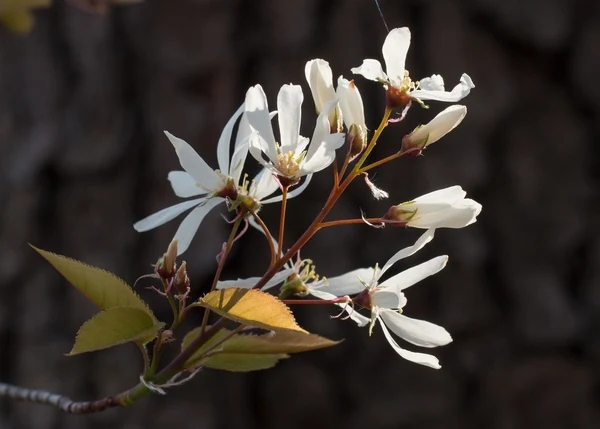
White spring flowers with narrow petals
Identification clue 3
Small fruits ripen purple
Diseases & insects in WNC
Problems to recognize in WNC gardens. These are documented susceptibilities, not a local outbreak report or a diagnosis. Weather, elevation and growing conditions change the risk.
Diseases & similar-looking injury
Rust, leaf spots, powdery mildew and fire blight can occur. Orange spots suggest rust; blackened shoot tips need a closer diagnosis.
Insects to recognize
Aphids, scale and leaf-feeding insects can occur; check for sticky leaves or feeding trails.
When to look
Inspect new shoots and blooms in spring, then leaves during humid summer weather.
A useful first step
Photograph fresh symptoms and ask Extension to distinguish rust, fire blight and simple leaf injury before treatment.
More growing details
Read the leaves
Look for a fine-toothed oval blade; young downy serviceberry leaves have conspicuous hairs. Leaves alone rarely resolve serviceberry hybrids.
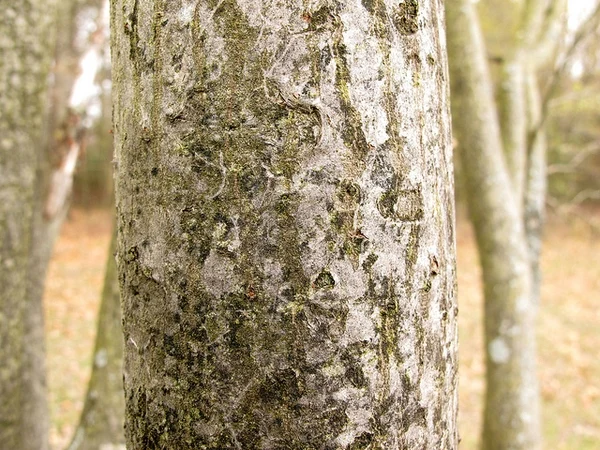
Read the bark
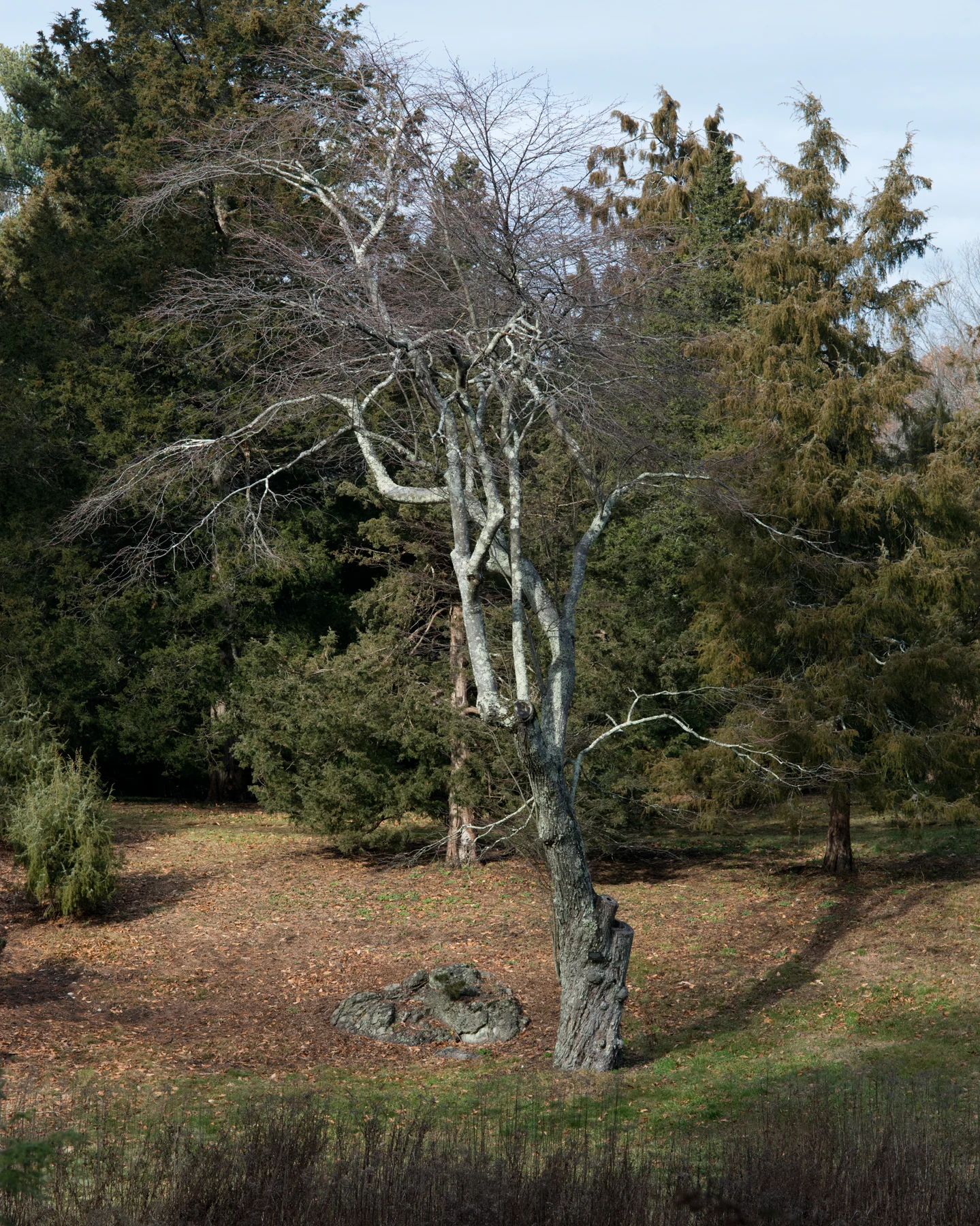
Smooth gray bark develops darker vertical markings and shallow furrows.
Fruit & seed
Small apple-like fruits follow the spring flowers; examine the little persistent star at their tip.
Winter character
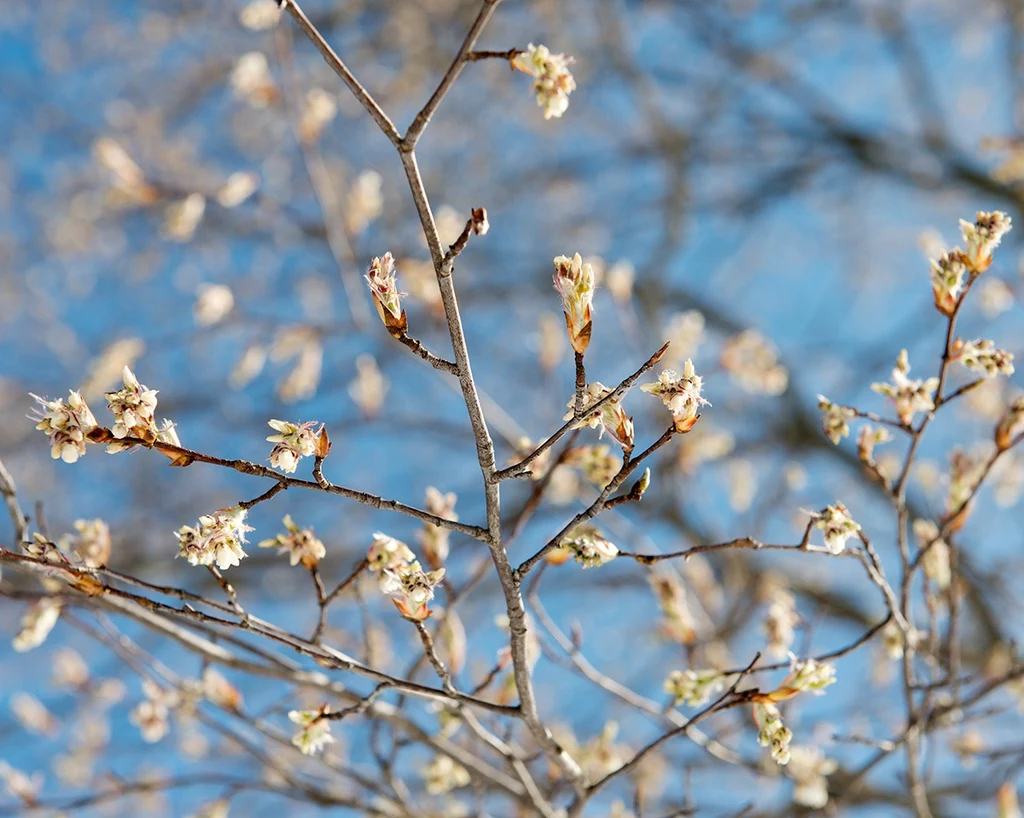
Slender pointed buds and a graceful small-tree framework remain after leaf fall.
Origin & place
The species occurs naturally in the southern Appalachian region; a planted specimen is not evidence of wild local origin.
WNC Notes
Native fruiting understory tree; cedar-serviceberry rust and browsing can affect appearance.
Sun Exposure
Full sun–part shade
MATURE HEIGHT (FT)
15–25
MATURE WIDTH (FT)
10–15
BLOOM SEASON
Early spring
BLOOM COLOR
White
FALL / WINTER COLOR
Yellow-orange-red
Wet-Soil Tolerance
Low–moderate
Drought Tolerance
Moderate
_(39046395342).jpg)