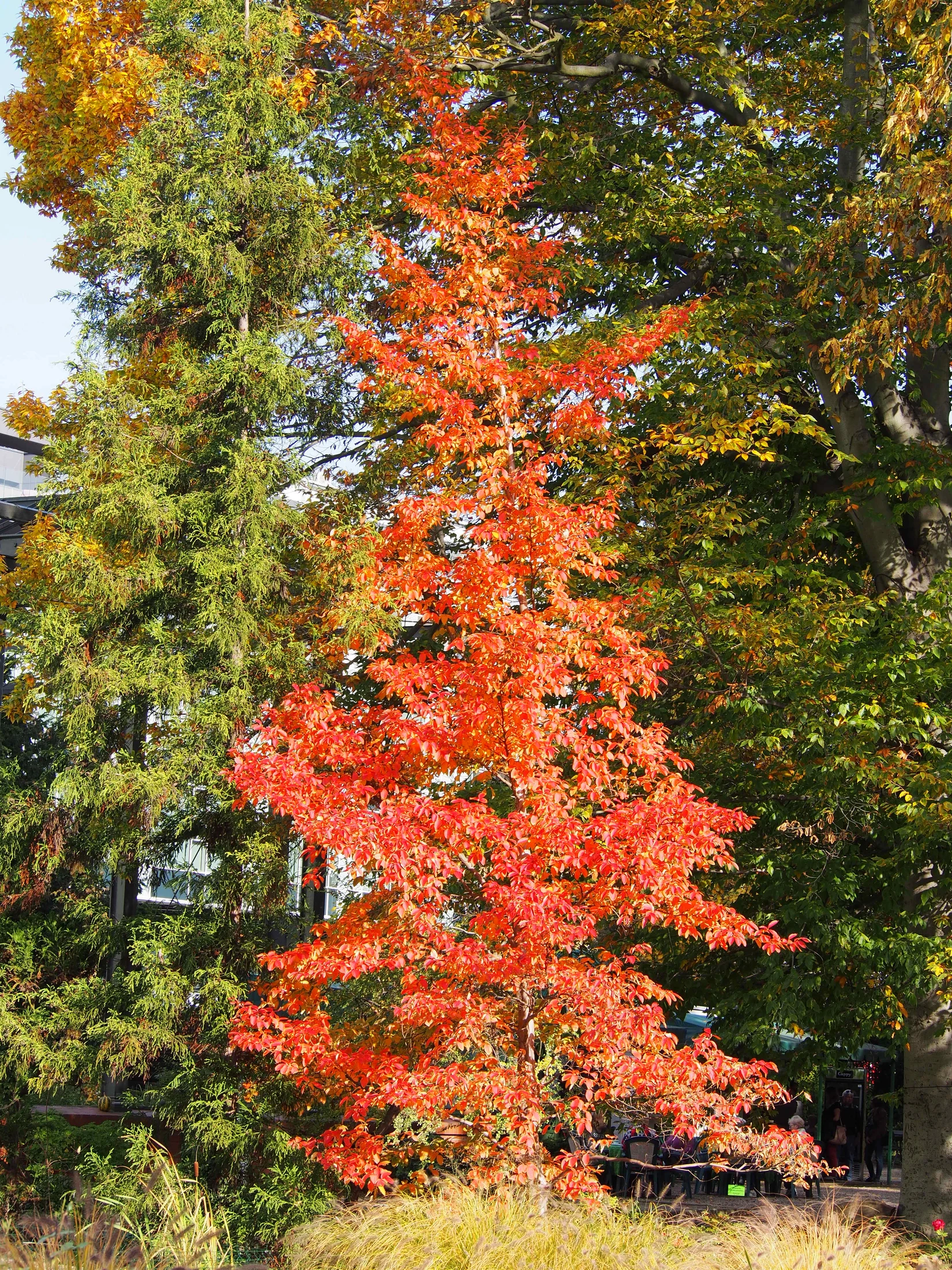
Get to know this plant.
Identification clue 1
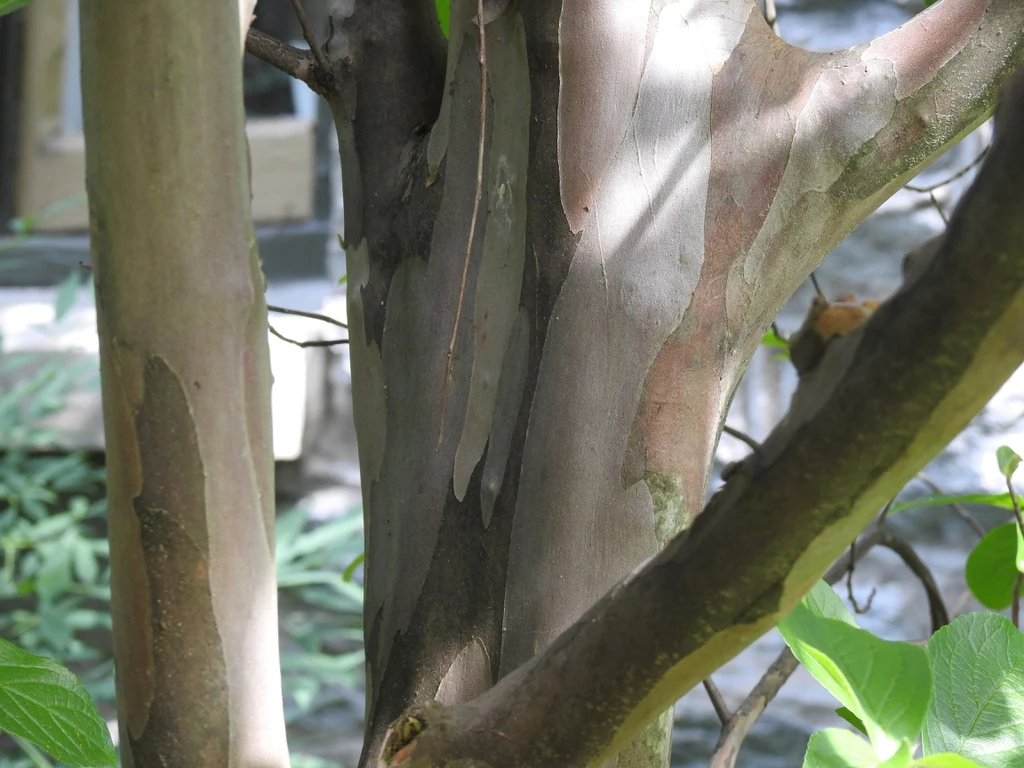
Patchwork peeling bark
Identification clue 2
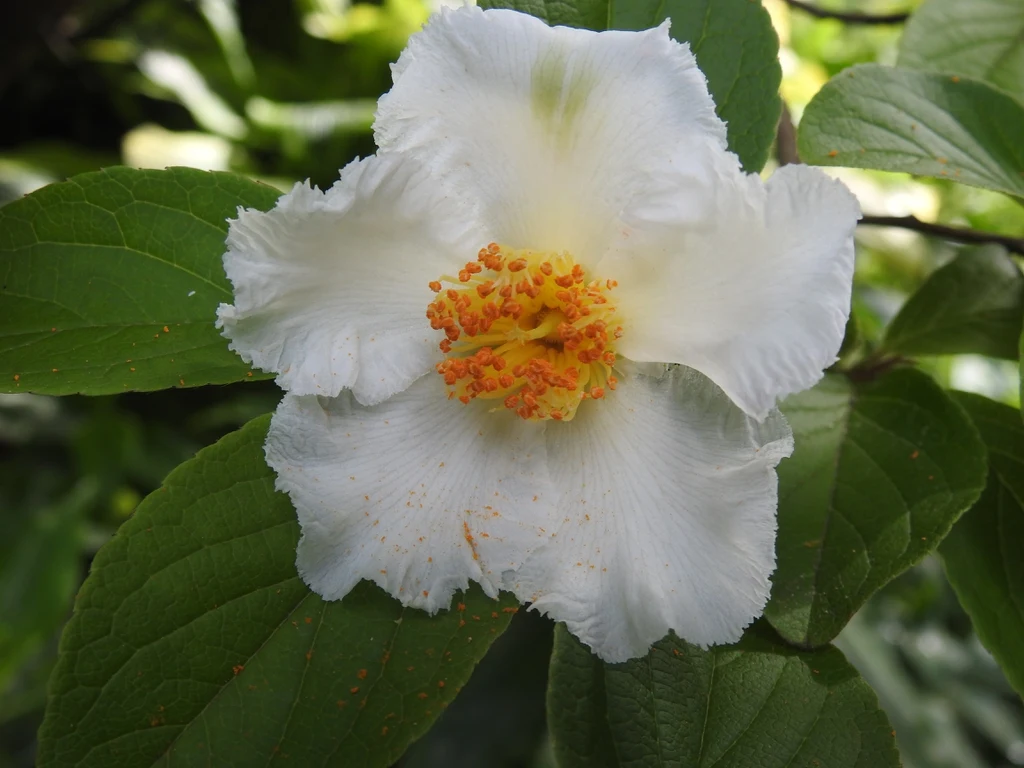
White camellia-like summer flowers
Identification clue 3
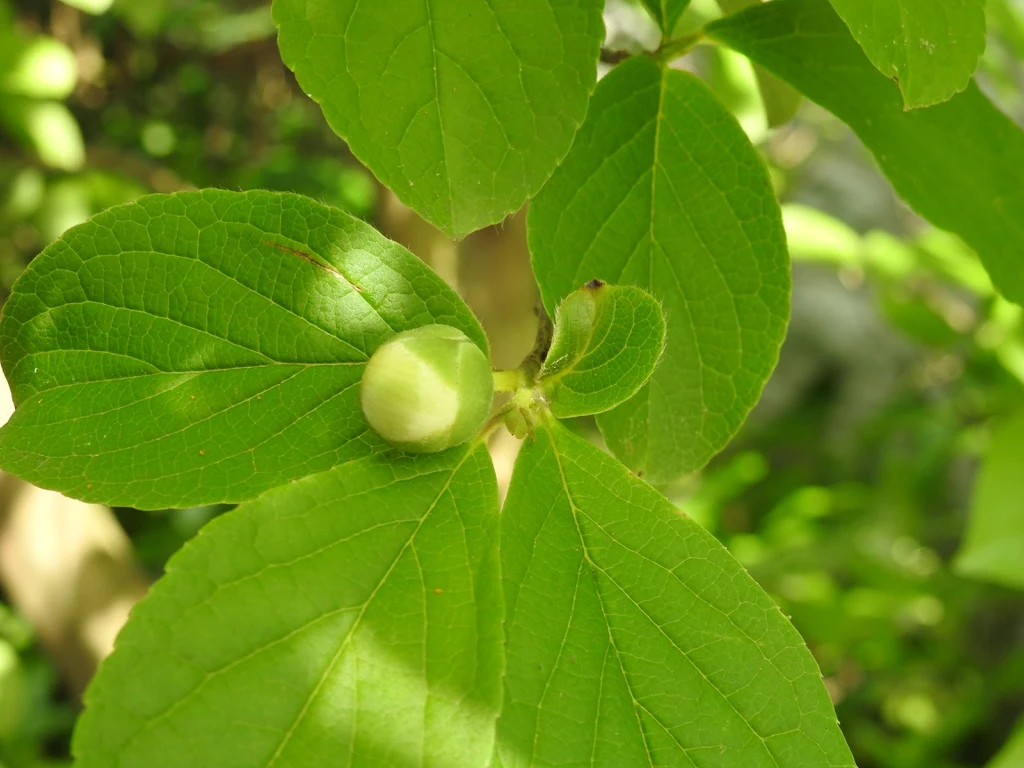
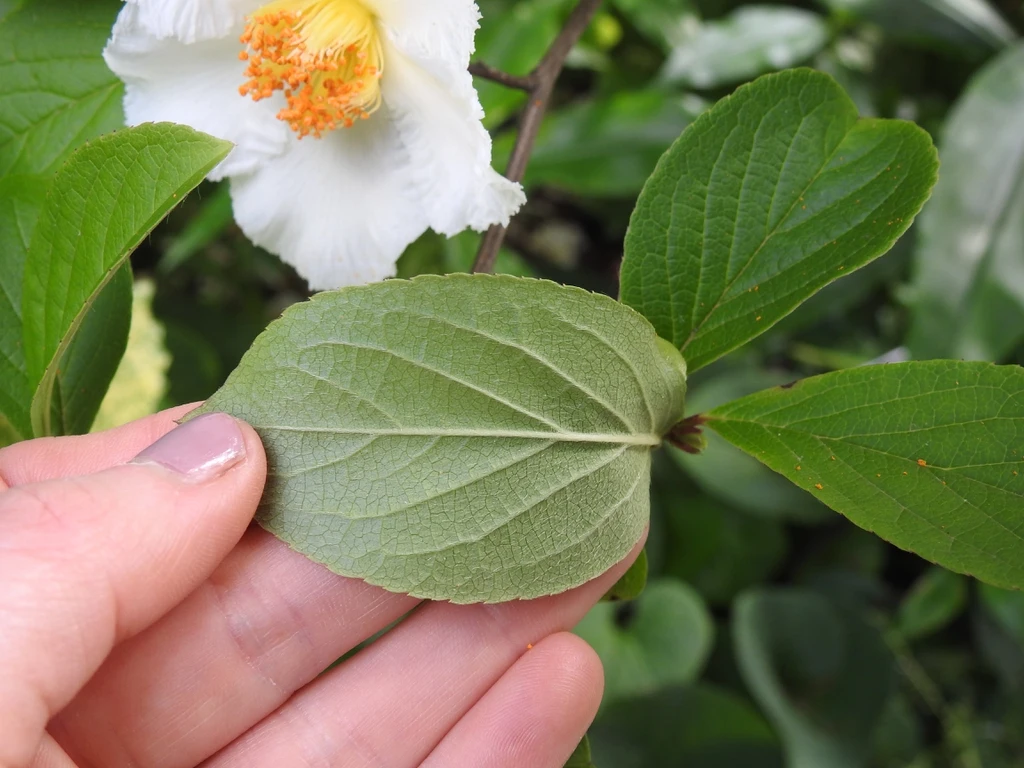
Fine-toothed alternate leaves
Diseases & insects in WNC
Problems to recognize in WNC gardens. These are documented susceptibilities, not a local outbreak report or a diagnosis. Weather, elevation and growing conditions change the risk.
Diseases & similar-looking injury
NC State reports no serious disease problems. Heat, drought and unsuitable soil can still cause decline.
Insects to recognize
NC State reports no serious insect problems.
When to look
Watch leaf edges during summer heat and dry spells.
A useful first step
Check soil moisture, drainage and site suitability before assuming leaf injury is a pest problem.
More growing details
Read the leaves
Simple oval leaves taper to a point and have fine teeth. The flowers and bark add more decisive clues.
Read the bark
Exfoliating bark exposes an irregular mosaic of cream, tan, orange, and gray.
Fruit & seed
Dry woody capsules open into sections after flowering.
Winter character
Patchwork bark and slender alternate twigs help when leaves are absent.
Origin & place
An introduced garden species or horticultural hybrid; study it as part of WNC landscapes rather than assume it belongs to the native mountain flora.
WNC Notes
Premium four-season specimen with camellia-like flowers and exfoliating bark; avoid hot dry sites.
Sun Exposure
Full sun–part shade
MATURE HEIGHT (FT)
12–40
MATURE WIDTH (FT)
8–25
BLOOM SEASON
Early–mid summer
BLOOM COLOR
White
FALL / WINTER COLOR
Orange-red
Wet-Soil Tolerance
Moderate
Drought Tolerance
Low
At Lynn’s Nursery · Japanese Stewartia
Stewartia pseudocamellia Summer/Fall 2026 catalog. Confirm current availability with the nursery. Mature height × width: 20–30 ft × 15–25 ft. Light: Full sun to part shade. Habit: Upright, pyramidal small tree. Flowers & season: White cups; early summer. Peeling bark and fall color; moist acidic soil.