Get to know this plant.
Identification clue 1
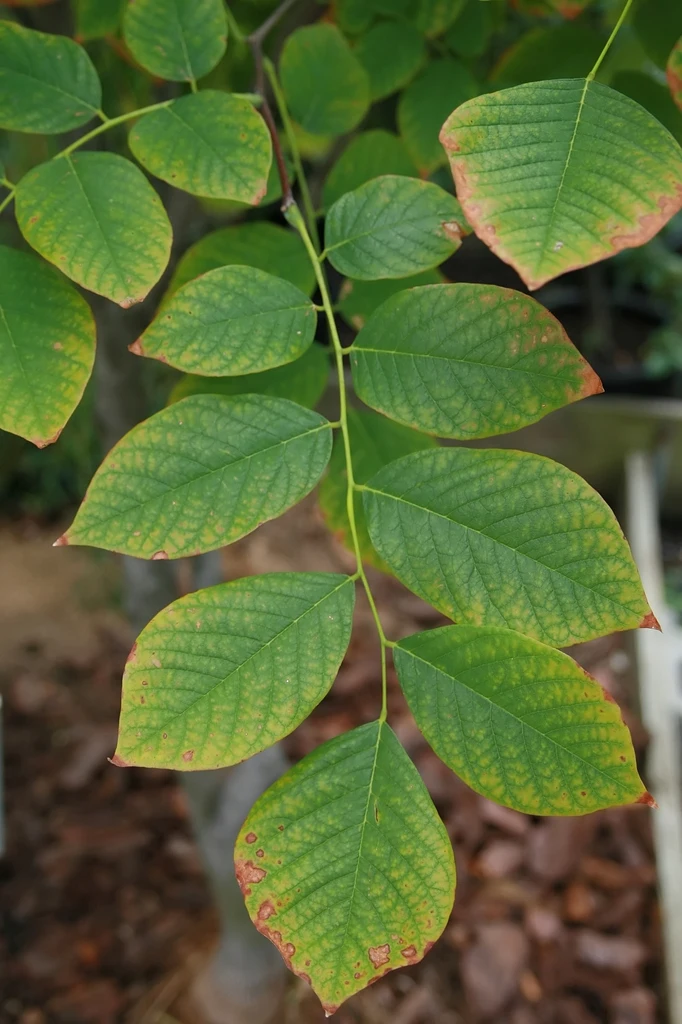
Odd-pinnate compound leaves
Identification clue 2
Leaflets with smooth edges
Identification clue 3
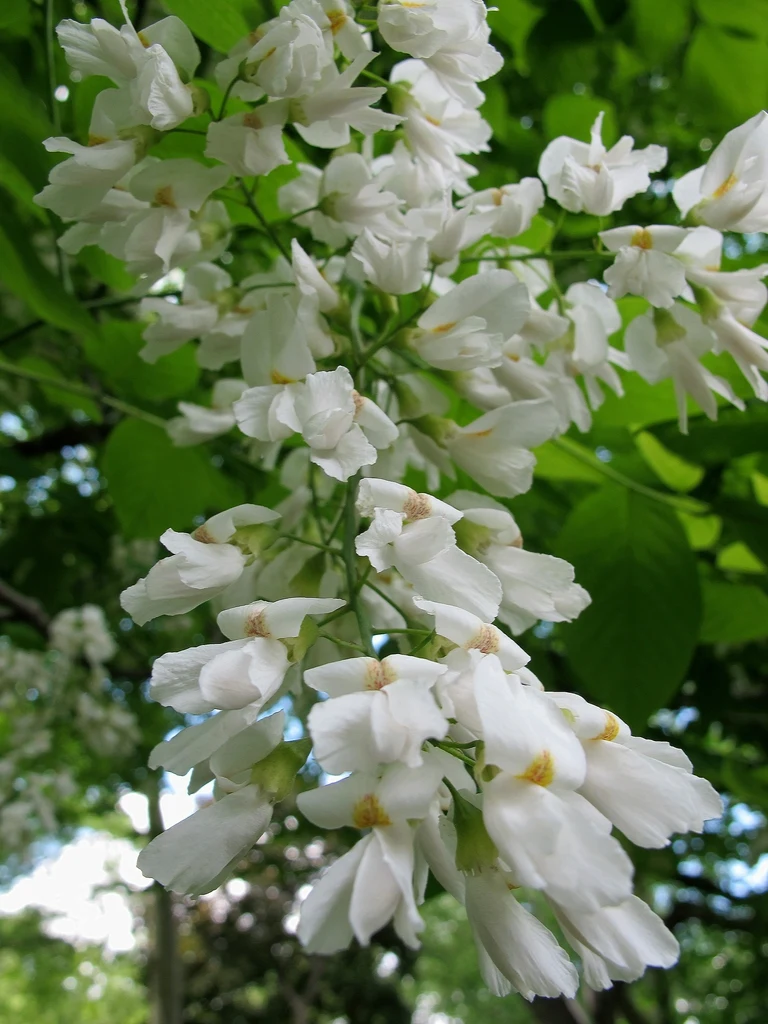
Long white flower clusters
Diseases & insects in WNC
Problems to recognize in WNC gardens. These are documented susceptibilities, not a local outbreak report or a diagnosis. Weather, elevation and growing conditions change the risk.
Diseases & similar-looking injury
Verticillium wilt can occur. Late frost and storm breakage can also injure this tree.
Insects to recognize
No major insect problem is emphasized in the NC State profile.
When to look
Check spring flowering after frost and inspect branches for wilt in summer.
A useful first step
Have persistent one-sided wilt diagnosed. Ask an arborist to assess damaged or weak branch attachments.
More growing details
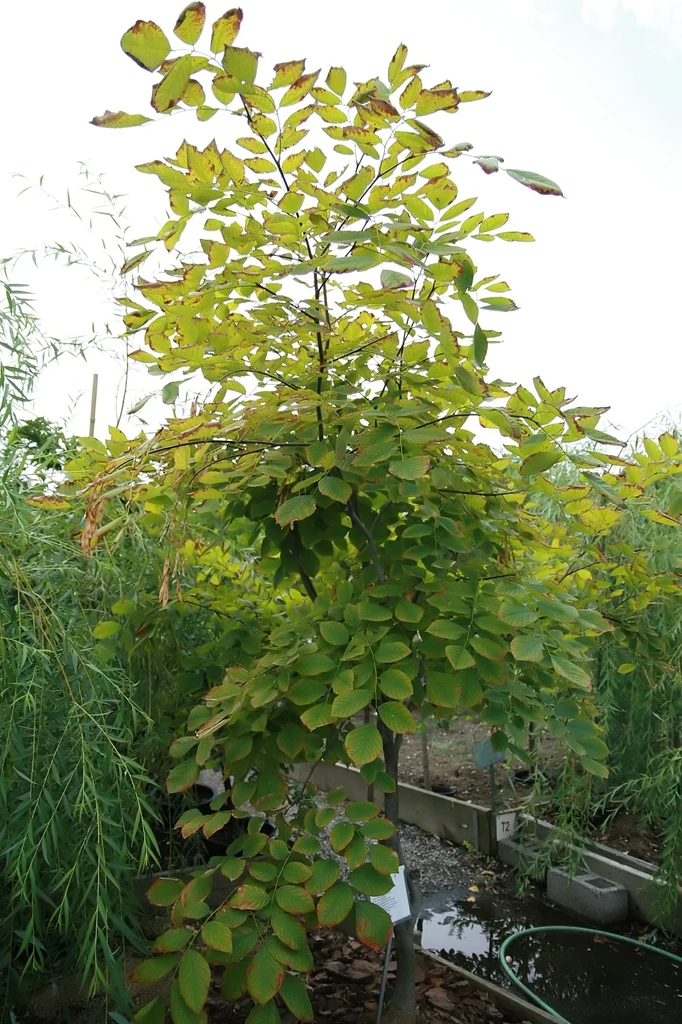
Read the leaves
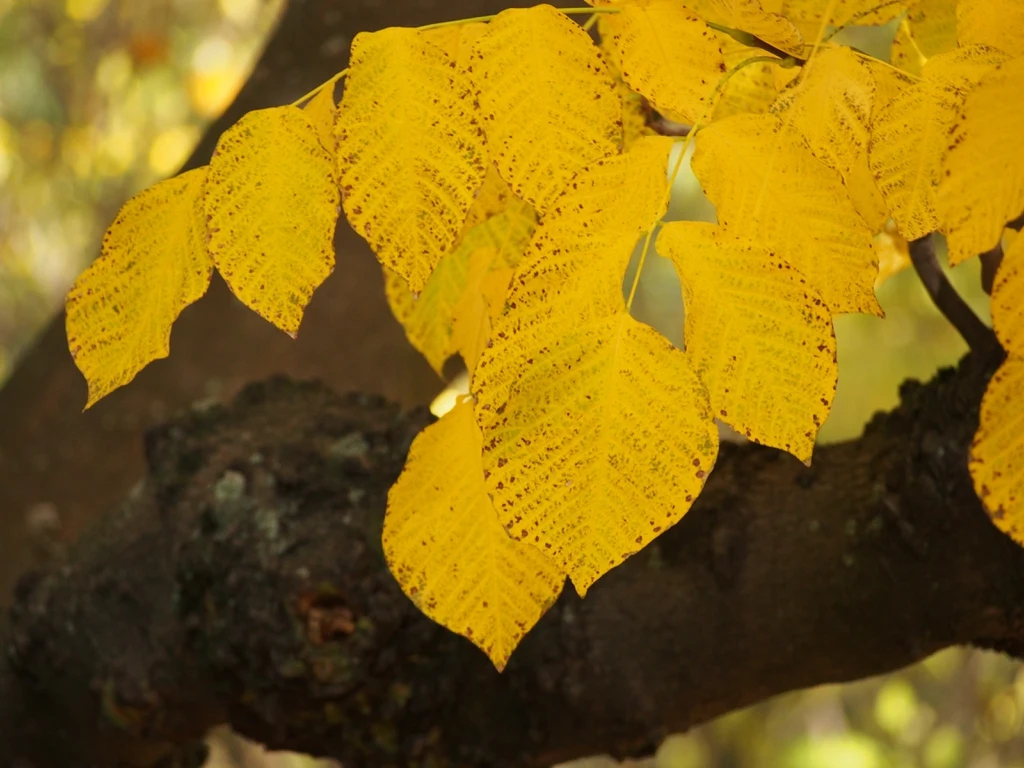
Find the whole leaf: several broad leaflets share one stalk, with one terminal leaflet. Their edges are smooth.
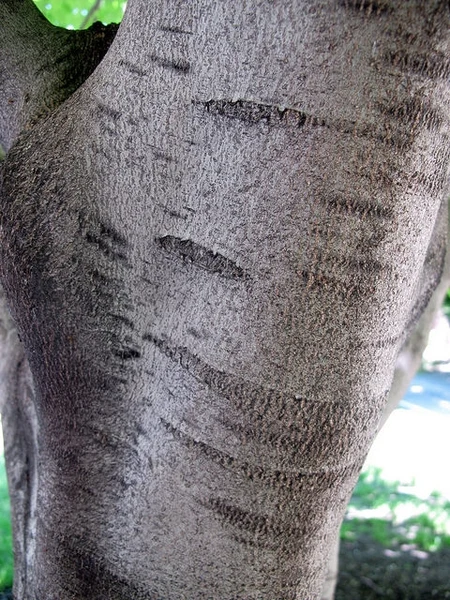
Read the bark
Smooth gray bark can resemble beech, so combine bark with the compound leaf.
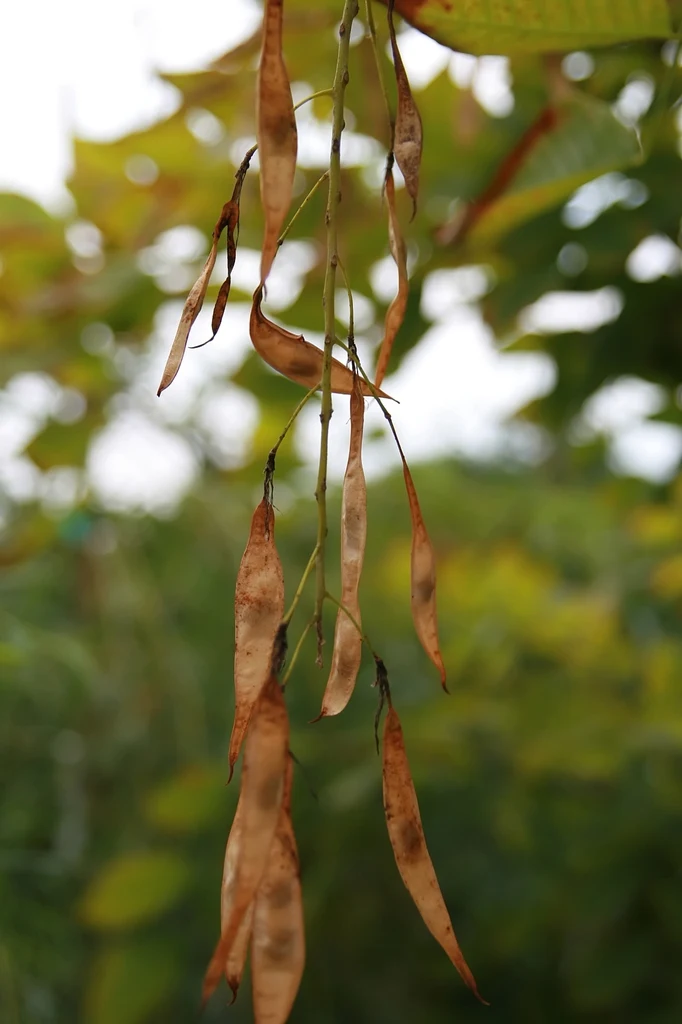
Fruit & seed
Flat pods follow hanging clusters of white pea-like flowers; crops vary greatly among years.
Winter character
Leaf bases conceal buds during the growing season; bare twigs and smooth bark need careful comparison.
Origin & place
Yellowwood has a scattered, localized native range; a nursery planting does not demonstrate a naturally occurring local population.
WNC Notes
Showy native specimen; prune young for sound branch structure and avoid wet soil.
Sun Exposure
Full sun–part shade
MATURE HEIGHT (FT)
30–45
MATURE WIDTH (FT)
40–45
BLOOM SEASON
Late spring
BLOOM COLOR
White
FALL / WINTER COLOR
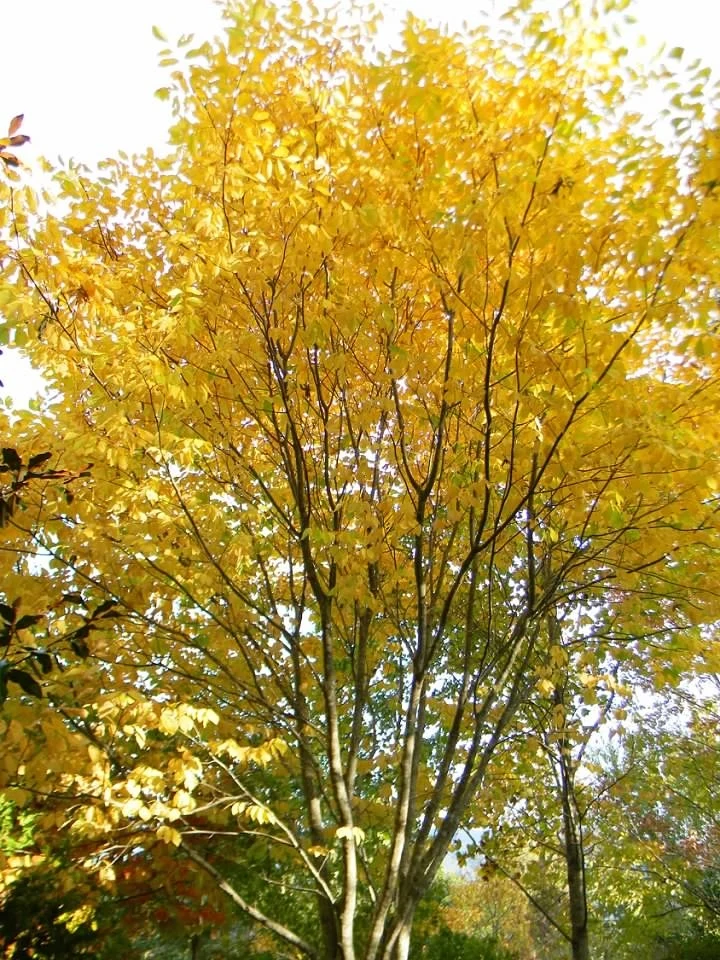
Yellow
Wet-Soil Tolerance
Moderate
Drought Tolerance
Moderate