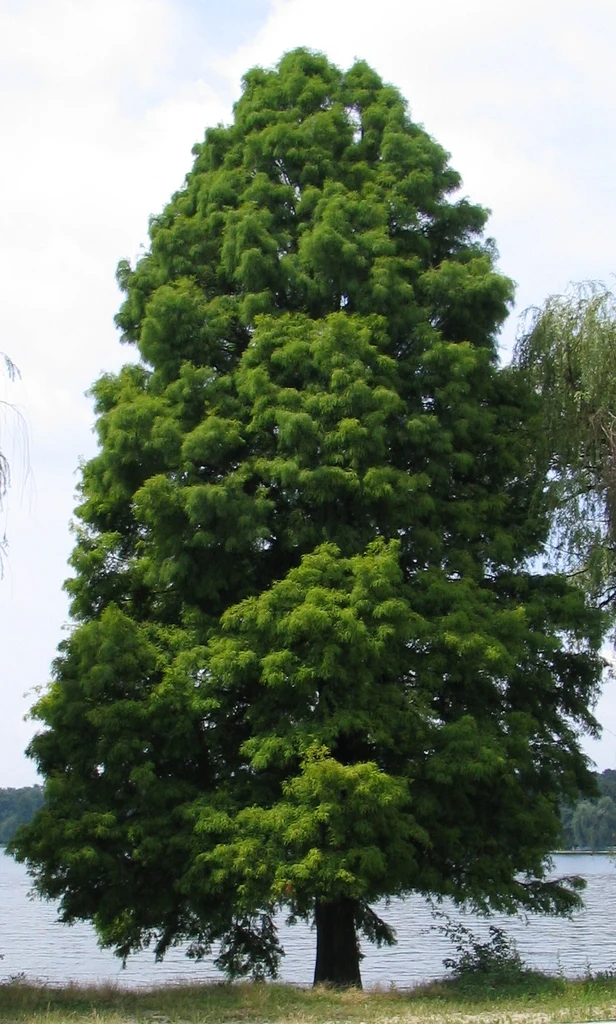
Get to know this plant.
Identification clue 1
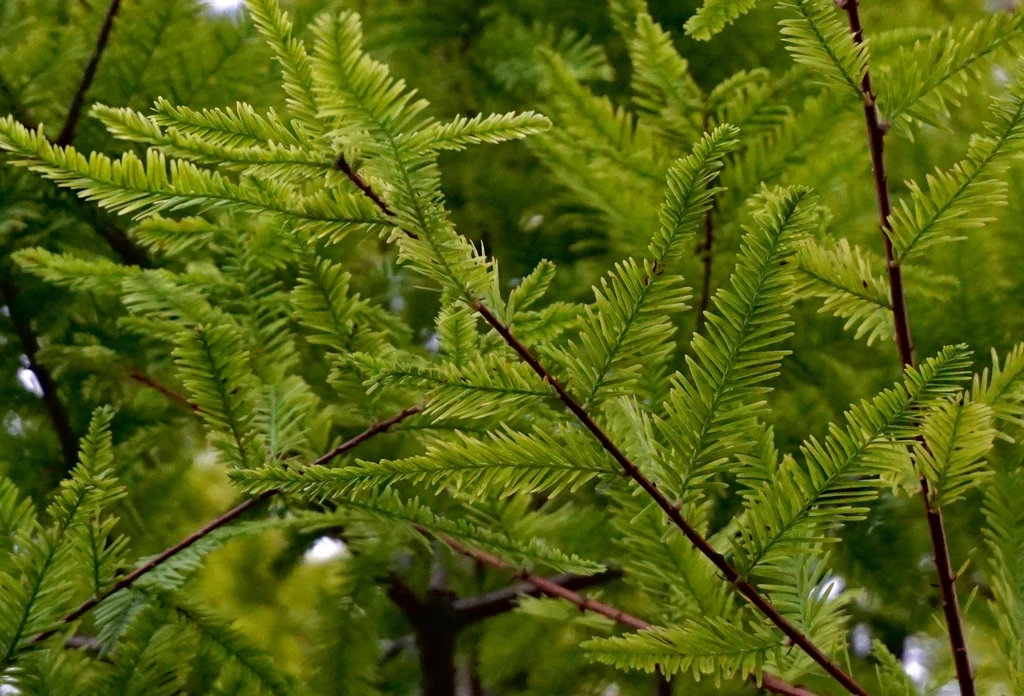
Soft needles on deciduous branchlets
Identification clue 2
Alternate attachments
Identification clue 3
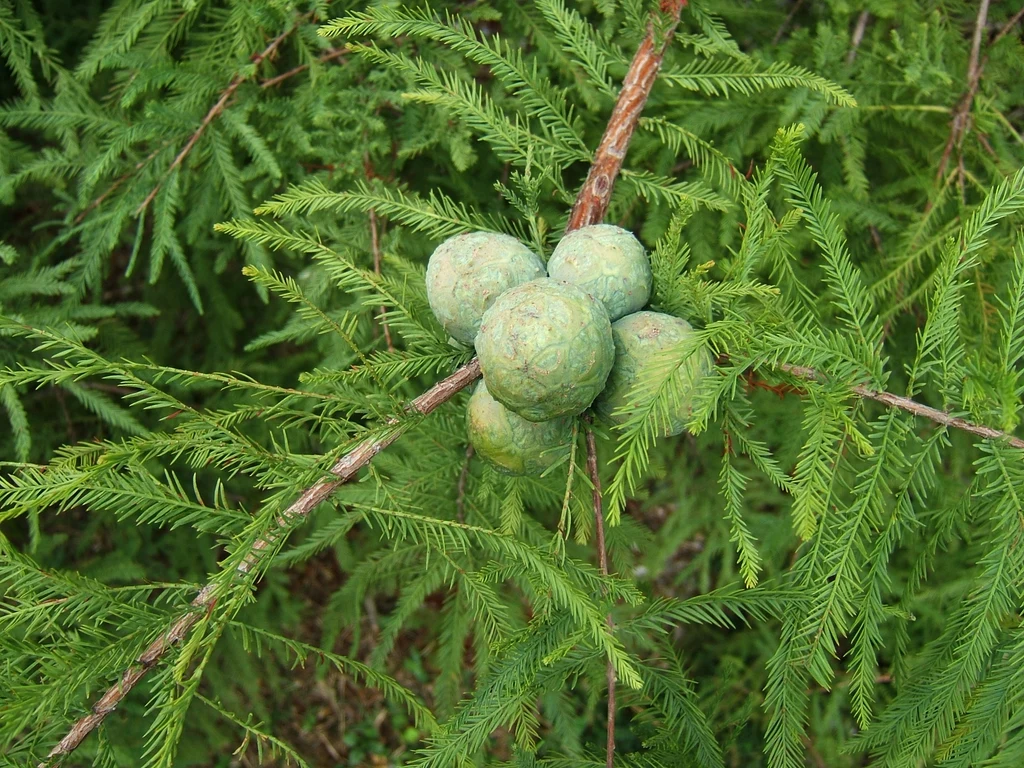
Rounded woody cones
Diseases & insects in WNC
Problems to recognize in WNC gardens. These are documented susceptibilities, not a local outbreak report or a diagnosis. Weather, elevation and growing conditions change the risk.
Diseases & similar-looking injury
Twig blight is occasional. Yellowing can also come from alkaline soil.
Insects to recognize
No major insect problem is emphasized in the NC State profile.
When to look
Check growing-season shoot tips; autumn needle browning and shedding are normal.
A useful first step
Compare affected tips with the rest of the tree and check soil pH when foliage stays unusually yellow.
More growing details
Read the leaves
Needles may look like paired rows, but their actual attachment is alternate. This distinction is more useful than overall feathery appearance.
Read the bark
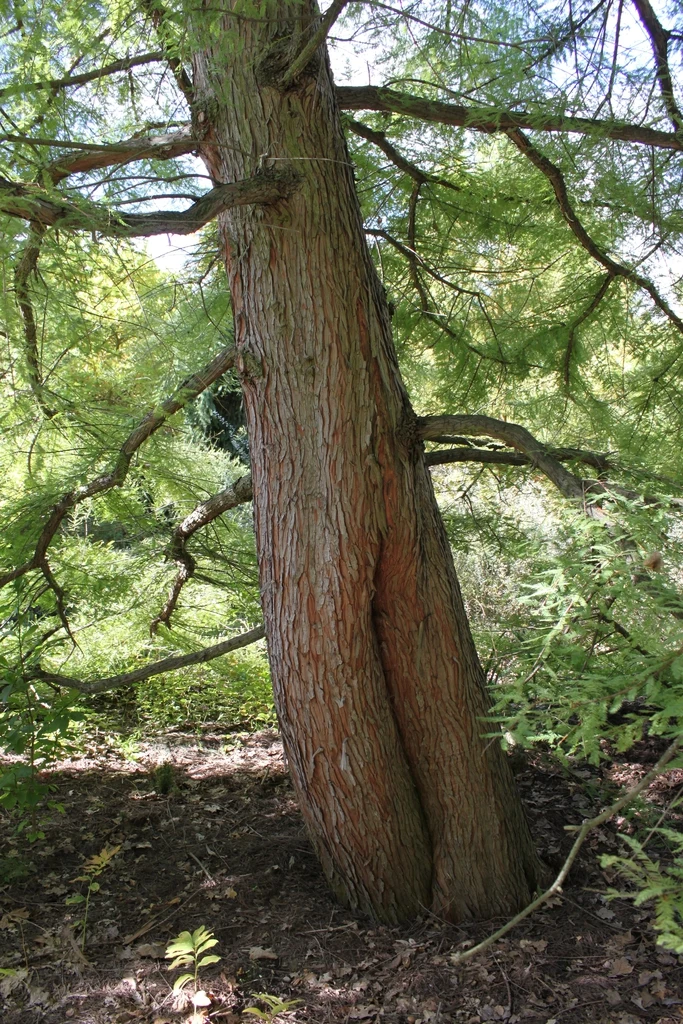
Fibrous reddish-gray bark and a broad, sometimes buttressed base are typical on older trees.
Fruit & seed
Rounded cones break apart into thick scales. Root knees may occur in wet sites but are not required.
Winter character
Bare fine branches and fibrous bark remain; check branchlet attachment rather than expecting knees.
Origin & place
Native chiefly to southeastern lowlands and swamps. Inland WNC specimens are commonly landscape plantings.
WNC Notes
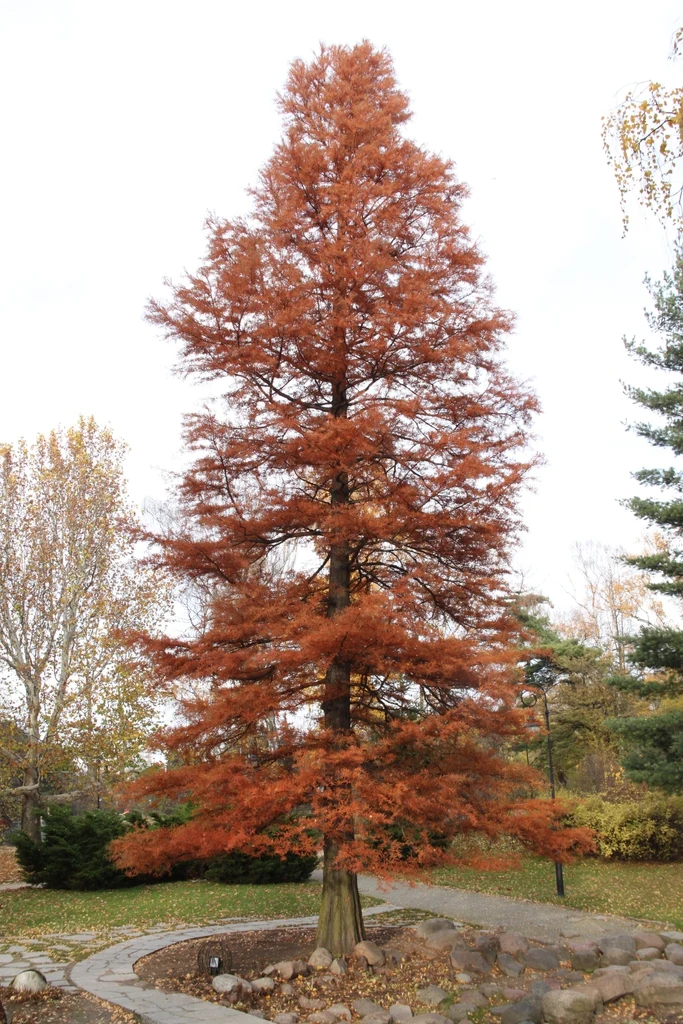
Adaptable native conifer for wet ground or lawns; knees are most likely in saturated sites.
Sun Exposure
Full sun
MATURE HEIGHT (FT)
50–70
MATURE WIDTH (FT)
20–30
BLOOM SEASON
Spring
BLOOM COLOR
Inconspicuous
FALL / WINTER COLOR
Copper-orange
Wet-Soil Tolerance
Very high
Drought Tolerance
Moderate once established