Trees & woodland lore · Western North Carolina field companion
Sourwood
Oxydendrum arboreum
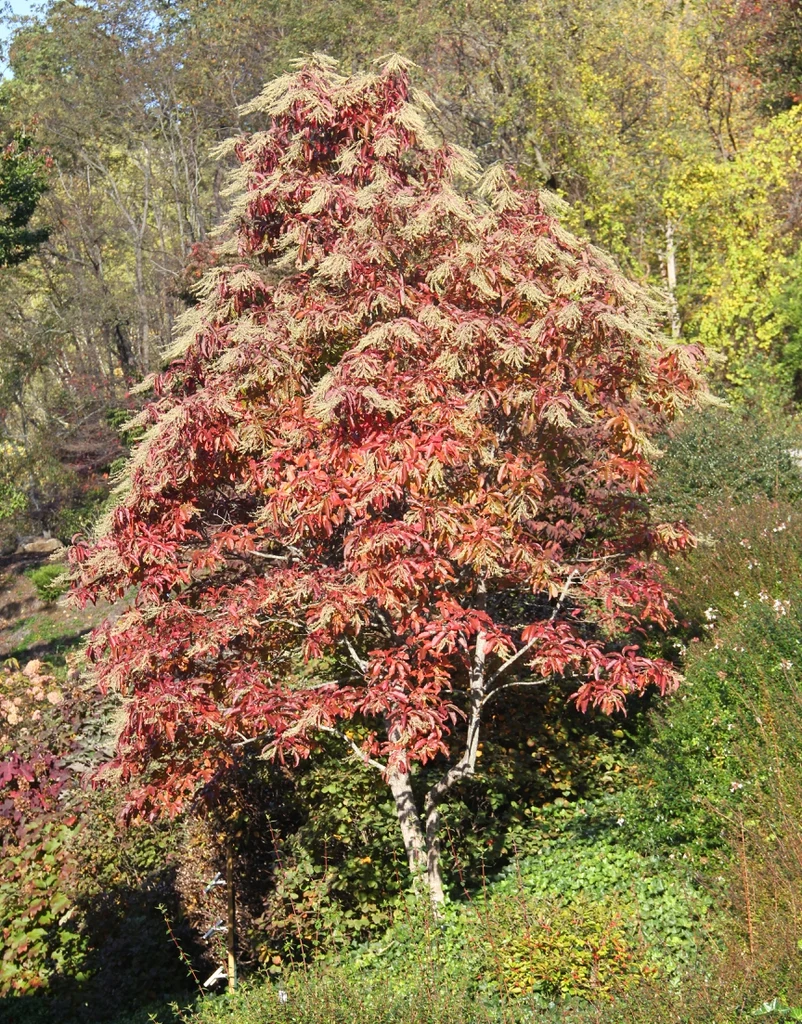
Whole tree — Oxydendrum arboreum. Species reference; the photographed specimen does not confirm the named variety. Age, pruning, and site affect its shape.☀ Full sun · ◐ Part sun or part shadeJim Janke ↗ · CC BY 4.0Photo contextResized and converted to WebP; full original composition retained.
Problems to recognize in WNC gardens. These are documented susceptibilities, not a local outbreak report or a diagnosis. Weather, elevation and growing conditions change the risk.
Diseases & similar-looking injury
Leaf spot and twig blight occur infrequently.
Insects to recognize
Fall webworm is an occasional problem; look for webs enclosing leaves near branch ends.
When to look
Look for leaf spots and expanding webs in late summer.
A useful first step
Small webworm colonies usually cause limited injury. Check tree vigor before deciding that intervention is needed.
More growing details
Read the leaves
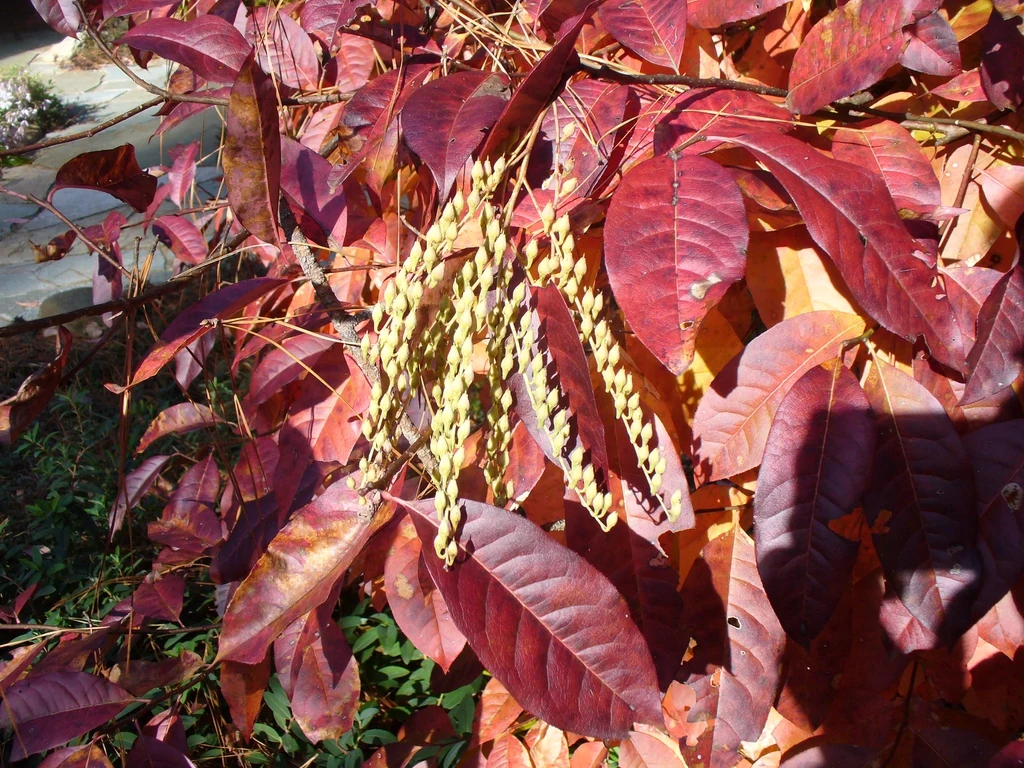
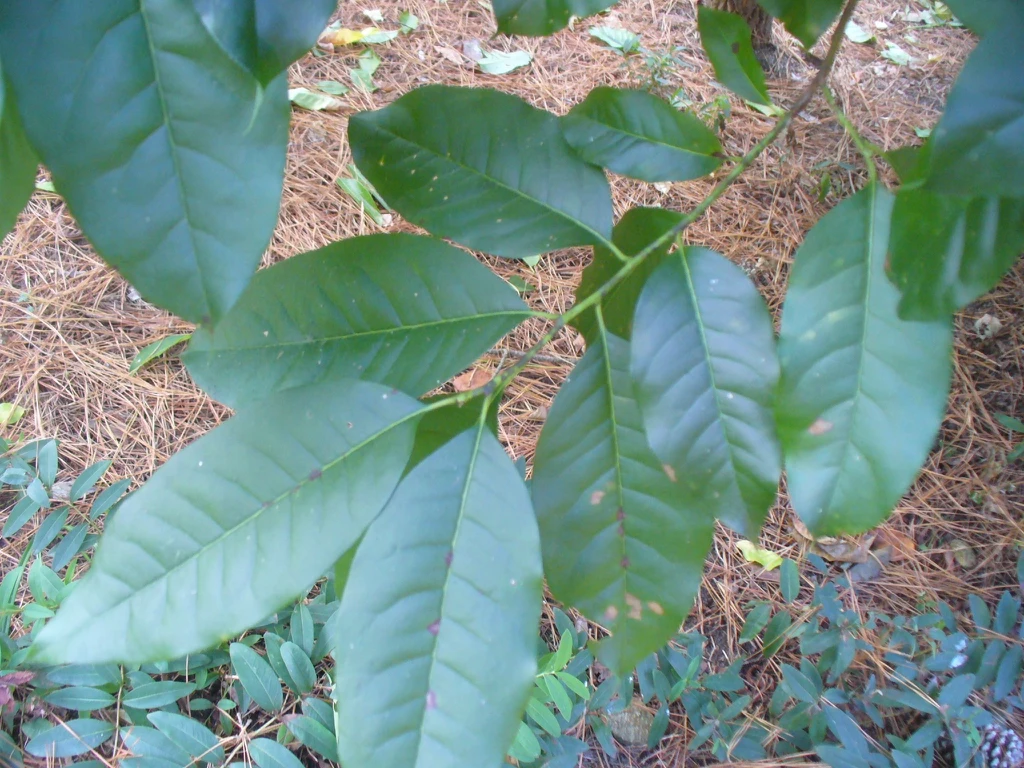
Long simple leaves taper toward the tip and have fine teeth; red autumn color is beautiful but not diagnostic.
Read the bark
Older bark is deeply furrowed, with chunky longitudinal ridges.
Fruit & seed
Small dry capsules remain in drooping branched sprays long after flowering.
Winter character
Persistent fruit sprays and deeply furrowed bark make a helpful winter pair.
Origin & place
The species occurs naturally in the southern Appalachian region; a planted specimen is not evidence of wild local origin.
WNC Notes
Signature mountain native; requires acidic, well-drained, undisturbed soil and performs poorly in compacted sites.
Sun Exposure
Full sun–part shade
MATURE HEIGHT (FT)
20–30
MATURE WIDTH (FT)
10–15
BLOOM SEASON
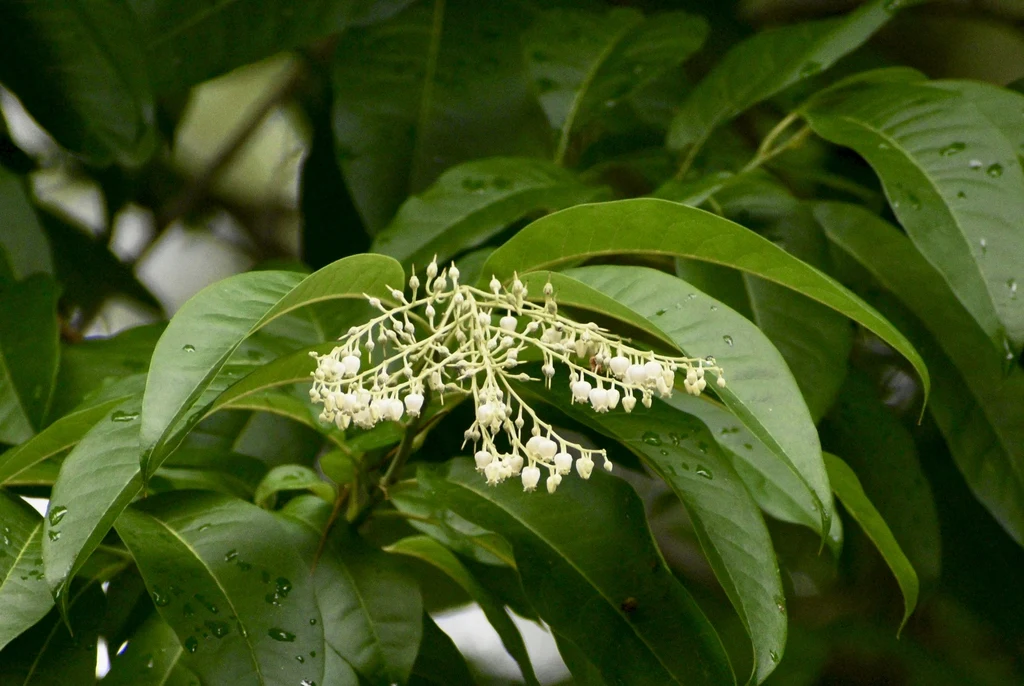
Early summer
BLOOM COLOR
White
FALL / WINTER COLOR
Scarlet-purple
Wet-Soil Tolerance
Moderate
Drought Tolerance
Low–moderate
LOOK CLOSELY
Two views, a closer look.
Place two photographs beside one another. Compare the overall plant with leaves, flowers, or bark when those views are available. Captions identify what each photograph actually shows. Images are not at the same scale; species references may show different cultivars.
Whole tree — Oxydendrum arboreum. Species reference; the photographed specimen does not confirm the named variety. Age, pruning, and site affect its shape.☀ Full sun · ◐ Part sun or part shadeJim Janke ↗ · CC BY 4.0Photo contextResized and converted to WebP; full original composition retained.Species reference; does not confirm the named variety. Photograph subject: Oxydendrum arboreum leaves in the fall in Moore County☀ Full sun · ◐ Part sun or part shadeSusan Strine ↗ · CC BY 2.0Photo contextResized and converted to WebP; full original composition retained.Species reference; does not confirm the named variety. Photograph subject: Flowers☀ Full sun · ◐ Part sun or part shadeCathy Dewitt ↗ · CC BY 4.0Photo contextResized and converted to WebP; full original composition retained.Oxydendrum arboreum's green leaves in the summer in Moore County. Taxon reference; photograph alone does not establish a named cultivar.☀ Full sun · ◐ Part sun or part shadeSusan Strine ↗ · CC BY 2.0Photo contextResized and converted to WebP; no diagnostic content altered.
Your margin of the garden.
Saved only in this browser on this device. Export your notes from My garden in the library.